

68-Key Hall Effect Rapid Trigger Keyboard (Wired RGB)
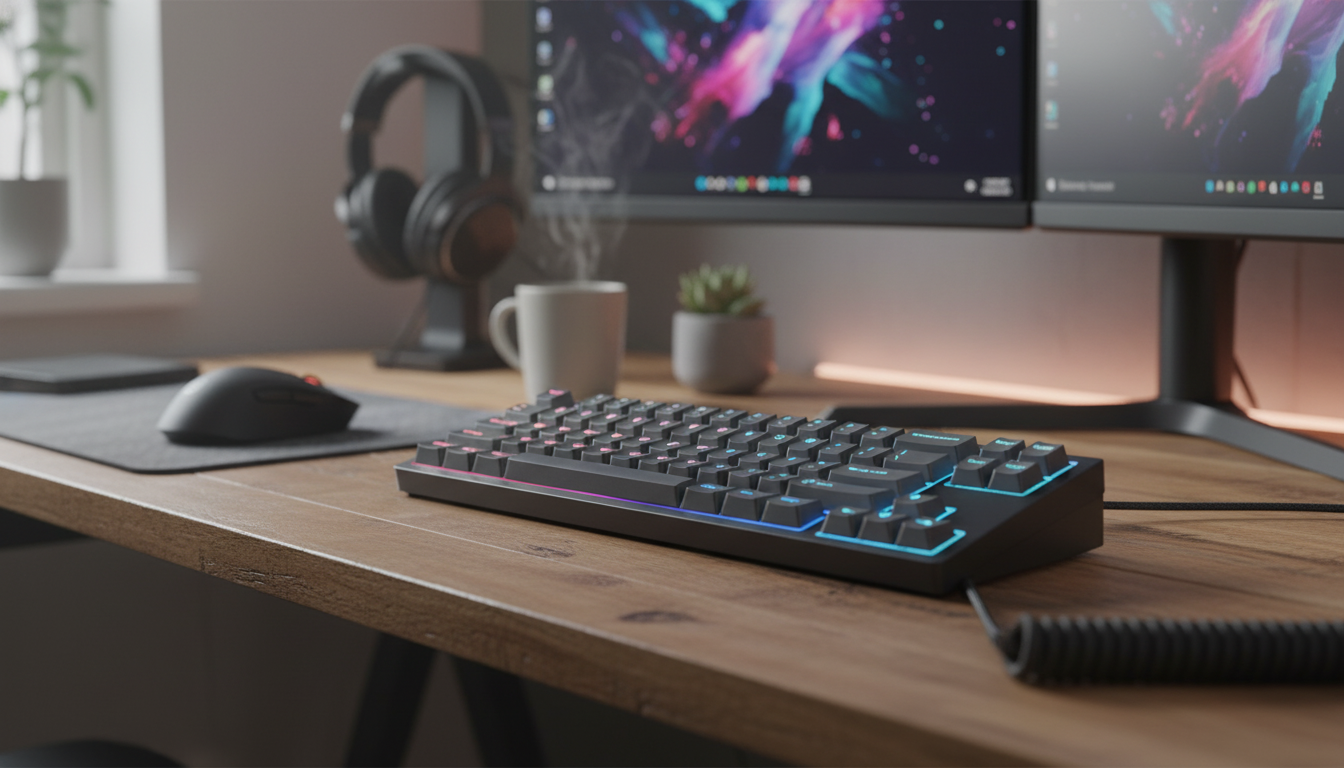
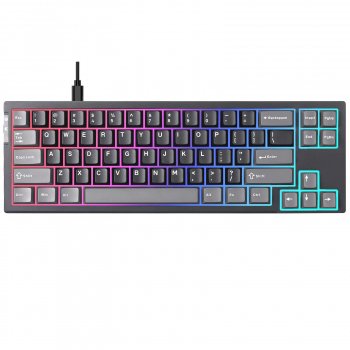
Rapid Trigger 68-Key Hall Effect Wired Gaming Keyboard with RGB Backlight
A compact 68-key layout paired with Hall effect sensing and rapid trigger behavior is built for fast resets, consistent actuation, and precise control in competitive play. This wired keyboard adds adjustable feel through magnetic detection and finishes the setup with vivid RGB backlighting for both style and visibility.
What Makes Hall Effect + Rapid Trigger Different
Traditional mechanical switches rely on physical contacts that close a circuit at a set actuation point, then reopen at a fixed reset point. Hall effect keyboards work differently: they use magnetic sensing to measure travel, which can stay consistent over time because the switch isn’t dependent on metal contacts touching.
- Hall effect switches use magnetic sensing instead of a physical electrical contact, measuring key travel with high consistency over time.
- Rapid trigger behavior allows keys to reset based on travel distance rather than a fixed mechanical reset point, helping with quicker repeated inputs.
- Analog-style detection (where supported in software) can enable finer control over when a key actuates and when it releases.
- Wired connectivity prioritizes stable polling and avoids wireless interference for latency-sensitive games.
For a deeper explanation of rapid trigger behavior and why travel-based reset matters in fast input scenarios, see Wooting’s Rapid Trigger overview. For general background on how USB keyboards communicate as Human Interface Devices, USB.org’s HID resources are a solid reference.
68-Key Layout: Space-Saving Without Feeling Cramped
A 68-key board is designed to keep the essentials close while clearing room where it matters most: mouse space. By trimming less-used keys and relying on function layers for secondary commands, the layout stays quick to learn and efficient in motion-heavy games.
- A 68-key compact layout frees desk space for wider mouse movement while keeping core keys close for faster reach.
- Common gaming essentials remain accessible, while less-used navigation keys are typically handled via function layers.
- Ideal for small desks, LAN setups, and minimalist workstations that still need dedicated arrow-key access (layout-dependent).
- Compact boards can reduce shoulder strain by allowing a more centered mouse position.
If desk space is limited, a compact wired board can also simplify cable management—one consistent connection, no charging cycles, and fewer variables during long sessions.
Performance Features to Look For in Rapid-Reset Play
The biggest advantage of a Hall effect rapid trigger keyboard is control over timing. Instead of accepting a one-size-fits-all actuation and reset point, you can often tune how sensitive movement and utility keys feel, helping match your inputs to your game and your technique.
- Adjustable actuation: set how far a key must travel before registering an input to tailor responsiveness to playstyle.
- Adjustable reset distance: rapid trigger shines in strafing, rhythm-like tapping, and repeated movement corrections.
- Consistency across keys: magnetic sensing can help maintain uniform response and avoid chatter typical of worn contacts.
- Reliable firmware/software: stable profiles and onboard memory support can keep settings consistent between systems.
| Feature | What it changes | Best for |
|---|---|---|
| Rapid trigger reset | Resets based on travel, not a fixed point | Fast counter-strafing, repeated movement taps |
| Adjustable actuation | Sets how quickly a press registers | Tuning for lighter or heavier touch |
| Wired connection | Reduces interference and battery variables | Competitive play, consistent latency |
| RGB backlight | Visibility and customization | Dark rooms, matching a setup theme |
RGB Backlighting: Practical Use, Not Just Looks
RGB can be a legitimate quality-of-life feature when it’s used intentionally. The right lighting setup improves visibility, helps reinforce muscle memory for complex binds, and keeps the board readable during late-night sessions without blasting a room light.
- Per-key or zone lighting (implementation-dependent) can improve key visibility in low light.
- Profiles can be used to highlight important binds (movement, abilities, push-to-talk) for quicker recognition.
- Brightness and effect controls help balance aesthetics with distraction-free play.
- If the keyboard includes onboard lighting memory, effects can persist without software running.
A smart approach is to set a calmer base color for general use, then apply brighter accents for critical keys (movement cluster, reload, melee, or utility keys). That keeps the board readable without turning every key into a distraction.
Comfort, Build, and Everyday Use
Speed features matter most when the keyboard is comfortable enough to use for hours. Hall effect boards often feel smooth and consistent, and small setup choices can make that feel even better over time.
Who This Keyboard Fits Best
Rapid Trigger 68-Key Hall Effect Wired Gaming Keyboard with RGB Backlight: At-a-Glance
In-Stock Picks
- Rapid Trigger 68-Key Hall Effect Wired Gaming Keyboard with RGB Backlight ($102.17)
- Stainless Steel Non-Stick Rolling Pin Set for Baking & Kitchen Use ($25.51)
- Elegant Cork Stopper Glass Storage Jar – Transparent Food & Tea Container ($7.67)
FAQ
What is rapid trigger on a keyboard?
Rapid trigger lets a key reset based on how far it moves back up, rather than waiting for a fixed mechanical reset point. That travel-based reset can make repeated taps and quick corrections register sooner, especially on movement keys.
Are Hall effect keyboards better than mechanical switches for gaming?
Hall effect sensing can deliver consistent detection and, on many models, adjustable actuation and reset behavior that’s useful for competitive play. Whether it feels better depends on the games you play and how much you value tuning versus a traditional mechanical feel.
Does a wired gaming keyboard reduce input delay?
A wired keyboard avoids wireless interference and battery-related power saving, which can make performance more consistent. Real-world latency still depends on the keyboard’s controller, firmware, and polling behavior, but wired is typically the most stable option.













Leave a comment