

Amphibious 4WD RC Car for Puddles, Grass & Pools
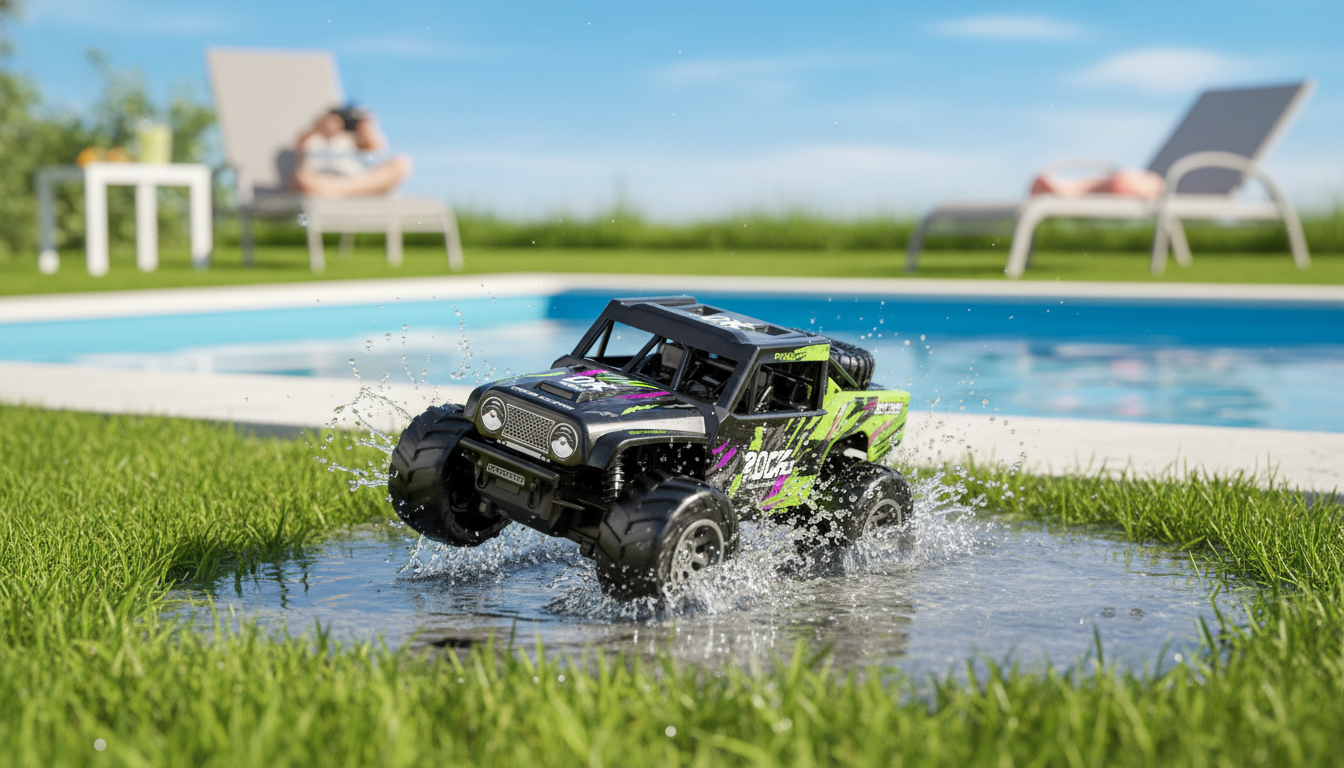
Amphibious 4WD Waterproof Remote Control Car for Land and Water Play
Built for puddles, wet grass, and shallow water runs, this amphibious 4WD remote control car brings the fun of an RC truck and a mini watercraft into one rugged toy. The sealed body and grippy drivetrain make it a strong pick for outdoor play where regular RC cars usually have to stop. For more guidance, see Water Proof Rc Car | rc-car.org.
What Makes It Amphibious
An amphibious RC car is designed to keep moving when the terrain changes from dry ground to wet patches and into calm, shallow water—without requiring any part swaps or mode changes. For further reading, see [PDF] Development of Amphibious Water Sampling Rover for Mosquito ….
- Designed to travel on both land and water without needing part swaps
- Water-resistant construction helps protect internal electronics during splashes and brief water runs
- 4WD traction supports transitions from wet ground to shallow water edges
- Body shape and wheel design aid forward movement on the water surface
For shoppers comparing “waterproof” claims, it helps to know that many consumer products use ingress protection concepts (often shortened as IP). The IEC overview explains how IP ratings relate to dust and water exposure levels: IEC 60529 Ingress Protection (IP) ratings overview.
Quick Look: Features and Best Uses
This style of RC vehicle is at its best when the environment is messy but manageable—think backyard puddles after a rain, damp lawns, or gentle shoreline water. It’s not meant to be treated like a full-on submarine or a surf toy.
- Best for: puddles, wet lawns, beach shallows, pool play (supervised), and muddy paths
- Not for: deep water, fast currents, saltwater without thorough rinse, or leaving submerged
- A solid fit for kids’ outdoor play, casual RC hobby starters, and gift occasions
Feature-to-Use Guide
| Feature | Why it matters | Great for |
|---|---|---|
| Amphibious design | Keeps play going across wet and dry terrain | Puddles, shorelines, pool edge runs |
| 4WD drivetrain | Improves grip and control on slippery surfaces | Wet grass, mud, small inclines |
| Waterproof body (splash-ready) | Helps protect electronics during water play | Shallow water cruising, rainy-day outdoors |
| Remote control handling | Steering and throttle control from a distance | Driveway courses, backyard obstacles |
Performance on Land vs. Water
Expect different “feel” depending on where you’re driving. Land performance is typically more responsive, while water travel is more about steady progress than quick turns.
- On land: expect better speed, sharper turns, and easier obstacle handling
- On water: steadier, slower movement is typical; wide turns help maintain control
- Transition tips: approach water gradually to avoid sudden nose dips; keep momentum when exiting onto wet banks
- Surface matters: calm water performs better than choppy water
If the car bogs down at the waterline, it usually helps to reduce steering input, point the nose straight, and let the wheels “paddle” forward before attempting a turn. When climbing out of water onto slick ground, gentle throttle often gets better traction than a sudden burst.
Waterproofing Notes and Safe Play Boundaries
Many toy listings use “waterproof” as a practical term, but most RC vehicles are best treated as splash-resistant and short-session water-capable rather than safe for long submersion.
- “Waterproof” often means resistant to splashes and short water sessions; avoid extended submersion
- After water use: dry the exterior, inspect for debris around wheels, and allow the battery area to air out
- Avoid saltwater when possible; if used, rinse with fresh water and dry thoroughly to reduce corrosion risk
- Keep hair, strings, and seaweed away from rotating wheels to prevent jams
For families buying toys for kids, it’s also worth being aware of general toy safety expectations and labeling practices. An overview of the toy safety standard can be found here: ASTM F963 Consumer Safety Specification for Toy Safety (overview).
Because this is a radio-controlled product, the remote/control system may be subject to radio device authorization requirements depending on the market. For reference, the FCC provides device authorization information here: FCC Equipment Authorization (radio devices) search and info.
Battery, Charging, and Run-Time Habits
Good battery habits make a bigger difference than most people expect—especially when play involves water, where wet surfaces can trap heat and grime.
- Charge on a non-flammable surface and follow the included charger instructions
- Let the car cool before recharging after a long run to help battery longevity
- For longer play sessions, consider a second compatible battery (if available for the model)
- Store in a dry place; avoid leaving batteries in extreme heat or freezing conditions
If run time starts to feel shorter than usual, check for drivetrain drag (mud packed into wheel wells), wrapped debris on axles, or a battery that isn’t reaching a full charge.
Who It’s Best For
This type of RC car shines for casual outdoor fun—especially when the yard or park is too wet for typical RC trucks.
Care and Maintenance Checklist
Amphibious 4WD Waterproof Remote Control Car: Price and Availability
The Amphibious 4WD Waterproof Remote Control Car is listed at $45.51 (USD). The stock indicator shows high availability at the time of listing. Check the product page for the latest pricing, shipping options, and any updated specifications.
More In-Stock Picks to Consider
- Stainless Steel Non-Stick Rolling Pin Set for Baking & Kitchen Use
- Beautiful Stainless Steel Shell Spoon – Elegant Kitchen Ladle Set
- Elegant Cork Stopper Glass Storage Jar – Transparent Food & Tea Container
FAQ
Can the car be used in a swimming pool?
Yes for supervised surface driving in calm water; avoid deep areas, drains, and extended submersion, and dry the car afterward.
Is it safe to use in saltwater at the beach?
Saltwater can speed up corrosion; if used, keep sessions short, rinse with fresh water afterward, and dry thoroughly.
What should be done if the wheels stop turning after water play?
Power off, remove debris (seaweed/hair/sand), dry the car, and check that the battery is charged before testing again.













Leave a comment