

Calm & Confident: Quick Stress Relief for Women
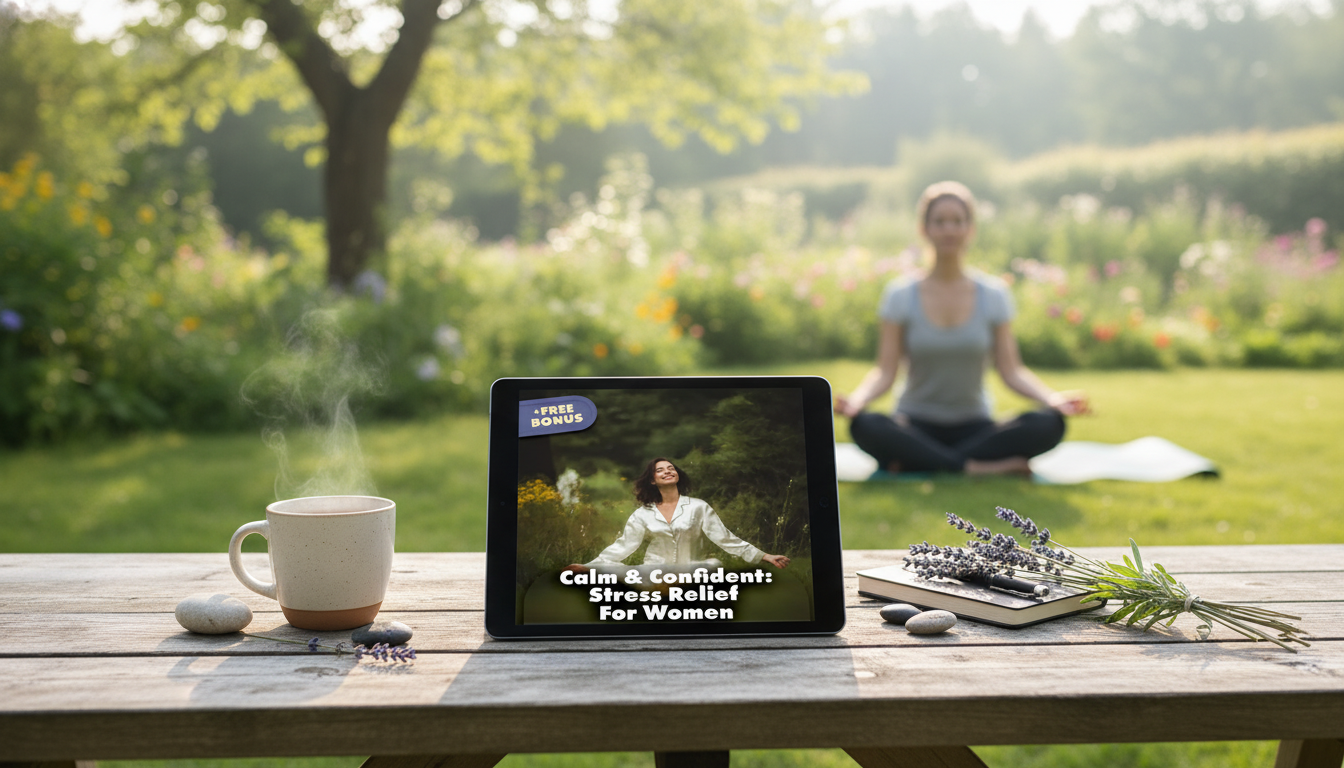
Calm & Confident: A Woman’s Guide to Relieving Stress and Restoring Balance
Stress can show up as racing thoughts, fatigue, irritability, tension, and the sense of being “on” all the time. Calm & Confident is a practical digital guide designed to help build steadier days through simple mindfulness, grounding, and self-care routines that fit real schedules. The goal is not perfection—it’s a repeatable approach to feeling more centered, capable, and present.
When stress stops being “normal”
A busy season is one thing. But when stress becomes your default setting, your body and mind usually start sending clearer signals.
- Common signs: disrupted sleep, muscle tightness, headaches, a short temper, brain fog, emotional eating, procrastination, or feeling emotionally numb.
- Why it can feel harder for women: the invisible workload, caregiving roles, emotional labor, social expectations, and limited recovery time can add up—especially when there’s little space to reset.
- What “restoring balance” can mean: fewer stress spikes, faster recovery after hard moments, clearer boundaries, and more consistent energy across the day.
Quick check-in (2 minutes): Write down your top 3 stress triggers, top 3 body signals (tight chest, jaw clenching, shallow breathing, etc.), and top 3 things that help—even a little. This becomes your personal “map” for what to watch and what to reach for first.
A calmer nervous system in minutes: quick resets that actually fit
Fast relief doesn’t have to be complicated. The point of a “reset” is to signal safety to your nervous system and interrupt the stress loop before it gathers momentum.
- 60–90 second grounding: Name 5 things you see, 4 things you feel, 3 you hear, 2 you smell, and 1 you taste.
- Breath patterns for downshifting: Extend the exhale to encourage a calmer state. Try inhale for 4, exhale for 6, repeating 5 times.
- Tension release: Unclench your jaw, drop shoulders down and back, soften your belly, and rest your tongue gently on the roof of your mouth.
- Micro-breaks that count: Step outside for 60 seconds, drink water slowly, or do one gentle stretch between tasks.
- Reduce “activation stacking”: Avoid piling caffeine, screens, and urgent conversations back-to-back without a pause.
For a clear overview of how stress affects the body, the American Psychological Association’s guide is a helpful reference.
Build a simple daily rhythm (morning, midday, evening)
Consistency beats intensity. A simple rhythm creates predictability—something the nervous system tends to respond to well.
- Morning: Choose one anchor habit (2–5 minutes) to start steady—breathing, a short journaling prompt, or intention setting.
- Midday: Interrupt the stress loop with a short reset before returning to work or caregiving.
- Evening: Create a predictable wind-down that supports sleep (light, temperature, and screen timing matter).
- Minimum viable routines: Design a “tiny” version for busy days and a fuller version for open days.
- Track what works without judgment: Note mood, energy, and sleep quality for 7 days to spot patterns.
Quick routine menu for different kinds of days
| Time of day | 2-minute option | 10-minute option | When it helps most |
|---|---|---|---|
| Morning | Three slow exhales + one intention | Breathing + short journal prompt + stretch | Rushed starts, anxious thoughts |
| Midday | Stand, sip water, look at distance for 30 seconds | Walk + grounding exercise + protein snack | Energy dips, overwhelm, irritability |
| Evening | Dim lights + 5 deep breaths | Screen-off wind-down + gentle stretch + gratitude note | Restlessness, trouble falling asleep |
Mindfulness without pressure: staying present in real life
Mindfulness isn’t about having a blank mind; it’s practicing the return. Every time your attention wanders and you bring it back, that’s progress.
If you want an evidence-based starting point for stress basics, the National Institute of Mental Health overview offers a practical snapshot.
Boundaries and energy: protecting what you need to feel balanced
Using Calm & Confident as a personal self-care guide
- Digital download convenience: keep Calm & Confident: A Woman’s Guide to Relieving Stress and Restoring Balance (digital download) on your phone or tablet for quick reference.
- Suggested approach: start with one routine (morning or evening) for a week before adding more.
- Make it personal: choose practices that match your lifestyle—busy workdays, parenting schedules, or caregiving responsibilities.
- Set a gentle goal: more calm moments, faster recovery, and a clearer sense of control—not constant calm.
- Pair with supportive habits: hydration, balanced meals, and consistent sleep routines can make stress tools work better.
Small environmental cues can also reinforce your wind-down: slipping into a cozy layer like the Women’s Abstract Print Loose Hoodie or creating a soothing “evening station” with a tidy surface and a simple container such as the Modern Glass Storage Jar with Golden Butterfly – Elegant Home Decor to hold tea bags, sleep accessories, or notes to yourself.
When extra support is the most self-caring choice
For additional practical strategies, Mayo Clinic’s stress management basics is a useful, grounded resource.
FAQ
How fast can stress relief practices make a difference?
Many people notice small shifts within minutes from breathing or grounding, especially when stress is spiking. Bigger changes typically come from consistency—think daily repetition over about 2–4 weeks, even if the routines are short.
Is this guide suitable for beginners to mindfulness?
Yes. The practices are simple, flexible, and designed to work without special equipment, with quick options for busy days and a low-pressure approach to attention and breath.
What do I need to use a digital self-care guide?
You only need access to a phone, tablet, or computer. Saving the file locally, bookmarking key sections, and setting a reminder can make it easier to build a steady routine.














Leave a comment