

3-Speed Record Player with Speakers & Headphone Jack
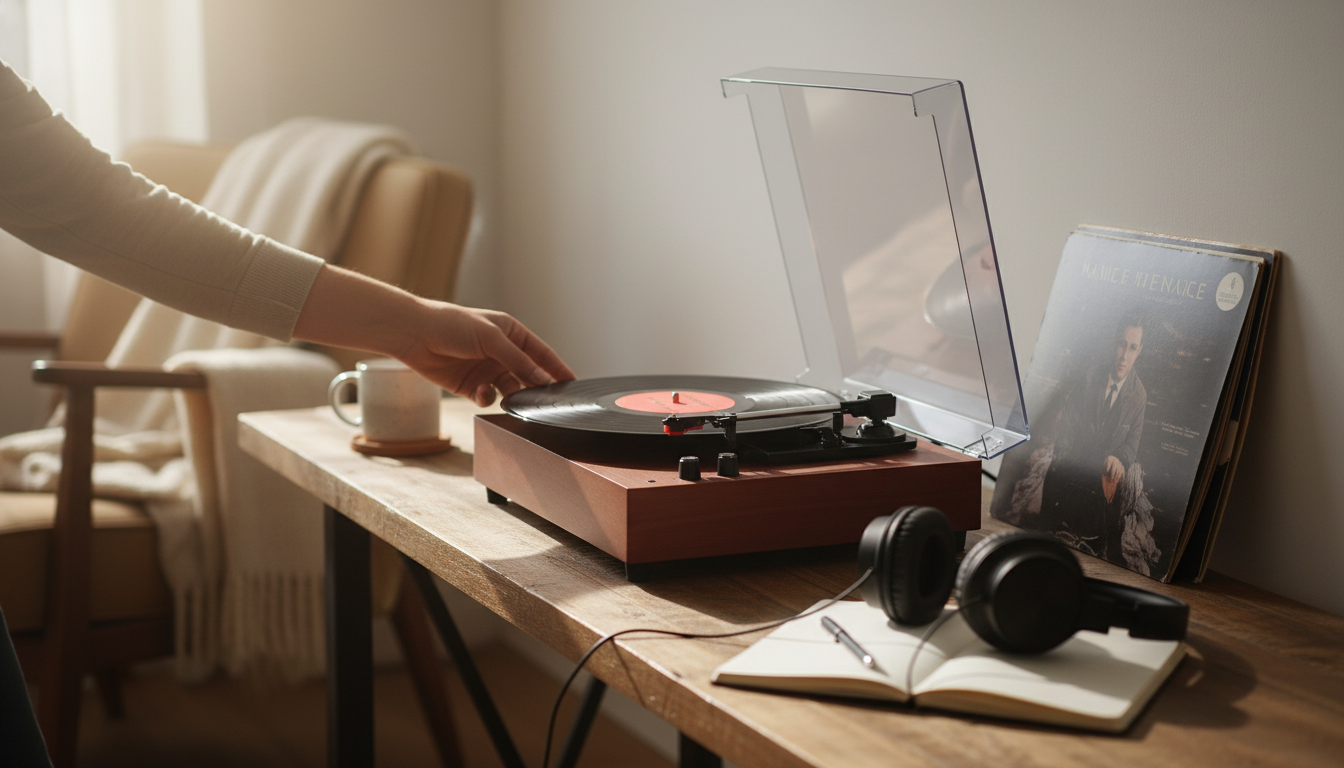
A simple, all-in-one way to enjoy vinyl at home
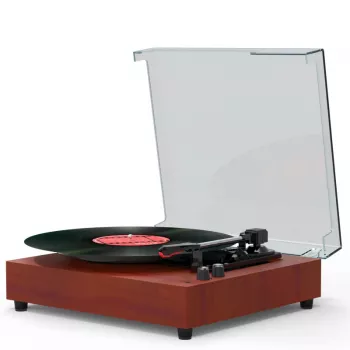
If you want to play records without building a full stereo setup, a 3-speed record player with built-in speakers keeps things easy: plug it in, pick your speed, and enjoy. This style of turntable is designed for everyday listening in smaller spaces, with onboard speakers for quick playback and a headphone jack for quieter sessions. A standout detail here is the Audio-Technica stylus, which can deliver clearer tracking and less groove wear than many basic generic needles—especially when it’s kept clean and replaced on time.
What this record player is designed to do
- Play common vinyl formats at 33 1/3, 45, and 78 RPM for broad record compatibility.
- Provide instant sound through built-in speakers for a space-saving setup.
- Enable private listening through the headphone jack, no external speakers required.
- Use an Audio-Technica stylus for more consistent groove tracking than entry-level generic options.
If you’re shopping for a straightforward unit that works for casual listening, bedrooms, dorms, offices, or a gift, the 3-Speed Vinyl Record Player with Built-in Speakers, Headphone Jack, and Audio-Technica Stylus is built around that “set it up and play” idea while still adding a meaningful stylus upgrade.
Key features that matter day to day
- 3-speed selector: Quick switching between LPs, singles, and 78s (where your cartridge/stylus supports it).
- Built-in speakers: Convenient near-field listening without an external amp or speaker pair.
- Headphone jack: Useful for late-night playback and shared living spaces.
- Audio-Technica stylus: Better detail and lower distortion when aligned and maintained.
- Compact footprint: Easier to place than a full receiver-and-speaker stack.
Speeds explained: 33 1/3, 45, and 78 RPM
Record speed isn’t just about pitch—it also affects how the stylus sits and moves in the groove. Choosing the correct speed helps your records sound right and can reduce unnecessary wear.
- 33 1/3 RPM: The standard speed for most 12-inch LP albums.
- 45 RPM: Common for 7-inch singles and sometimes used for 12-inch audiophile pressings.
- 78 RPM: Typically reserved for older shellac-era discs. These often require a stylus sized specifically for 78s to avoid damaging the record.
Before dropping the needle, check the center label or sleeve for the intended speed. Playing a 45 at 33 (or vice versa) is an instant “something’s off” moment, and forcing a modern stylus on the wrong record type can be worse than a simple pitch mistake.
Built-in speakers vs. external audio
Built-in speakers prioritize convenience: fewer boxes, fewer cables, and fast setup. That said, small onboard speakers usually won’t deliver the same bass depth or stereo width as a separate pair of speakers placed farther apart.
- Placement matters: Use a stable, level surface away from foot traffic to reduce vibration that can cause skips.
- Avoid “echo corners”: When possible, keep the player away from corners and hard reflective surfaces that can make sound feel harsher.
- Headphones can be the upgrade: A good set of headphones often reveals more detail than built-ins and bypasses room acoustics entirely.
Headphone jack listening: what to expect
Headphone listening is ideal for apartments, dorm rooms, and nighttime sessions because you can keep volume low while still hearing plenty of detail. For the best experience, use comfortable, efficient headphones so you don’t have to crank the volume.
- Start at low volume before placing the needle to avoid sudden loud transients.
- If sound seems thin or noisy, clean dust off the record and check the stylus tip for buildup.
- If one playback method sounds off, compare: try the built-in speakers, then headphones, to narrow down whether it’s room vibration or a stylus/record issue.
Audio-Technica stylus: why it’s important
For brand guidance on stylus handling and general best practices, see Audio-Technica’s resources. For broader archival-style care guidance, the Library of Congress preservation section is also a solid reference.
Setup and care for better sound and longer record life
Keeping small accessories in one place helps you stay consistent. A decorative container like the Modern Glass Storage Jar with Golden Butterfly – Elegant Home Decor can be a handy spot for a record brush, spare sleeves, or other lightweight listening-room odds and ends.
Quick spec snapshot
| Feature | What It Means | Why It Helps |
|---|---|---|
| 3 speeds (33 1/3, 45, 78 RPM) | Supports common record playback rates | Prevents wrong-pitch playback and expands record compatibility |
| Built-in speakers | Sound without external equipment | Fast setup for small spaces and casual listening |
| Headphone jack | Private listening option | Better detail at low volumes; ideal for shared spaces |
| Audio-Technica stylus | Recognized stylus brand and consistency | Improved tracking and reduced distortion when maintained |
Common issues and simple fixes
Who this player fits best
For a cozy, low-key listening setup that feels intentional (especially in cooler months), pairing the ritual of vinyl with something comfortable like the Women’s Abstract Print Loose Hoodie can make those longer album sides even more relaxing.
FAQ
What is the 16 speed on a record player?
16 RPM was mainly used for spoken-word and transcription formats and is uncommon today. Most modern record collections won’t need 16 RPM, which is why many contemporary turntables don’t include it.
How many speeds should a record player have?
Most collections are covered by 33 1/3 and 45 RPM. A third speed (78 RPM) adds compatibility for older records, but many 78s require a dedicated 78 stylus to avoid damaging the grooves.
What size is a 12-inch vinyl record sleeve?
A typical 12-inch record sleeve is about 12.3 inches square (dimensions vary slightly). If you use protective outer sleeves, it’s smart to allow extra clearance, often around 12.75 inches square.












Leave a comment