

Is Opal a Stone? Types, Play-of-Color & Ring Facts

Is opal a stone?
Yes. Opal is a gemstone, which means it’s a type of stone used for jewelry. Unlike many gems that are crystalline minerals, opal is classified as a mineraloid because it doesn’t have a regular crystal structure. It forms from silica-rich water that seeps into rock cracks and cavities, then hardens over time into a hydrated silica material.
What makes opal especially recognizable as a stone is its “play-of-color”—the shifting flashes of rainbow-like color seen in many natural opals. This effect comes from tiny silica spheres inside the opal that diffract light. Not every opal shows strong play-of-color, though; common opal can look milky, translucent, or uniformly colored without the same light show.
What kind of stone is opal?
Opal is generally grouped as a precious or semi-precious gemstone depending on the quality and the presence of play-of-color. It’s also considered an organic-style gem in the sense that its beauty is strongly tied to water content and internal structure rather than a traditional crystal lattice. Because opal contains water, it can be more sensitive to harsh drying, rapid temperature changes, and rough handling than stones like sapphire or diamond.
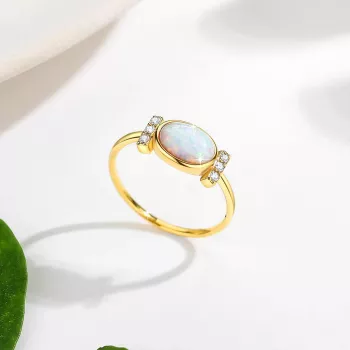
In jewelry, opals are commonly cut into cabochons (smooth, rounded tops) to highlight their color and patterns. Opal can be set in rings, earrings, and pendants, often paired with warm metals like 14k gold for a classic look.
Is opal “real” if it’s in a ring?
An opal in a ring can be natural, lab-created, doublet/triplet, or imitation—each is still “a stone,” but the value and care needs differ. Natural opal is formed in nature; lab opal is made under controlled conditions with a similar look; doublets and triplets layer opal with backing and/or a protective cap; imitations use other materials to mimic the appearance.
To see how opal is featured in fine jewelry and what to expect from a classic setting, visit this guide to a 14k gold oval opal ring.
FAQ
Is opal a good stone for everyday wear?
Opal can be worn daily, but it’s best treated gently. Choose protective settings, avoid hard impacts, and keep it away from extreme heat, harsh chemicals, and prolonged dryness to help preserve its appearance.












Leave a comment