

Round LED Smart Bathroom Mirror: 3-Color + Anti-Fog
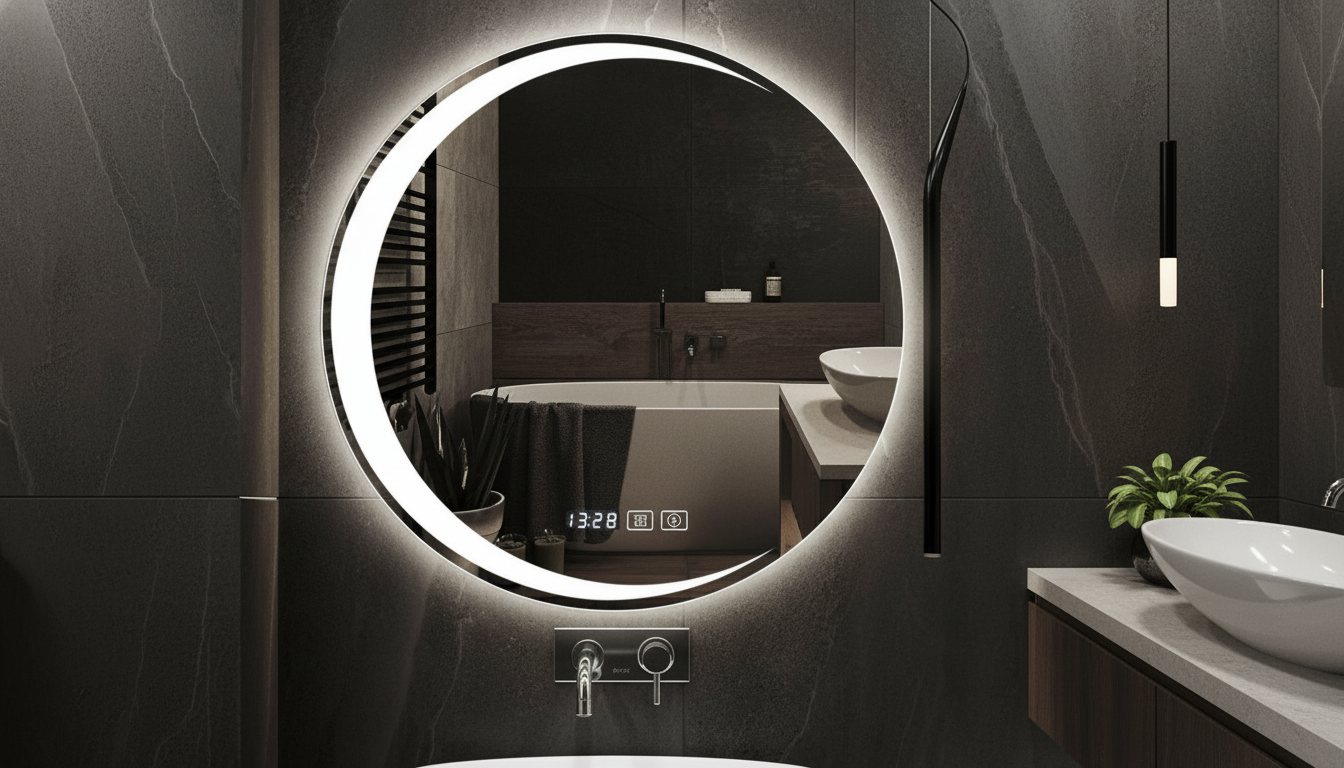
A round frameless smart bathroom mirror brings together clean, modern styling and functional upgrades that matter every day: bright, adjustable LED lighting, easy touch controls, and an anti-fog feature that keeps a clear viewing area after hot showers. If you’re considering a wall-mounted LED-lit round mirror with three color temperatures, the details—like light diffusion, mounting height, and power planning—make the difference between a mirror that simply looks good and one that genuinely improves your routine.
What Makes a Round Frameless Smart Mirror Different
Round frameless smart mirrors stand out because they remove visual clutter while adding built-in lighting and convenience features. The frameless edge keeps sightlines clean, so the mirror pairs well with modern, minimalist, and spa-style bathrooms without competing with statement tile or hardware.
Integrated LEDs reduce reliance on overhead fixtures for grooming tasks like shaving, skincare, and makeup, where shadows can be frustrating. Most models use touch-style controls, so switching color modes or dimming doesn’t require adding wall switches or rewiring the bathroom layout. And because the round shape softens hard lines from vanities, tile grids, and rectangular cabinets, it can make the entire wall feel more balanced.
Lighting Modes: 3-Color Settings for Morning-to-Night Use
Three-color lighting is designed to match different tasks and times of day. Warm light tends to feel calmer and more flattering at night, neutral light is a practical everyday setting for realistic skin tone, and cool light can feel crisper for detail work.
Beyond color temperature, pay attention to how evenly the light is distributed. A well-designed mirror uses diffusion to avoid “hot spots” around the perimeter that can cast odd shadows on the face, especially under the eyes and chin.
| Light tone | Best for | What to watch for |
|---|---|---|
| Warm | Night routines, relaxing ambiance, softer reflections | Can feel dim in larger bathrooms without additional lighting |
| Neutral | Daily grooming, balanced color appearance | Ensure the mirror provides even illumination across the face |
| Cool | Precision tasks, brighter perceived light | May feel harsh if used as the only light source at night |
LED lighting is also a practical efficiency upgrade compared to many older bulbs. For a quick overview of how LEDs work and why they’re widely used, the U.S. Department of Energy’s guide to LED lighting basics is a helpful reference.
Anti-Fog Function: When It Helps (and When It Doesn’t)
Anti-fog mirrors typically use a warming pad on the back of the glass to reduce condensation. Instead of blasting heat, the pad gently warms a section of the mirror so steam is less likely to settle there. For best performance, turn the anti-fog feature on a few minutes before showering or right as the shower starts.
It’s important to set realistic expectations: anti-fog usually clears a central viewing zone. In very steamy bathrooms, the edges may still fog, especially if the room is small or the ventilation fan is weak. Good airflow helps both visibility and long-term moisture management; the EPA’s guidance on ventilation and moisture control explains why consistent ventilation matters in humid spaces.
Controls and Everyday Usability
Touch controls are the main “smart” element on many frameless LED mirrors. The best setups are responsive even with wet hands, and the control placement should be easy to reach—often near the lower edge so it’s accessible without stretching.
If a mirror includes a memory function, it can restore the last-used brightness and color mode, which makes mornings feel simpler (no daily fiddling). Dimming is often more important than maximum brightness, especially in smaller bathrooms where strong perimeter LEDs can cause glare. A clear, consistent on/off response also helps avoid accidental activation when multiple people share the space.
How to Choose the Right Size and Placement
Choosing the right diameter and mount height prevents the most common “looks great online, feels off in real life” issue. A widely used rule of thumb is to select a mirror slightly narrower than the vanity to maintain visual balance and keep edges from feeling crowded.
Center the mirror to the sink and faucet, then confirm the top height is comfortable for the tallest primary user. Also check side clearance: round mirrors can bump into nearby sconces, cabinets, or shelving because their widest point extends left and right more than many expect.
If the mirror will act as a primary task light, prioritize placement that evenly lights the face. Overhead lights can create shadows under the brow and chin; a well-positioned LED mirror can reduce those shadows when the diffusion is even.
How to Choose: A Practical Pre-Purchase Checklist
When inventory varies or you’re comparing multiple models, a quick checklist keeps the decision focused on long-term usability.
Wall Mounting and Power Considerations
Care, Cleaning, and Longevity
Common Fit Issues to Avoid Before Buying
FAQ
Does the anti-fog feature clear the entire mirror?
Most anti-fog systems warm a specific pad zone, usually a central viewing area, rather than the full glass. Performance improves if you turn it on before showering and use good ventilation, but the edges can still fog in very steamy rooms.
Which light color is best for makeup or shaving?
Neutral light is typically the most reliable for everyday grooming because it balances warmth and clarity. Cool light can help with precision tasks, while warm light is better for nighttime routines; using dimming helps reduce glare.
Can a wall-mounted LED mirror be installed on tile?
Yes—many wall-mounted LED mirrors are installed on tile using the correct drill bit and anchors, with careful measuring before any holes are made. Because bathrooms involve moisture and electricity, follow local safety guidance and keep connections protected.












Leave a comment