

1100W Meat Bandsaw: Adjustable Thickness Cutting Guide
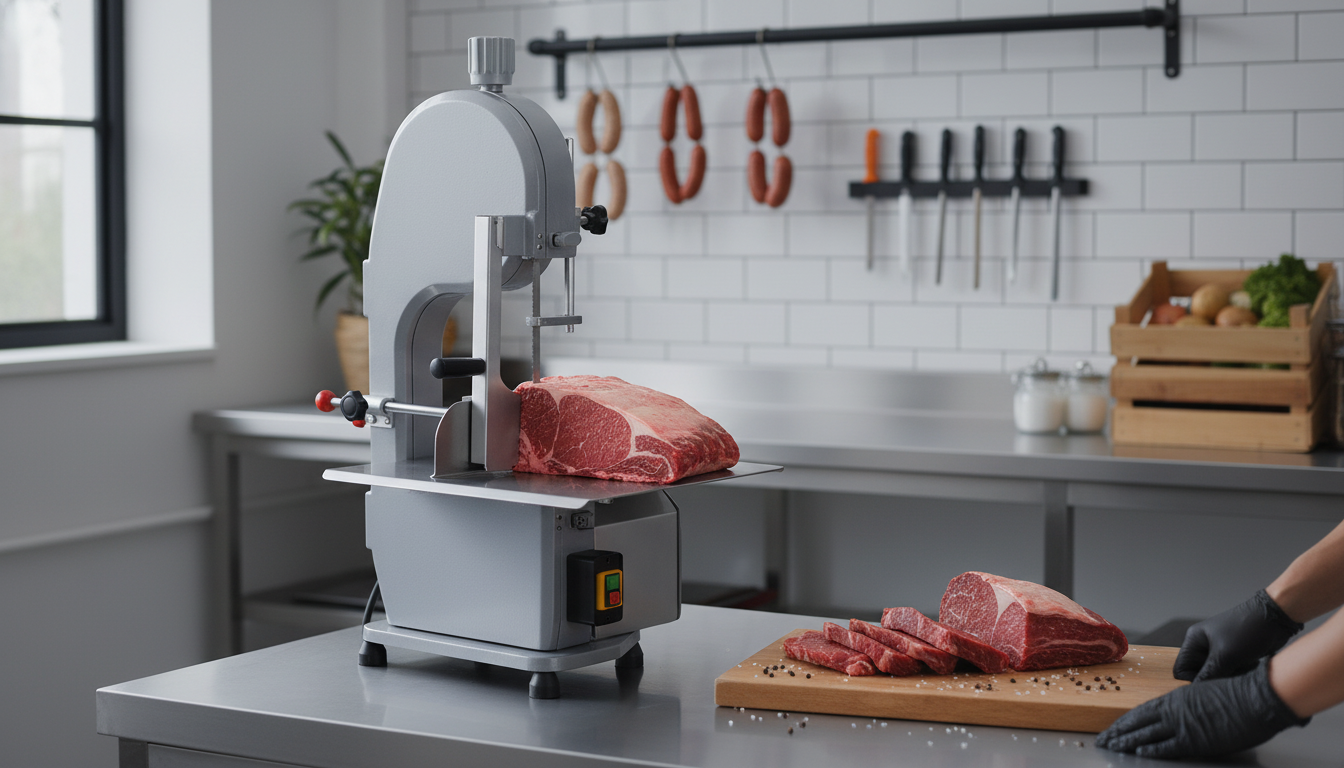
A commercial electric meat bandsaw with adjustable cutting thickness helps portion meat and bone-in cuts quickly and consistently in butcher shops, delis, restaurants, and processing rooms. Adjustable thickness controls aren’t just “nice to have”—they’re the difference between repeatable portions and a day of rework, trim loss, and inconsistent cook results. Below is a practical guide to how thickness adjustment works, which features matter most on a 1100W-class commercial unit, what to check for safety and sanitation, and how to keep performance steady over time.
What adjustable cutting thickness means in daily use
On most commercial meat bandsaws, adjustable thickness is controlled by a fence (or gauge plate) that sets the distance between the blade and the guide surface. Once the fence is set and locked, each pass should produce the same thickness—assuming the blade is sharp, properly tensioned, and guided.
Repeatable settings support uniform steaks, chops, ribs, and frozen portions that cook evenly and reduce trim waste. The practical priority is a clear adjustment scale and a lock that doesn’t creep under load. Extra-wide adjustment range sounds appealing, but a fence that slips even a little can create uneven cuts and increase the chance of binding or blade drift.
Thickness choice also changes how the cut behaves. For bone-in and partially frozen product, thicker settings can reduce blade deflection (less tendency to “snake” as the blade hits changing density). For boneless roasts and portion cuts, finer settings help deliver consistent weights and neat presentation.
Common thickness goals and setup tips
| Cut type | Typical thickness target | Setup tip | Blade note |
|---|---|---|---|
| Boneless steaks/portion cuts | Thin to medium | Lock the fence firmly and feed steadily without forcing | Finer tooth blade helps finish |
| Bone-in chops | Medium | Use a slightly slower feed rate to avoid drift | Coarser tooth spacing reduces binding |
| Ribs/sections | Medium to thick | Keep the product supported flat against the table | Choose a blade suited for bone |
| Frozen blocks | Thick | Allow the saw to work; avoid rapid pushing | Blade designed for frozen cutting lasts longer |
Core features to evaluate on a commercial electric bandsaw
When comparing commercial units in the 1100W range, focus on the parts that protect cut accuracy over long runs—not just headline power. Small design details often show up later as faster blade wear, more drift, or longer cleaning downtime.
Motor power and torque
Higher wattage generally supports steadier cutting through dense product with less stalling. Torque matters when you’re moving from soft muscle into bone, or when a partially frozen piece loads the blade. If the motor bogs down easily, operators tend to push harder, which increases deflection and worsens thickness consistency.
Blade guide stability
Rigid guides help keep the blade from wandering, especially across long cuts like rib sections. Stable guides also help the saw maintain the selected thickness when you’re repeating the same portion size throughout a shift.
Table size and working height
Adequate table support improves accuracy because product stays flat and controlled. Comfortable working height reduces operator fatigue, which in turn helps maintain consistent feed pressure and safer hand positioning during repetitive portioning.
Fence design and lock reliability
A straight, stiff fence with a positive lock is the heart of adjustable thickness. Look for a fence that moves smoothly, locks firmly, and stays square to the blade. If the fence flexes or the lock slips, thickness drift becomes unavoidable.
Tensioning, tracking, and electrical suitability
Accessible tension and tracking controls make it easier to keep the blade running true. Also confirm electrical compatibility with your workspace and expected duty cycle. Commercial cutting often happens in bursts; a saw that’s under-matched to runtime can overheat, trip breakers, or gradually lose performance during peak periods.
Safety and sanitation checks before buying
A meat bandsaw lives at the intersection of sharp tooling and food handling. Safety features and cleanability aren’t optional—both affect day-to-day throughput and inspection readiness.
Guarding and emergency stop access
Look for effective blade guarding that minimizes exposed blade length during cutting. The emergency stop should be easy to reach from the normal operating position, without leaning over the blade path. For general machine safeguarding expectations, reference OSHA’s machine guarding requirements.
Materials, surface finish, and cleanability
Smooth, corrosion-resistant construction helps reduce harborage points and shortens washdown time. Tool-free (or low-tool) disassembly supports more frequent cleaning—important for both hygiene and performance, since debris buildup can affect tracking and guide movement. For retail and foodservice sanitation principles, consult the FDA Food Code and general guidance from USDA FSIS.
Debris control and stability
How to choose the right adjustable-thickness bandsaw for your workload
1) Define the product mix
2) Set portioning requirements
3) Estimate throughput and downtime tolerance
4) Match blade type to use
5) Check footprint and workflow
Operating tips for consistent thickness and smoother cuts
Maintenance checklist to protect accuracy and blade life
FAQ
Can a commercial meat bandsaw cut frozen meat and bone-in cuts?
Many commercial units can handle frozen and bone-in cutting, but results depend on motor power, using the right blade for bone/frozen product, correct tension and tracking, and a controlled feed rate. Expect faster blade wear and prioritize safe handling and stable guarding.
How is cutting thickness adjusted on a meat bandsaw?
Thickness is usually set with a fence or gauge plate that changes the distance between the blade and the guide surface. Lock the setting firmly, make a test cut to confirm repeatability, and keep the fence aligned so portions remain uniform.
What causes a bandsaw to cut uneven thickness or drift?
Common causes include a dull or incorrect blade, improper tension, misaligned fence, worn guides, forcing the feed, or poor product support on the table. Correcting drift typically means replacing or changing the blade, resetting tracking/tension, and checking guide and fence alignment.











Leave a comment