

Instant Wall-Mount Electric Water Heater: LCD Control Guide
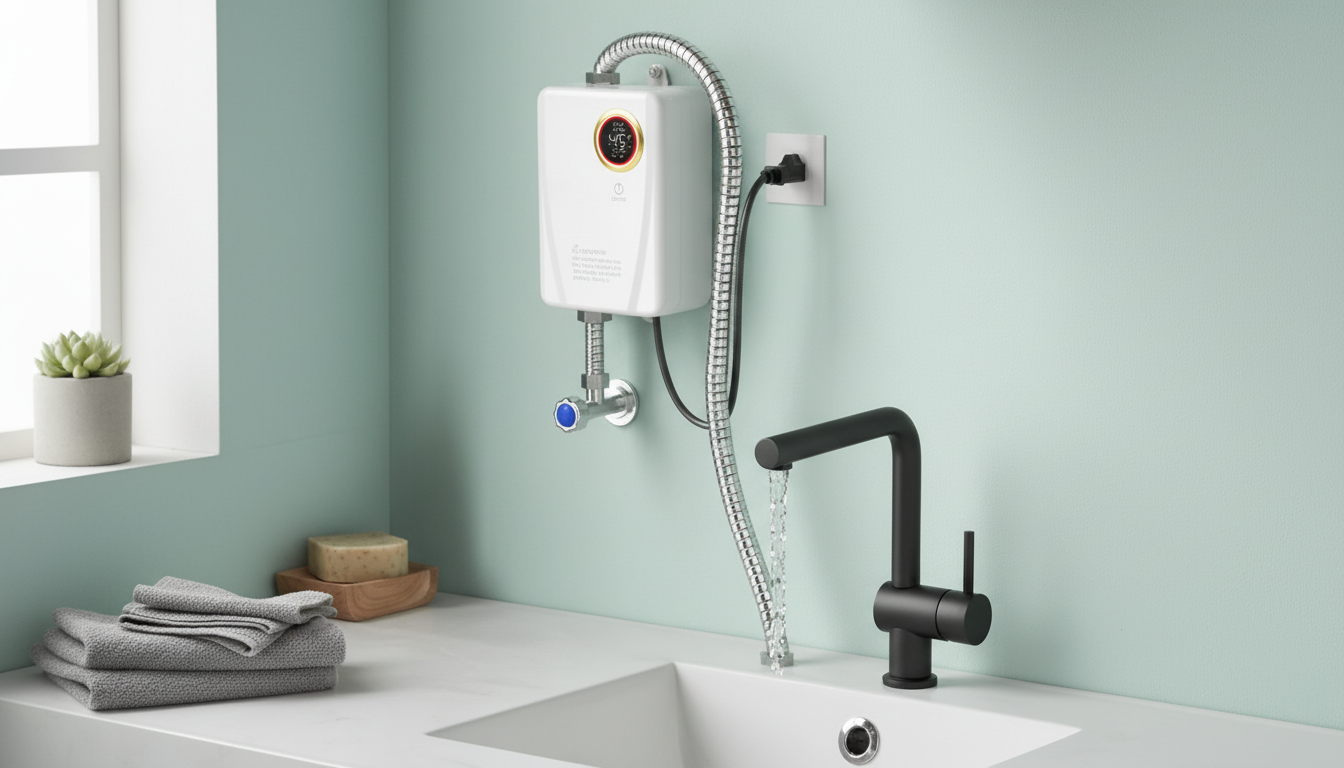
Instant Wall-Mounted Electric Water Heater with LCD Display
An instant wall-mounted electric water heater delivers hot water on demand without a bulky storage tank. With an LCD display for temperature visibility and quick adjustments, it’s designed for compact spaces where consistent, controllable hot water matters—such as bathrooms, sinks, and small households.
What It Is and Where It Fits Best
Unlike traditional tank-style heaters that store and reheat a full reservoir, an instant (tankless) electric unit heats water only when you open the faucet. Because many models mount directly to the wall, they’re especially practical in tight utility areas where every inch counts.
- On-demand electric heating: warms water as it flows, rather than storing it in a tank.
- Wall-mounted format: helps free up floor space and keeps installation tidy.
- LCD display: shows set temperature and operating status for easier control.
- Common use cases: handwashing sinks, bathroom basins, utility sinks, small apartments, and point-of-use hot water needs.
How Instant Electric Heating Works
When a hot-water tap opens, cold water enters the heater and passes over internal electric heating elements. Built-in sensors track flow and temperature so the controls can modulate power and aim for your selected outlet temperature.
- Cold water enters the unit and passes over internal heating elements.
- Sensors and controls regulate power to maintain a target outlet temperature.
- Temperature stability depends on incoming water temperature, flow rate, and electrical capacity.
- LCD controls typically allow quick setpoint changes and simple monitoring.
In real-world use, performance is a balance: higher flow requires more heating power to maintain the same temperature rise. If incoming water is very cold, the unit may still deliver comfortable warm water, but it may need a lower flow rate to reach hotter temperatures.
Key Benefits for Daily Use
For many households, the appeal is simple: hot water where you need it, without dedicating space to a storage tank. A wall-mounted form factor can make a small bathroom or laundry area feel less crowded, and the LCD makes it easier to keep settings consistent.
- Hot water on demand: reduces waiting compared with long pipe runs from a central tank.
- Space-saving: wall placement can suit tight utility areas and small bathrooms.
- Visible control: LCD display makes it easier to confirm temperature settings at a glance.
- Potential energy advantages: avoids standby losses associated with storing hot water in a tank (results vary by use pattern).
For general efficiency guidance on water heating, the U.S. Department of Energy provides a helpful overview: U.S. Department of Energy — Water Heating.
Important Considerations Before Buying
Instant electric heaters can be a great fit, but they’re not “one-size-fits-all.” A quick check of your electrical service, water temperature expectations, and installation location can prevent disappointing performance and avoidable retrofit costs.
- Electrical requirements: instant heaters can draw significant power; confirm breaker size, wire gauge, voltage, and local code compliance.
- Hot water performance: flow rate and temperature rise are linked—higher flow means lower outlet temperature at the same power.
- Incoming water temperature: colder climates require more heating capacity to reach comfortable temperatures.
- Mounting location: keep accessible for service, protect from freezing, and plan for splash/steam exposure if installed near a sink or shower area.
- Water quality: hard water can cause scale; filtration or periodic descaling may be needed depending on local conditions.
For electrical safety and code fundamentals, consult authoritative references such as the NEC overview from NFPA: NFPA — National Electrical Code (NEC) Overview. For third-party safety certification concepts, UL’s resource library is also useful: UL Standards and Safety Certification Information.
At-a-Glance Specs and Checklist
Use the checklist below to compare models and confirm fit for the intended fixture(s). Before shopping, it helps to record your site details (supply voltage, breaker size, wire gauge) and to estimate the hot-water demand at the fixture.
| Item to Confirm | Why It Matters | Your Notes |
|---|---|---|
| Voltage and amperage requirements | Determines compatibility with existing electrical service and safety | — |
| Max power (kW) and supported flow rate | Affects temperature rise and comfort at the tap | — |
| Temperature control type (LCD setpoint, increments) | Improves day-to-day usability and repeatable settings | — |
| Mounting dimensions and clearances | Ensures it fits the wall space and remains serviceable | — |
| Water connection sizes and included fittings | Reduces installation surprises and extra parts runs | — |
| Safety protections (overheat, dry-fire, GFCI needs) | Helps prevent damage and improves safe operation | — |
Installation Notes and Safety
Because these heaters can require dedicated circuits and are often installed near sinks, safety planning matters as much as performance planning.
How to Choose the Right Model for the Space
Care, Maintenance, and Troubleshooting Basics
FAQ
Can an instant electric water heater run a shower?
It depends on the heater’s kW rating, incoming water temperature, and the shower’s flow rate. Many compact wall-mounted units are better suited to a single sink or low-flow use unless they’re specifically sized and wired to support shower demand.
Does an LCD display change performance or just usability?
An LCD primarily improves usability by making temperature settings and operating status easier to see and adjust. Actual heating performance depends on power capacity, flow rate, incoming water temperature, and proper installation.
What electrical setup is typically required for a wall-mounted instant heater?
Requirements vary by model, but it’s important to confirm voltage, breaker size, wire gauge, grounding, and any wet-location protections such as GFCI where required. Follow local code and use qualified professionals when the installation calls for it.











Leave a comment