

Portable Chainsaw Mill Guide: 14–36 in Bars, Adjustable Cuts

Portable Chainsaw Mill for 14″–36″ Bars with Adjustable Thickness
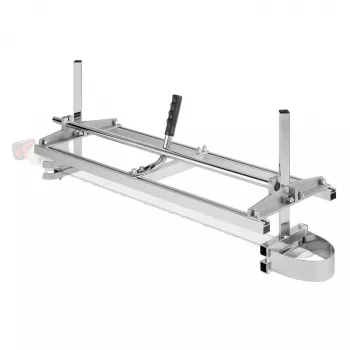
A portable chainsaw mill turns a standard chainsaw into a practical milling setup for converting logs into boards on-site. With bar compatibility spanning 14″ to 36″ and adjustable cut thickness from about 0.2″ up to 11.81″, this style of mill is built for making slabs, planks, and beams for woodworking projects, property maintenance, and small-scale lumber needs—without needing to haul heavy logs to a fixed sawmill.
What a Portable Chainsaw Mill Does
A chainsaw mill is essentially a guided frame that holds the saw steady so each pass stays level and repeatable. Instead of freehanding a long rip cut (which often wanders), the mill’s rails and clamps help keep the bar traveling in a consistent plane.
- Guides the chainsaw in a controlled, level cut so a log can be sliced into consistent boards.
- Helps reduce waste compared with freehand cutting by stabilizing the saw and maintaining a fixed depth.
- Works well for milling at the log site, especially where moving heavy logs to a sawmill isn’t practical.
- Common outputs include live-edge slabs, dimensional boards, and beams for outdoor builds.
Because the mill rides on a reference surface (especially for the first cut), it’s well-suited to turning storm-felled trees and yard logs into usable material—often where the tree lies.
Key Specs and Fit
Before choosing a mill, it helps to separate “bar length compatibility” from “real-world milling capacity.” The bar might be 36 inches, but usable cutting width is always less than the bar length due to the mill frame, clamps, and the space required near the nose of the bar.
- Bar compatibility: designed for chainsaw bars from 14″ to 36″ (confirm your saw’s bar mount and clearance before purchase).
- Adjustable thickness range: approximately 0.2″ to 11.81″ to support thin boards through thick slabs.
- Chain and power pairing: best results come from a sharp ripping chain and sufficient engine power for the bar length being used.
- Plan for cutting width: bar length does not equal maximum board width; usable width is reduced by the mill frame and nose clearance.
Quick Reference: Compatibility and Adjustments
| Feature | What to Look For | Why It Matters |
|---|---|---|
| Bar length range | 14″–36″ | Sets the usable log diameter and practical milling capacity |
| Thickness adjustment | 0.2″–11.81″ | Controls whether the output is boards, planks, or slabs |
| Mounting/clearance | Secure bar clamp and rigid rails | Improves straight cuts and reduces chatter |
| Chain type | Ripping chain recommended | Smoother finish and lower strain during long grain cuts |
| Power match | More power for longer bars | Prevents bogging, overheating, and slow feed rates |
Setting Up for Straight, Repeatable Cuts
The quality of the first cut sets the tone for everything that follows. Once one face is flat, the mill can reference that surface for the next passes. If the first cut is twisted or uneven, every board after it will fight you.
- Create a flat reference for the first cut: attach a straight ladder or rigid guide rail to the log so the mill rides on a true surface.
- Set thickness evenly: measure from the reference face and lock both sides evenly to avoid wedge-shaped boards.
- Support the log: use wedges, cribbing, or stands so the kerf doesn’t pinch the bar during long passes.
- Use steady feed pressure: forcing the saw builds heat, dulls the chain faster, and can introduce waviness.
- Re-check fasteners: vibration can loosen hardware during milling; verify clamps and bolts after the first few passes.
For longer logs, plan your stance and path before starting the cut. A smooth, uninterrupted pass tends to leave a flatter surface than stop-and-go pushing.
How to Choose the Right Portable Chainsaw Mill
With portable mills, the “right” choice depends as much on the chainsaw and the typical log size as it does on the mill itself. Matching the system as a whole reduces frustration and improves the lumber you get at the end of the day.
Safety and Maintenance Essentials
For additional safety guidance, consult resources from OSHA, the CDC/NIOSH, and chainsaw training references from the USDA Forest Service.
Common Results and What to Expect from the Cut
FAQ
Will a mill that fits 14″–36″ bars work with any chainsaw?
No—bar length is only one part of the fit. Confirm that the mill’s bar clamping method matches your bar shape and that there’s enough clearance for the saw body, clutch cover, and handle geometry. Also make sure the saw has adequate power for the bar length and the sustained load of ripping cuts.
How is thickness set accurately on an adjustable chainsaw mill?
Thickness is set by measuring from the reference face and adjusting both sides of the mill to the same value before tightening evenly. It helps to make a short test pass, then re-check settings and fasteners because vibration can shift hardware. A flat, rigid first-cut guide makes the measurements meaningful and repeatable.
Do you need a special chain to mill boards and slabs?
A ripping chain is strongly recommended because it’s designed to cut with the grain more smoothly and with less strain during long passes. A standard crosscut chain can work, but it usually leaves a rougher surface and tends to generate more heat in extended rip cuts.











Leave a comment