

Infinite Space Abyss Night Light: Setup & Placement Tips
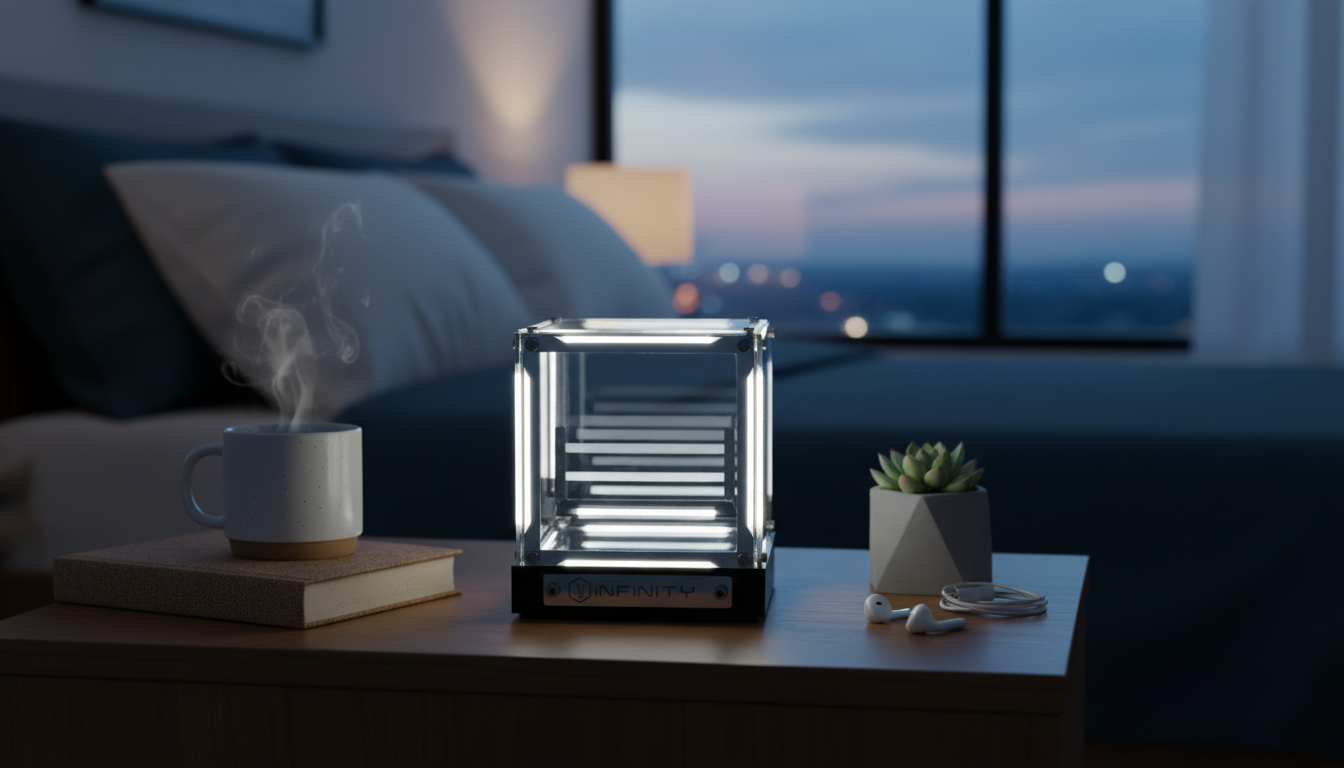
A sculptural night light that creates a depth-illusion “infinite space” effect can transform a shelf, desk, or bedside table into a calm, futuristic focal point. The right setup and placement help the illusion look deeper, reduce glare, and keep the glow comfortable for winding down.
What the “infinite space” effect looks like
The “abyss” look is a visual illusion: the lamp appears to open into a tunnel of light that recedes inward, even though the unit itself stays compact. It’s a layered-reflection effect that can feel like a tiny portal—especially when the surrounding area is dim.
- Creates a tunnel-like depth illusion that appears to recede into the lamp, even though the unit is compact.
- Best experienced from a few steps back or at an angle where reflections and internal layers align.
- Works as ambient lighting rather than a room-filling lamp; ideal as a visual accent.
Where it fits in a room
Because the illusion relies on contrast and controlled reflections, placement matters as much as brightness. Think of it as a “scene-setting” light: it looks most dramatic when it’s not competing with direct sunlight, glossy surfaces, or harsh overhead bulbs.
- Bedside: use a low brightness level for late-night visibility without fully waking up.
- Desk or gaming setup: place slightly off-center to avoid direct glare in the line of sight.
- Entryway or shelf display: position at eye level for the strongest depth impression.
- Kids’ rooms: keep cords tidy and choose a stable surface to prevent tip-overs.
Placement guide for a stronger depth illusion
| Location | Best placement | Why it works | Small caution |
|---|---|---|---|
| Nightstand | Back corner, facing outward | Reduces direct glare while staying visible | Avoid shining directly into the pillow area |
| Desk | Behind the monitor or 30–60 cm to the side | Creates atmosphere without washing out the screen | Keep reflective surfaces (glass) from causing distracting reflections |
| Shelf | Near eye level with a dark backdrop | Increases perceived contrast and depth | Secure it so it can’t slide off edges |
| Hall/entry | On a console table away from direct sun | Depth effect stands out in dimmer spaces | Sunlight can weaken the illusion and fade some materials over time |
Light comfort: brightness, color, and sleep-friendliness
For evening use, comfort comes from keeping the light gentle and avoiding harsh contrast. A night light should help with orientation—finding a water glass, navigating a hallway—without turning the room into “day mode.” General sleep guidance often emphasizes consistent routines and minimizing disruptive light at night; for deeper background, see the American Academy of Sleep Medicine’s sleep hygiene recommendations and the NIH overview on healthy sleep.
- Lower brightness supports nighttime comfort and reduces harsh contrast in dark rooms.
- Warm tones typically feel calmer; cooler tones look more “sci‑fi” but can feel more alerting at night.
- If the light is used near bedtime, aim for indirect viewing and minimal brightness needed for orientation.
If the lamp includes multiple colors or modes, consider setting a “default” low-brightness option for late hours. That way, a quick tap doesn’t accidentally jump to a bright scene when eyes are adjusted to darkness.
How to choose an infinite-depth night light (quick checklist)
With depth-illusion lights, small differences in build quality can noticeably change the visual result. A clean face panel, solid alignment, and stable placement typically do more for the “endless tunnel” look than raw brightness.
- Power and control: look for simple switching, stable power input, and convenient placement of controls.
- Brightness range: a truly low setting matters more than a very high maximum for nighttime use.
- Build and stability: a weighted base or non-slip feet help maintain alignment for the depth effect.
- Viewing quality: the illusion is clearer with clean internal surfaces and good contrast.
- Noise and heat: silent operation and minimal heat output keep it comfortable for bedrooms.
- Surface compatibility: check dimensions and cable routing for small nightstands and shelves.
Buying checklist for depth-illusion night lights
| Feature to check | What to look for | Why it matters |
|---|---|---|
| Lowest brightness | A dim setting usable in a fully dark room | Helps maintain sleep-friendly lighting |
| Control method | Easy switch placement or simple control | Reduces fumbling at night |
| Stability | Non-slip base, balanced design | Prevents wobble that ruins the illusion |
| Glare management | Diffusion or comfortable viewing angle | Less eye strain in dark environments |
| Materials/finish | Scratch-resistant surfaces where possible | Scratches can reduce clarity of the depth effect |
| Power setup | Safe cable routing and tidy cord length | Cleaner look and fewer trip/snags |
Setup tips for the strongest “abyss” look
To make the depth feel deeper, help the lamp “win” the contrast battle. The more the surrounding environment is controlled, the more convincingly the tunnel effect reads.
Care, safety, and everyday use
If you’re curious about broader lighting concepts—brightness, contrast, and how light is measured—the International Commission on Illumination (CIE) provides lighting fundamentals and terminology that can help when comparing products.
Troubleshooting common issues
FAQ
Is an infinite-depth night light bright enough to light a whole room?
It’s mainly an ambient/accent light designed for atmosphere and basic nighttime orientation, not a replacement for overhead lighting. Brightness depends on the settings and where you place it, but the depth effect is usually best at moderate-to-low light levels.
What’s the best place to put it for the strongest depth effect?
A dimmer area with a darker background (like an eye-level shelf against a dark wall) typically shows the deepest-looking illusion. Avoid direct sunlight and competing reflections from mirrors or glossy frames, and experiment with a slight viewing angle.
How should it be cleaned without damaging the surface?
Use a dry microfiber cloth first, then a lightly damp cloth only if needed, keeping moisture away from ports and power connections. Avoid abrasive cloths, harsh solvents, or aggressive scrubbing that can create fine scratches and reduce clarity.












Leave a comment