

Extended Silicone Oven Mitts: Heat Grip & Wrist Guard
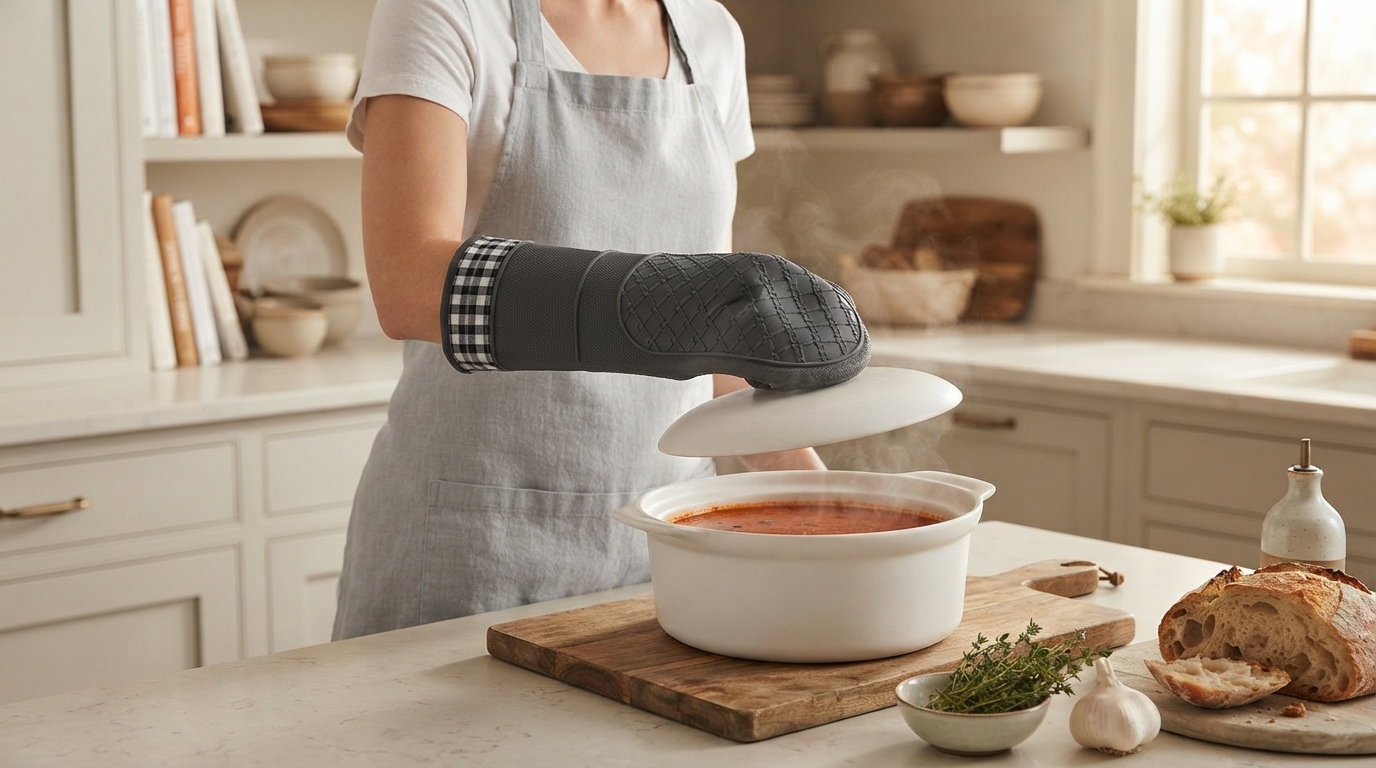
Extended Heat-Resistant Silicone Oven Mitts with Wrist Protection
Hot handles, splattering oils, and heavy pans make hand protection more than a convenience in the kitchen. Extended silicone oven mitts add a longer cuff for wrist and forearm coverage, a textured grip for secure handling, and a wipe-clean surface that stands up to everyday cooking and baking. If a standard mitt leaves you feeling exposed when you reach deep into an oven or lift a lid releasing steam, extended-length protection can make hot-zone tasks feel steadier and safer.
Why extended-length mitts matter
A longer cuff is a small design change that can make a noticeable difference during quick, high-risk moments—like sliding out a sheet pan or rotating a roasting dish.
- Longer cuffs help shield wrists and lower forearms from oven rack contact, steam bursts, and splatter when transferring trays or lifting lids.
- Better coverage can reduce the urge to “double up” with towels, which can slip and expose skin.
- Useful beyond ovens: air fryers, grill lids, smoker doors, and hot pot handles often put wrists close to heat sources.
That extra length matters most when your hands are stable but your wrists are still in the danger zone—like pulling a heavy Dutch oven forward or lifting a casserole dish from a lower rack.
What heat-resistant silicone does well
Silicone is popular for kitchen protection because it behaves differently than absorbent fabrics. It’s designed to act like a barrier—especially helpful when moisture and grease are involved.
- Silicone offers a non-porous, water-resistant barrier that helps with brief contact against hot surfaces and steam exposure.
- Textured silicone improves grip on smooth cookware, glass bakeware, and metal sheet pans.
- A wipe-clean exterior helps handle sticky glazes, grease, and splashes without absorbing odors the way some fabrics can.
For home cooks who alternate between baking, sautéing, and meal prepping, silicone’s quick cleanup can be just as valuable as the heat protection—especially when spills happen mid-service and you need your mitts back in action fast.
Comfort and control in daily use
Protection is only useful if you can control what you’re holding. When evaluating extended mitts, pay attention to how the mitt supports natural hand movement and how securely it stays in place.
- Look for a balance between protection and dexterity so trays can be steadied without over-gripping.
- Inner lining and shape influence comfort: a well-formed pocket reduces hand fatigue during longer cooking sessions.
- Extended cuffs are most useful when they stay put—secure edges and a snug but not tight opening help prevent shifting.
- A hanging loop or easy storage option keeps mitts within reach and off messy countertops.
If you regularly lift heavier cookware, also consider how the grip texture feels when you’re supporting weight at an angle (for example, when tipping a roasting pan to spoon out drippings). A secure surface can reduce micro-slips that lead to sudden readjustments near hot metal.
Cleaning and care
Extended silicone mitts are designed for real-life messes: marinades, grease splatter, butter, and sticky sauces. Keeping them clean also helps maintain grip texture and prevents residue from building up.
- For routine messes, wipe with warm soapy water; for heavier grease, wash thoroughly and dry completely before storing.
- Avoid exposing mitts to open flame or direct contact with heating elements; heat resistance does not equal flameproof protection.
- Inspect regularly for tears, thinning areas, or hardened spots—damage can reduce protection and grip.
For food safety, remember that bacteria concerns are about what’s on hands, tools, and surfaces—not just what’s in the oven. Guidance from the USDA Food Safety and Inspection Service and the FDA emphasizes safe cooling, storage, and reheating practices—especially for large batches and leftovers.
Quick comparison: silicone vs. common alternatives
Use this snapshot to match the mitt style to the way cooking is typically done (baking, grilling, steaming, or handling heavy cookware).
| Material | Grip | Water/steam resistance | Cleaning | Typical trade-offs |
|---|---|---|---|---|
| Silicone (often with inner lining) | High (textured) | High | Wipe-clean / wash | Can feel bulkier; avoid open flame |
| Quilted cotton | Medium | Low to medium | Machine washable | Can absorb steam/grease; grip may slip when damp |
| Aramid fiber (e.g., Kevlar/Nomex blends) | Medium | Medium | Varies by design | Often pricier; grip depends on exterior finish |
| Leather (grill gloves) | Medium | Medium | Spot clean | Less dexterity; can stiffen with heat/age |
When extended wrist protection is especially helpful
Extended cuffs shine when the hottest risk isn’t your fingertips—it’s everything between your palm and your elbow.
Product spotlight
If you want longer coverage without giving up everyday practicality, Extended Heat-Resistant Silicone Oven Mitts with Wrist Protection are built around the features that matter most: extended cuff coverage paired with a silicone exterior designed for secure handling and easier cleanup.
For a simple companion item that supports calmer kitchen decision-making (timing, prep order, and batch cooking planning), consider The Clear-Mind Decision Maker | Printable Mindfulness Checklist for Clarity & Calm Choices | Ways to Calm Your Mind Before Making Decisions.
FAQ
What material is extremely heat-resistant?
For kitchen gear, silicone and aramid fibers are commonly used for heat resistance, but performance depends on thickness, insulation, and how long heat contact lasts. Silicone is often chosen for its grip and moisture resistance, while aramid blends are known for heat-tolerant textiles.
Is Clostridium perfringens heat-resistant?
It can form spores that may survive typical cooking temperatures. Safe cooling, refrigeration, and thorough reheating are key steps to reduce risk, especially with large batches of food.
What is the strongest heat-resistant material?
Industrial materials like advanced ceramics and specialized alloys can tolerate extreme temperatures, but they aren’t practical for flexible oven mitts. In wearable kitchen protection, safety usually comes from layered systems (outer layer plus insulation and lining), not a single “strongest” material.













Leave a comment