

Buy vs Build a Loft Bed: Which Is Cheaper in 2026?
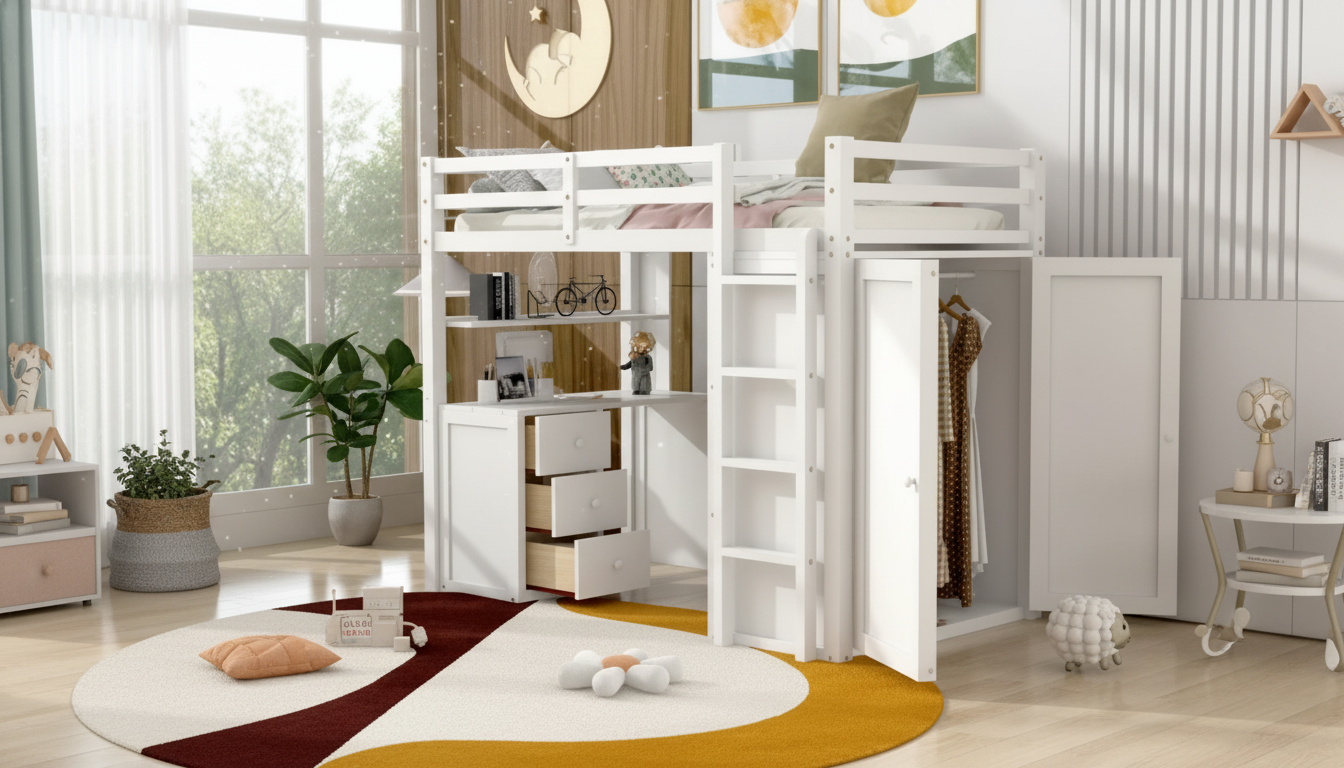
Is it cheaper to buy or build a loft bed?
It’s usually cheaper (and far less time-consuming) to buy a loft bed once you add up lumber, hardware, tools, and finishing supplies. Building can be cheaper only when you already own the tools, can source quality wood at a low cost, and you’re comfortable engineering a sturdy frame and ladder. For most homes, buying wins on predictable pricing and fewer surprises.
When buying is the better deal
Buying tends to be more cost-effective because the price includes a complete structure designed to handle daily use: pre-cut components, the correct fasteners, and a tested layout. You also avoid overbuying materials—common with DIY builds—and you won’t need to purchase specialty items like extra-long bolts, bed rail hardware, or edge banding. If you want integrated storage or a workstation, buying can be an even bigger savings because drawers, wardrobes, and desks are expensive to build well from scratch.
If you’re considering a setup that combines sleep and storage, our team put together a practical walkthrough for a twin loft bed with a desk, wardrobe, and drawers. You can use it to understand what’s involved in a full-feature build: Twin loft bed with desk, wardrobe, and drawers setup guide.
When building can be cheaper
DIY can come out ahead if you already have a saw, drill/driver, clamps, square, and sander—and you can work accurately. The most cost-sensitive builds are simple platform-style lofts that use fewer parts, avoid built-in furniture, and don’t require fine finishing. Building also helps when you need a very specific footprint (for example, fitting around a window trim, radiator, or odd ceiling slope) that would otherwise require custom furniture pricing.
Costs people forget to include
DIY budgets often miss sandpaper, wood filler, primer/paint, brushes, and the time to let finishes cure. Hardware adds up quickly: structural screws, brackets, bed rail material, anti-tip/wall anchoring, and ladder treads. If you’re building for a child or teen, don’t underbuild: prioritize guardrails on all open sides and a ladder with secure handholds and non-slip steps.
Our quick rule for deciding
If you want a loft with a desk and storage, buying is typically the cheaper path. If you want a basic loft and you’re equipped to build square, strong, and safe, DIY can be competitive.
FAQ
What wood is best for a loft bed frame?
Solid hardwoods and strong softwoods like Douglas fir or Southern yellow pine are common choices because they hold fasteners well and resist sagging. Avoid low-grade boards with large knots in structural areas like legs and side rails.











Leave a comment