

Twin Loft Bed with Desk, Wardrobe & Drawers: Setup Guide
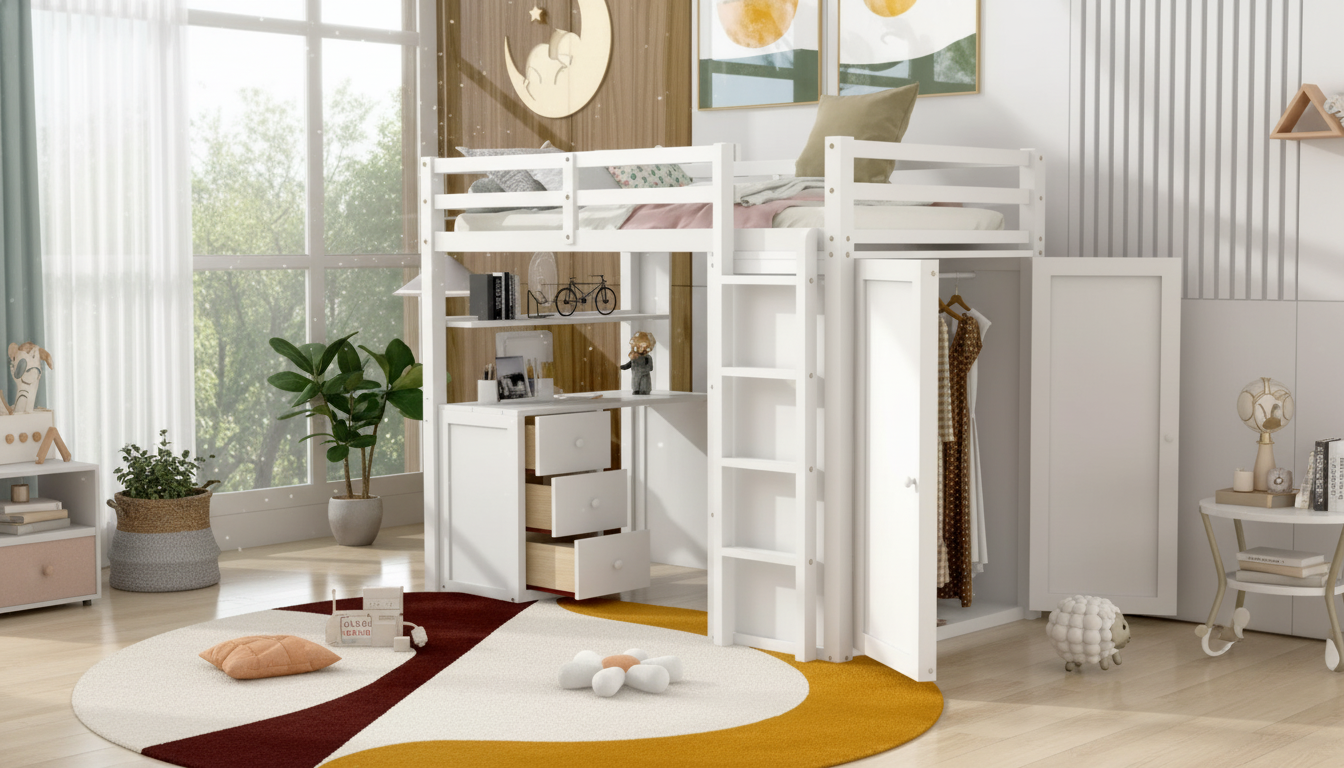
Twin Loft Bed with Desk, Wardrobe, and Storage Drawers
A twin loft bed that combines a sleep space with a built-in desk, wardrobe, and drawers can turn one footprint into a compact bedroom-and-study zone. This guide breaks down how the setup works, what to check before buying, and how to plan a comfortable, safe layout for everyday use.
What This Loft Layout Adds to a Room
A multi-function loft design is most valuable when a room needs to do more than one job—sleep, study, and store daily essentials—without feeling cramped. By stacking functions vertically, you can get the feel of separate “zones” while keeping open floor space for play, stretching, or simply easier cleaning.
- Creates separate zones for sleeping, studying, and storage without needing multiple bulky pieces of furniture
- Helps keep floors clearer by moving the desk and clothing storage under the bed
- Supports routines for schoolwork and organization by giving everything a dedicated place
If you’re ready to build that all-in-one layout, start with a single piece that handles the big categories well: Twin Loft Bed with Desk, Wardrobe, and Storage Drawers.
Built-In Desk Area: Study Space That Stays Ready
The desk is often the make-or-break feature. A loft desk works best when it stays “ready to use” rather than becoming a catch-all surface. Before ordering, think through the basics: workable depth, chair clearance, and how power will reach the work zone without cords crossing walkways.
- Look for a desktop depth that comfortably fits a laptop plus notebooks, with room for a task lamp
- Plan cable routing early: place the bed so outlets are reachable without cords crossing walkways
- Add a desk chair that tucks in fully to keep the aisle clear in smaller rooms
| Item | What to check | Simple tip |
|---|---|---|
| Lighting | Overhead shadowing and glare | Use an adjustable LED desk lamp aimed across the work surface |
| Power access | Distance to outlets and cord path | Use a surge protector mounted off the floor where possible |
| Chair clearance | Knees/leg room and slide-in space | Choose a chair that nests under the desk when not in use |
For small-item control at the desk (paper clips, erasers, charging adapters), a lidded container can prevent visual clutter. Something like the Elegant Cork Stopper Glass Storage Jar – Transparent Food & Tea Container can double as a tidy catch-all on a shelf near the workstation.
Wardrobe Space: Clothing Storage Without a Separate Closet
The built-in wardrobe is a major advantage in rooms with limited or awkward closets. The goal is to reduce “back-and-forth” movement—especially in the morning—by keeping frequently used items easy to reach and occasional items higher or deeper inside.
- Decide what will live inside: hanging items, folded stacks, or bins; then organize by frequency of use
- Use slim hangers and matching storage bins to maximize the available interior volume
- Keep daily-wear items at the most reachable height to reduce climbing in and out repeatedly
A practical approach is to create a weekly “core” section (school outfits, go-to sweatshirts, gym clothes) and a separate section for seasonal or special-occasion items. If the wardrobe has a hanging bar, keep the most-used pieces in the center, with bulkier coats and jackets toward the sides to reduce snagging.
Storage Drawers: Keeping Small Items Contained
Drawers do their best work when they prevent piles from migrating onto the desk and bed. Assigning each drawer a purpose makes it easier to maintain order, even for kids who are still learning organizational habits.
Safety and Everyday Comfort
Because a loft bed places a sleeper above ground level, safety details deserve extra attention. Follow the manufacturer’s directions for mattress thickness so the guardrails can do their job, and keep the ladder/steps unobstructed. For broader safety guidance, review the U.S. Consumer Product Safety Commission bunk bed recommendations at CPSC’s Bunk Beds Information Center and the ASTM F1427 bunk bed safety specification.
| Measure | What to record | Why it matters |
|---|---|---|
| Ceiling height | Floor-to-ceiling and any fan/light clearance | Helps ensure comfortable headroom on the top bed |
| Wall length | Usable wall span where the bed will sit | Confirms the footprint fits without blocking doors or vents |
| Door swing | Door arc and closet access | Prevents collisions and awkward daily bottlenecks |
| Outlet locations | Distance to desk zone | Reduces extension cords across walkways |
| Window/vent placement | Nearby drafts and airflow | Improves comfort for sleeping and studying |
For the mattress itself, confirm twin sizing and plan bedding accordingly. Twin mattress dimensions vary slightly by brand, but standard guidance is summarized by Sleep Foundation’s twin bed dimensions.
Assembly and Placement Tips
Styling and Organization Ideas That Work with a Loft Setup
Maintenance and Care
Featured Picks (In Stock)
- Twin Loft Bed with Desk, Wardrobe, and Storage Drawers
- Elegant Cork Stopper Glass Storage Jar – Transparent Food & Tea Container
- Stainless Steel Non-Stick Rolling Pin Set for Baking & Kitchen Use
FAQ
What mattress height works best for a loft bed with guardrails?
Use the manufacturer’s recommended mattress thickness so the guardrails remain protective above the mattress surface. Avoid taller mattresses that reduce how much rail height is left to help prevent rolling out.
How much ceiling height is needed for a twin loft bed to feel comfortable?
Measure floor-to-ceiling and aim for enough headroom to sit up comfortably on the top bed. Also account for ceiling fans, light fixtures, and any sloped ceilings near where the loft will be placed.
Is a loft bed with a desk and wardrobe hard to assemble?
Assembly is typically manageable with two adults, careful step-by-step sorting of hardware, and building near the final placement. Plan extra time for aligning panels, squaring the frame, and tightening fasteners evenly.













Leave a comment