

1.6HP Dust Collector for Blast Cabinets: Clearer Air
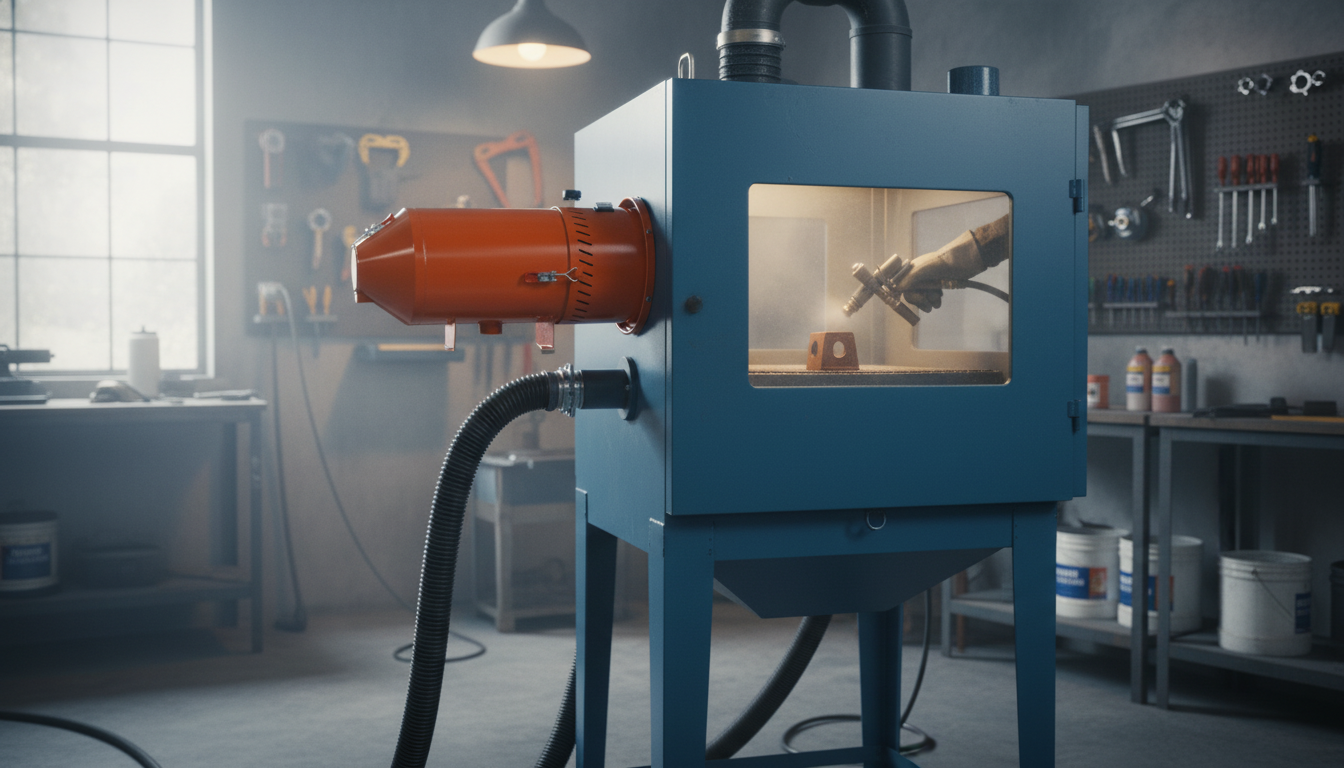
1.6HP Dust Collection for Sandblasting Cabinets: Cleaner Visibility, Safer Airflow
A dedicated dust collector keeps a blast cabinet usable day after day: a clearer viewing window, steadier media flow, and less abrasive dust escaping into the shop. A well-matched 1.6HP cabinet dust collection setup can provide the kind of consistent pull that small vac-style solutions often struggle to maintain once filters begin to load. Below are the key performance priorities, practical installation steps, and maintenance habits that help keep suction stable over time.
What a Cabinet Dust Collection System Should Do
A sandblasting cabinet creates dust continuously—abrasive fines, rust, mill scale, and coating debris all get suspended in the air. The dust collector’s job is to keep that airborne haze moving in one direction: out of the cabinet through a dust port and into filtration.
- Maintain negative pressure in the cabinet so dust stays inside rather than leaking from seams, door gaps, and glove ports.
- Pull fine abrasive and coating debris away from the work area to improve visibility through the window and reduce frosting.
- Reduce media contamination and clumping by moving suspended fines out of the cabinet.
- Support steadier blasting by minimizing dust re-circulation that can cause inconsistent cutting and surface finish.
- Help limit exposure to hazardous dust when paired with proper respirators and safe media choices.
Key Performance Factors When Matching a Collector to a Blast Cabinet
Horsepower alone doesn’t guarantee performance inside a cabinet. Real-world airflow depends on restrictions, leaks, and how quickly filters load with fine dust.
- Airflow needs: cabinet size, how often the door is opened, and how leaky the cabinet is all change required airflow.
- Static pressure losses: hoses, bends, restrictive fittings, and clogged filters reduce real-world suction.
- Filter type and surface area: blasting generates constant fine dust, so filtration and cleanability matter as much as motor power.
- Hose diameter and length: short, smooth, appropriately sized hose preserves flow; long small-diameter hose can choke performance.
- Media and material being blasted: fine media and coatings create more airborne fines than heavier, clean reusable media.
Quick Fit Checklist for a Cabinet Dust Collector
| Factor | What to look for | Why it matters |
|---|---|---|
| Cabinet volume and leaks | Adequate airflow with doors sealed; manage common leak points | Leaky cabinets require more airflow to keep dust contained |
| Filter efficiency | Fine-dust capable filtration and good sealing | Blasting produces very fine particles that quickly haze windows and escape gaps |
| Filter maintenance | Easy access for cleaning/replacement | Suction drops as filters load; maintenance keeps performance stable |
| Hose routing | Shortest practical run with gentle bends | Reduces static pressure and preserves usable airflow |
| Disposal/collection | Secure dust container and simple emptying | Prevents re-entrainment and reduces mess during cleanout |
Spotlight: 1.6HP Dust Collection System for Sandblasting Cabinets
For many hobbyists and small shops, a 1.6HP class collector is a practical middle ground: more pull and better staying power than small vac setups, without the space and cost jump of larger industrial systems.
- Designed to pair with a blast cabinet to improve dust removal during abrasive work.
- A 1.6HP class unit is typically chosen to provide stronger pull than small shop vac-style setups, especially as filters begin to load.
- Best results come from careful sealing of cabinet joints and proper hose routing to reduce losses.
- Practical uses include restoring parts, cleaning rust/scale, and prepping surfaces for coatings while keeping the viewing area clearer.
- Price point and availability can make it an accessible upgrade for hobby and small-shop blasting.
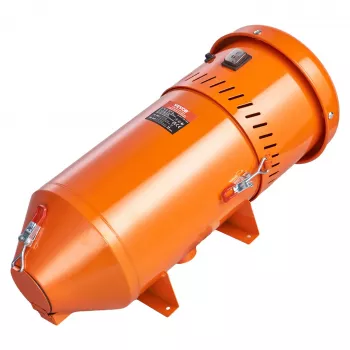
If you’re setting up or upgrading a cabinet, start with a purpose-built option like the 1.6HP Dust Collection System for Sandblasting Cabinets.
Installation Basics That Improve Suction Right Away
Many “weak suction” complaints are actually installation losses. A strong collector can feel underpowered if it’s fighting leaks, long hose runs, and tight bends.
Daily Use Habits for Clearer Visibility and Less Mess
For organizing small nozzles, jets, and cabinet spares so they don’t get misplaced between sessions, a simple sealed container like the Elegant Cork Stopper Glass Storage Jar can help keep small parts together and easy to find.
Maintenance Schedule: Keep Airflow From Fading
Safety Notes for Abrasive Blasting Dust
For guidance on silica hazards and why safer media choices matter, review OSHA’s resources on crystalline silica and NIOSH’s topic page on silica workplace safety.
FAQ
How do a blast cabinet and dust collector work together?
The collector pulls dusty air out of the cabinet through a dedicated port, creating negative pressure so dust stays inside rather than leaking into the shop. The filter captures fine particles, allowing cleaner air to return to the workspace or exhaust as designed, which improves visibility while blasting.
Why does suction drop after a short time of blasting?
The most common cause is filter loading from fine dust, which increases restriction and reduces airflow. Clogged hoses, an overfilled dust bin, cabinet leaks, or too many sharp bends can also cut performance until the filter is cleaned/replaced and the airflow path is corrected.
Is a dust collector enough protection for blasting dust?
No—dust collection helps containment, but respiratory protection and safe media selection are still required. Hazards can include silica exposure and potentially toxic coating residues, so use appropriate PPE and handle collected dust responsibly.













Leave a comment