

1:16 RC Bulldozer: Remote-Control Pushing & Blade Action
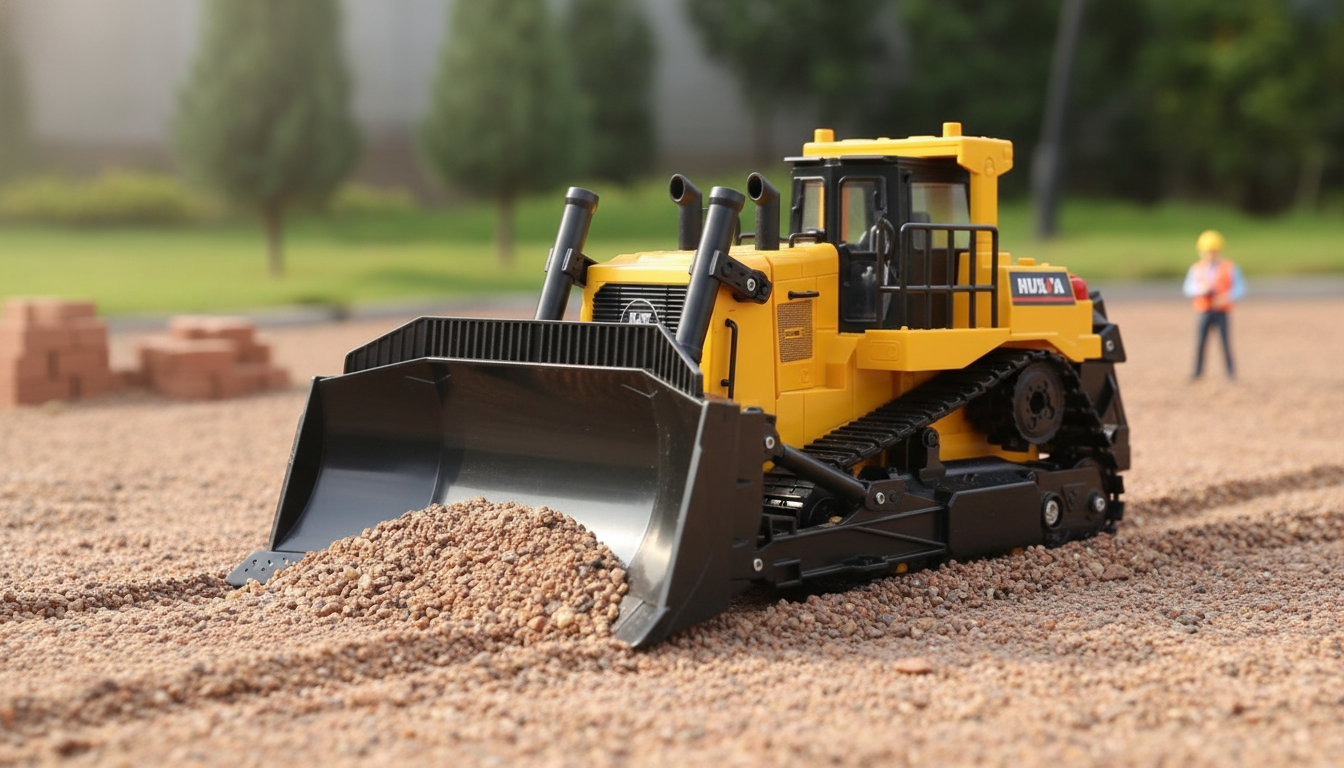
1:16 Scale RC Bulldozer with Remote Control: Realistic Pushing Power for Play and Display
A scale RC bulldozer brings construction-site action to the living room, driveway, or sandbox with controllable driving and blade movement. The appeal is simple: it’s not just fast driving in circles—it’s purposeful pushing, leveling, and “getting the job done” with a model that looks at home both in play sessions and on a shelf. Below is a practical guide to choosing a 1:16 RC bulldozer, using it on common surfaces, and keeping it running smoothly.
What Makes a Scale RC Bulldozer Fun and Useful
RC bulldozers stand out because the play pattern is slower, skill-based, and task-oriented. Instead of only steering and throttle, you’re coordinating steering lines, approach angles, and blade movement to move material cleanly.
- Hands-on control over pushing and leveling: moving a small pile from point A to point B feels like a real “job site” task, not just driving.
- Imaginative setups: gravel piles, kinetic sand, small blocks, or garden soil (with supervision) create endless mini projects.
- Display-friendly realism: a convincing scale presence looks great on a shelf, desk, or alongside other construction toys.
- Coordination and planning: learning how to square up to a pile, adjust blade angle, and make smoother passes builds fine motor control.
Quick Specs at a Glance
The 1:16 category is a favorite because it offers a satisfying size for visible detail without demanding a huge storage footprint. For shoppers looking for a ready-to-ship option, the model below is available now.
Product Snapshot
| Model | Scale | Control | Price | Availability |
|---|---|---|---|---|
| 1:16 Scale RC Bulldozer with Remote Control | 1:16 | Remote control driving + blade action | 46.51 USD | In stock |
If you’re building a neat “RC corner” at home, a small container for accessories can help keep loose items tidy between sessions. An option like the Modern Glass Storage Jar with Golden Butterfly – Elegant Home Decor can work as a stylish catch-all for small non-battery accessories (such as twist ties, tiny tools, or labels) stored separately from the vehicle.
Design and Realism: What to Notice Before Buying
Even among similarly sized RC construction vehicles, the feel can differ a lot. These details tend to have the biggest impact on both realism and day-to-day enjoyment.
- Blade shape and range of motion: a wider, well-shaped blade helps material roll forward rather than spilling around the edges, which makes leveling smoother.
- Track-style look: track-inspired styling adds the “dozer” identity and gives the model a more construction-like presence than a wheeled toy.
- Body detailing: cab lines, molded panels, and a clean color finish matter if the bulldozer will live on display between play sessions.
- Scale presence: 1:16 typically balances portability, realism, and enough size to operate comfortably without tiny controls.
How to Get the Best Performance on Different Surfaces
A dozer’s fun is directly tied to where it runs. A few small adjustments—like choosing the right material and keeping loads light—can make operation smoother and help reduce wear.
- Hard floors: pick a clean, open area and push only light materials (like paper pieces or foam). Avoid dragging gritty sand across delicate flooring.
- Carpet/rugs: resistance increases, so keep pushes short and piles small. If it bogs down, reset your approach angle rather than forcing it.
- Sandboxes/kinetic sand: this is prime territory for grading and shaping. After play, brush sand away from moving joints so the blade motion stays smooth.
- Gravel or small rocks: use caution—larger pieces can catch on blade edges or stress moving parts. If you hear clicking or scraping, stop and clear debris.
- After-play cleanup: a quick dry brush-off and dry storage go a long way toward keeping the controls responsive.
Play Scenarios That Feel Like a Real Worksite
Adding simple “missions” turns casual driving into satisfying construction play. These ideas work indoors with kinetic sand or outdoors in a sandbox (dry conditions recommended).
- Leveling challenge: make a mound and try to flatten it evenly within a time limit using multiple light passes.
- Road building: push sand into a straight “path,” then smooth it by overlapping passes as if you’re grading a road base.
- Clear-the-zone: move lightweight foam blocks into a marked area without knocking over a “no-go” zone boundary.
- Mini quarry: relocate a pile in stages—push, back up, realign, and repeat—just like a real machine working a tight space.
- Team play: pair it with other construction toys so one vehicle “hauls” while the dozer spreads and levels.
Care, Storage, and Safe Use
For general toy safety guidance, it’s also helpful to review consumer resources like CPSC Toy Safety and the broader framework of ASTM toy safety standards.
Who This 1:16 RC Bulldozer Is Best For
Featured In-Stock Picks
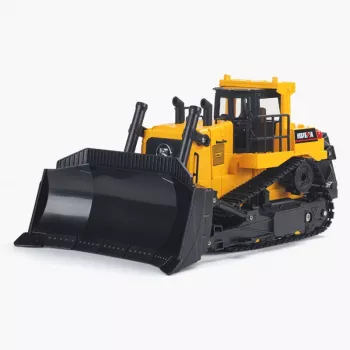
- 1:16 Scale RC Bulldozer with Remote Control (46.51 USD) — remote-controlled driving with bulldozing blade action for hands-on construction play.
- Modern Glass Storage Jar with Golden Butterfly – Elegant Home Decor (25.97 USD) — a neat way to keep small non-battery accessories organized near a play or display area.
FAQ
Can a scale RC bulldozer drive on sand or dirt?
Yes, it can handle sand or dry dirt for light pushing and leveling. Avoid wet conditions, and brush debris away from the blade and moving areas after use.
Is 1:16 scale a good size for indoor use?
Yes. A 1:16 model is typically large enough to control comfortably while still fitting in most rooms; a clear floor area makes steering and blade operation easier.
What should be used for safe “bulldozing” at home?
Kinetic sand, dry play sand, lightweight foam blocks, or small paper/cardboard pieces work well. Avoid sharp gravel or heavy objects that can jam parts or strain movement.













Leave a comment