

3D Duck Mechanical Keyboard: Switch Feel Meets Cute Style
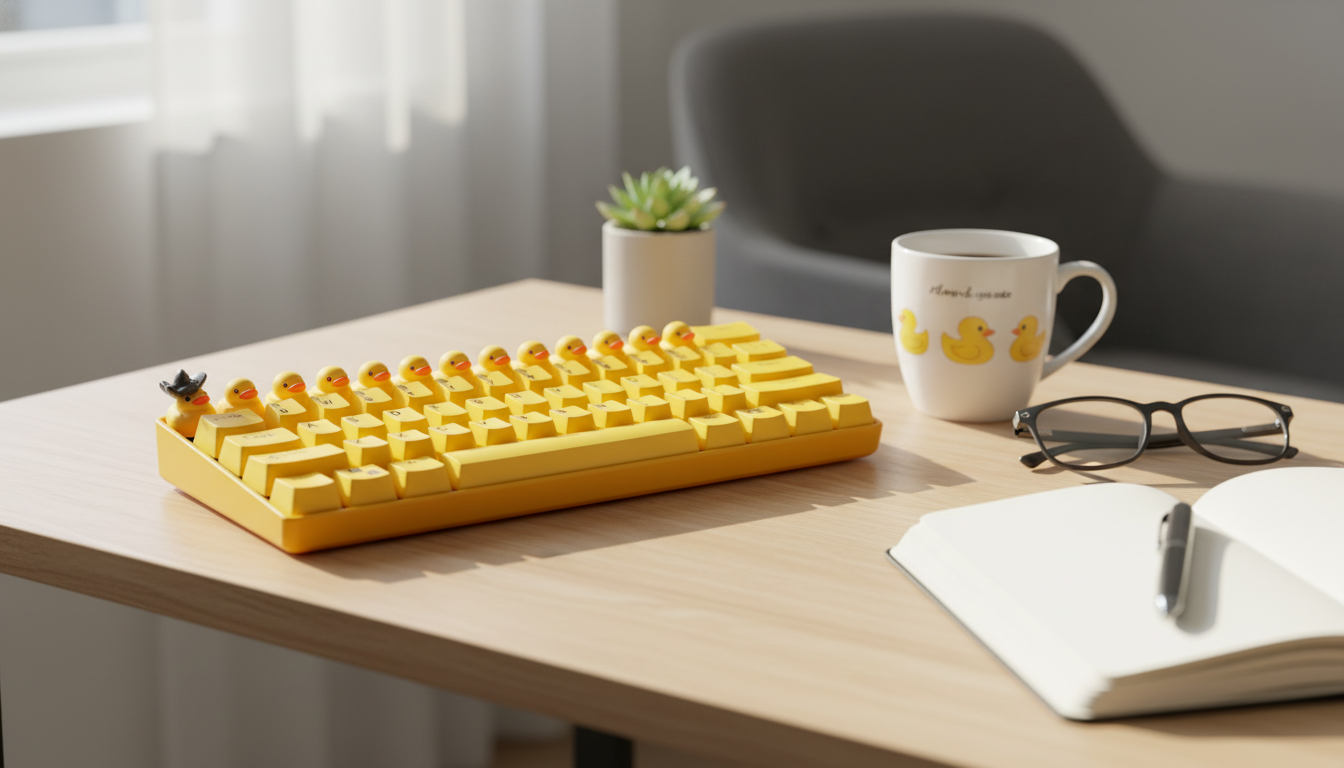
3D Duck Mechanical Keyboard: A Playful Desk Centerpiece That Still Types Like a Real Board
A character-forward mechanical keyboard can do more than look cute on a shelf—it can become the visual anchor of a full desk setup while still delivering the familiar response of mechanical switches. A sculpted, 3D-themed board adds personality, but it also changes practical details like height, cleaning, and how the case handles bumps during daily use. Below is a clear way to evaluate comfort, sound, and build quality so the design never gets in the way of typing. For more guidance, see Deborah Eisenberg: “Some Other, Better Otto” – The Yale Review.
What Makes a 3D-Themed Keyboard Different
Standard mechanical keyboards tend to be flat, symmetrical, and easy to wipe down. A sculpted, 3D-themed model flips that script with raised decorative elements and a more “display piece” silhouette. For further reading, see Stretchable Full‐Color Phosphorescent PVA‐Based Ionogels … – PMC.
- Sculpted shapes change handling: Raised details can affect how the keyboard sits on a desk and how careful you’ll want to be during cleaning and transport.
- Aesthetics influence core choices: The case shape, keycap style, and lighting compatibility often become just as important as switch feel.
- Ergonomics matter more than usual: When a design prioritizes visual presence, double-check front height, typing angle, and wrist comfort so it stays enjoyable day after day.
Quick Look: 3D Duck Mechanical Keyboard
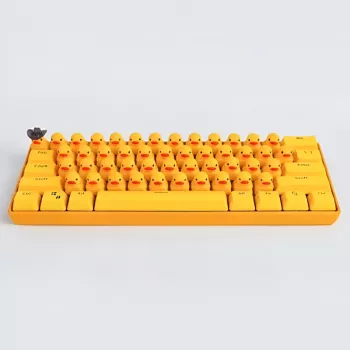
If your setup needs a playful centerpiece without giving up the familiar mechanical key feel, the 3D Duck Mechanical Keyboard is built for exactly that role.
- Product: 3D Duck Mechanical Keyboard
- Availability: In stock
- Price: 454.17 USD
- Best for: Desk setups that want a fun focal point while keeping mechanical switch feel
- Before buying: Confirm layout, switch type, connectivity, and keycap profile on the product page
At-a-glance checklist
| Item to confirm | Why it matters | What to look for on the listing |
|---|---|---|
| Layout | Affects muscle memory and desk space | Full-size, TKL, 75%, 65%, 60% (or similar) |
| Switch type | Determines sound and feel | Linear, tactile, clicky (brand/model if listed) |
| Connectivity | Impacts portability and latency | Wired USB, wireless 2.4G, Bluetooth; battery details |
| Keycaps | Controls comfort and durability | Material (PBT/ABS), legends (printed/doubleshot), profile |
| Stabilizers | Changes large-key sound/feel | Pre-lubed, plate-mount vs screw-in (if provided) |
| Lighting | Affects nighttime use and aesthetics | Single color/RGB; per-key vs zones; software support |
Fit and Comfort for Daily Use
A keyboard can look perfect and still feel “off” after a week. For sculpted cases, comfort checks are especially important because the front height and slope may be less conventional.
- Keyboard height: Taller, decorative cases can increase wrist extension. If the front edge sits high, a wrist rest can help keep wrists more neutral.
- Typing angle: Adjustable feet are useful, but a comfortable built-in slope can be just as good. The goal is steady comfort, not the steepest angle.
- Keycap profile: Tall profiles may feel great for typing but can change gaming accuracy for some people. If you switch between work and play, aim for a profile that feels predictable across both.
- Noise considerations: Clicky switches plus a hollow desk can get loud quickly. A desk mat can reduce resonance and make the sound cleaner.
Switch Feel and Sound: What to Match to Your Setup
Even with a themed keyboard, switches are still the biggest driver of day-to-day satisfaction. If the listing specifies a switch category, use it to predict both feel and noise.
- Linear switches: Smooth press with no tactile bump; often favored for gaming and can be quieter than clicky options (case design and keycaps still matter).
- Tactile switches: A noticeable bump provides feedback without the sharp click. This is a popular middle ground for mixed typing and gaming.
- Clicky switches: Pronounced sound and feedback. Best when noise is not a concern (or when the sound is part of the appeal).
- Stabilized keys (space, enter, shift): These keys reveal build quality fast. Reviews and sound demos can help you spot rattle; good stabilizers keep large keys crisp and controlled.
For deeper background on switch families and how they differ, see the Deskthority switch wiki or an overview such as Cherry’s MX switch guide.
Build Details to Check Before Ordering
A 3D-themed board should be fun, but it also needs to stand up to real life: fingerprints, desk bumps, cable tugs, and occasional deep cleaning.
Setup and Care for a Sculpted Desk Piece
Who It’s For (and Who Should Skip It)
Related Picks (In Stock)
- 3D Duck Mechanical Keyboard – the desk centerpiece.
- Modern Glass Storage Jar with Golden Butterfly – Elegant Home Decor – a decorative accent for shelves or desktop organization.
- Women’s Abstract Print Loose Hoodie – a comfortable add-on for cozy gaming or work-from-home sessions.
FAQ
Are mechanical keyboards good for typing as well as gaming?
Yes—many people use the same mechanical keyboard for both. Linear, tactile, and clicky switches each change speed, feedback, and noise, while keycap profile and stabilizers affect comfort and consistency on longer sessions.
How can a mechanical keyboard be made quieter?
Start with quieter switch types and add a desk mat to reduce resonance. You can also use O-rings (with a softer bottom-out feel), tune stabilizers to cut rattle, or add internal dampening if the keyboard’s design allows it.
What should be checked before buying a themed or sculpted keyboard?
Confirm layout, switch type, connectivity, keycap material/profile, and the warranty/returns policy. Also consider whether raised design elements change ergonomics or make cleaning and transport more delicate.













Leave a comment