

4 Cute Ceramic Animal Succulent Pots: Drainage & Styling
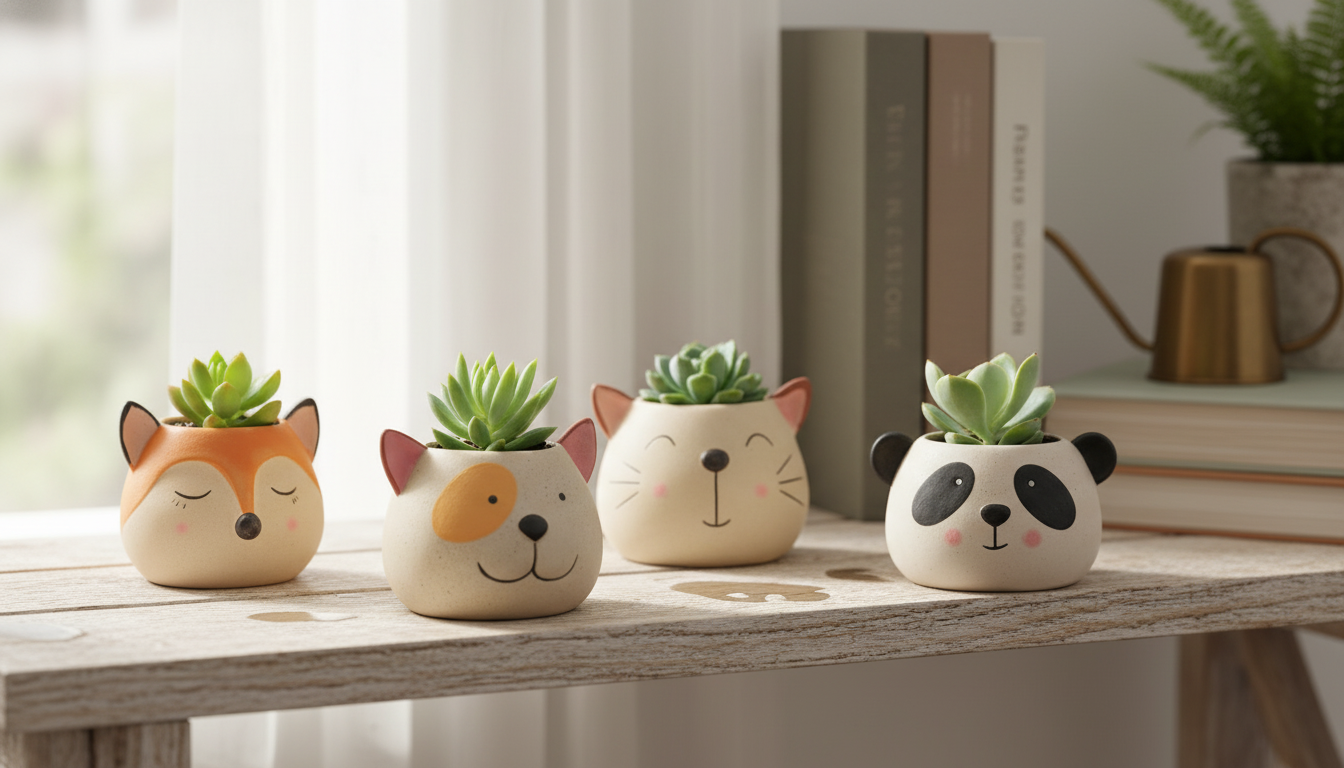
A small plant display can change the feel of a desk, shelf, or windowsill. A coordinated set of animal-shaped ceramic pots adds personality while keeping everyday plant care practical with drainage. Below are the key things to look for, how to set them up neatly indoors, and easy ways to style a four-piece set so it feels curated rather than cluttered.
Why animal-shaped ceramic pots work so well indoors
Indoor plant decor works best when it looks intentional and stays easy to maintain. Cute animal silhouettes help with both. The soft, playful shapes make tiny succulents feel like a designed accent instead of “one more thing” on a surface, which is especially helpful on busy desks and compact shelves.
Ceramic is also a solid choice for indoor conditions. Compared with thin plastic, ceramic tends to buffer quick moisture swings, which can reduce the stop-and-start stress that small succulents experience in lightweight containers. A matching set of four creates cohesion across multiple spots—two on a desk and two on a nearby shelf, for example—so your decor repeats in a calm, balanced way.
Animal designs pair easily with modern, cozy, and minimalist rooms when the plants stay simple. Think crisp rosettes, upright spikes, or compact clumps of greenery that let the pot shape do the “cute” work.
How to Choose
When there aren’t product pages to compare side-by-side, it helps to use a quick, practical checklist. For indoor succulent pots—especially a coordinated set—focus on drainage, stability, and a finish that’s easy to wipe clean.
What matters most for a four-piece set
- Drainage you can trust: A real drainage opening should let water flow freely, not just seep out slowly.
- A plan to catch runoff: Drainage protects roots, but your desk, shelf, and electronics need protection too.
- Balanced proportions: A set looks best when each pot has similar visual weight (height and footprint) so no single piece feels out of place.
- Stable bases: Short, wide shapes are less likely to tip when bumped or when you rotate plants for even growth.
Quick selection checklist for indoor succulent pots
| What to check | Good sign | Why it matters indoors |
|---|---|---|
| Drainage hole | Clear opening that drains quickly | Reduces root rot risk and prevents soggy soil |
| Catch solution | Saucer, tray, or DIY liner planned | Protects desks, shelves, and windowsills from water damage |
| Pot size | Slightly larger than nursery pot | Supports growth without holding excess moisture |
| Stability | Flat base; doesn’t wobble | Safer around keyboards, paperwork, and tight shelves |
| Finish | Even glaze; no sharp edges | Easier cleaning and safer handling |
How to choose the right succulent pots with drainage
Drainage is the feature that keeps indoor succulents manageable. Look for a hole that’s large enough to actually flush water through; tiny pinholes can clog with fine soil and trap moisture. If you’re planting very gritty mix, the hole should still be sized so it doesn’t “bottle-neck” and leave the bottom layer wet.
Next, think about how the pot sits in real life. Desks and shelves are rarely perfectly level, so stability matters. A wider base and a lower center of gravity reduce tipping, which is a big deal around monitors, notebooks, and window ledges.
Finally, consider the finish. Smooth glazed ceramic usually wipes clean with minimal effort. Unglazed sections can be beautiful, but they tend to show mineral marks faster if you have hard water. If you like the look of matte or partially unglazed pots, plan on wiping the exterior more often and keeping runoff fully contained.
Setting up drainage the clean way (without mess)
Indoor drainage only works when you control where the water goes. The simplest approach is an individual saucer under each pot. For a set of four, a single decorative tray can look even tidier and helps visually “group” the planters into one display.
- Keep soil in place: Add a thin mesh screen or a small shard over the drainage hole to reduce soil loss while still letting water drain freely.
- Use the right mix: Choose a gritty cactus/succulent blend that drains fast. Dense, moisture-holding soil can stay wet too long in small indoor pots.
- Water away from surfaces: Water over a sink, let excess drip out, then return each pot to its saucer or tray once dripping stops.
- Protect delicate furniture: If your tray or saucers sit on finished wood, add felt pads underneath to prevent scratches.
For more general guidance on succulent care basics indoors, the Missouri Botanical Garden and the Royal Horticultural Society offer reliable, easy-to-follow recommendations.
Styling ideas for a set of four animal planters
A four-piece set gives you enough repetition to create a theme without taking over a room. The key is spacing: let each pot have a little “breathing room” so the shapes read clearly.
Plant pairings that look cute and stay manageable
Care tips to keep ceramic pots and succulents looking fresh
FAQ
Do succulent pots with drainage still need a saucer indoors?
Yes. Drainage protects the roots, but a saucer or tray protects desks, shelves, and windowsills from runoff. For a set of four, use individual saucers or one shared tray, and add felt pads underneath if the surface scratches easily.
What soil works best for small ceramic succulent pots?
A fast-draining cactus/succulent mix works best, and adding pumice or perlite can improve airflow and drainage even more. Dense soils stay wet too long in small indoor pots, which increases the risk of root problems.
How often should indoor succulents be watered in pots with drainage holes?
Water only when the soil is completely dry; the exact timing depends on light, season, and pot size. After watering, let pots drain fully and don’t leave them sitting in water inside a saucer or tray.











Leave a comment