

70″ Farmhouse LED Fireplace TV Stand: Storage for 80″ TVs
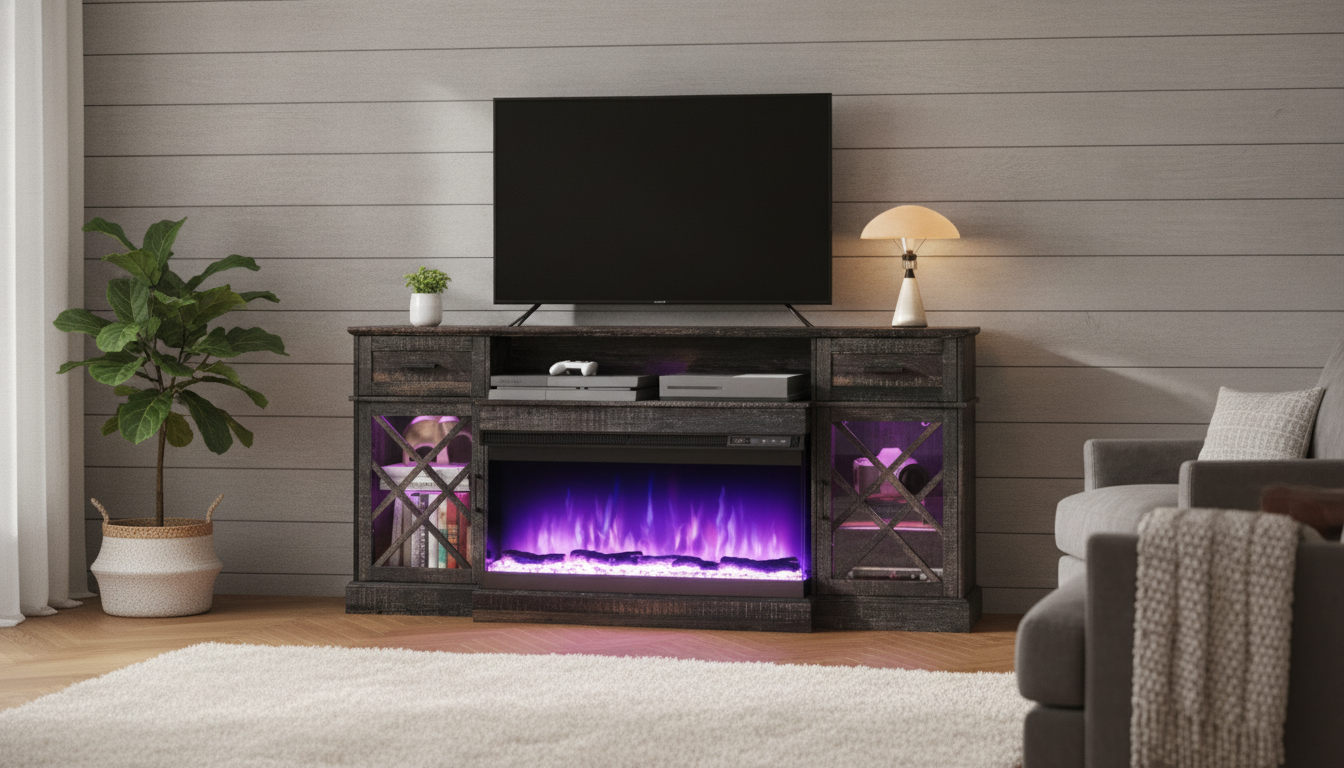
Farmhouse LED Fireplace TV Stand with Storage (70″) for TVs up to 80″
A farmhouse fireplace TV stand can anchor a living room by combining a media console, storage hub, and electric flame display in one piece. The right setup comes down to proportion (especially with an 80-inch TV), practical storage, and smart placement so the room feels cozy, organized, and intentional—without the commitment of a built-in remodel.
At a Glance: What This TV Stand Adds to a Room
- Creates a single focal point for TV, décor, and an electric fireplace effect without a built-in remodel.
- Balances farmhouse styling (warm wood look, substantial frame) with modern features like LED lighting.
- Helps reduce visual clutter by consolidating media devices, remotes, and accessories behind closed storage.
- Offers an easy way to refresh a living room layout by centering seating around one furniture piece.
| Feature | What to look for | Why it matters |
|---|---|---|
| Overall width | 70 inches | Keeps an 80-inch TV from overhanging while still looking proportionate |
| TV compatibility | Up to 80 inches | Reduces risk of unstable placement and improves sightlines |
| Storage | Cabinets + open areas/shelves | Hides clutter while keeping frequently used devices accessible |
| Fireplace/LED | Flame effect + lighting modes | Adds ambiance year-round, with or without heat |
Farmhouse Style Details That Read “Built-In”
The difference between a console that looks temporary and one that feels “made for the room” is usually the visual weight. A thicker-looking top and a substantial base keep the stand from feeling undersized beneath a large screen. Symmetry also does a lot of heavy lifting: matching cabinet doors or evenly spaced shelves make the whole wall look calmer and more planned.
A mantel-like top is another practical farmhouse cue. It gives space for a soundbar, framed photos, or seasonal décor—without forcing items to crowd the TV’s feet. For finishing touches, farmhouse styles pair naturally with matte black hardware, woven baskets, and warm neutral textiles that soften the electronics-heavy area.
Fireplace and LED Features: Ambiance Without Commitment
One of the biggest benefits of an electric fireplace TV stand is flexibility. Flame visuals can typically run with or without heat, which makes the stand useful in warm climates and during shoulder seasons when heat isn’t needed. LED accent lighting adds depth around the fireplace glass or shelving and can double as low lighting for movie nights.
Before committing to a layout, confirm where the controls live (remote and/or onboard). Being able to change flame brightness or lighting modes without shifting the TV matters more than it sounds once the stand is fully styled. Also plan outlet placement: fireplace inserts and LEDs generally need a nearby grounded outlet so cords don’t end up visibly draped along the baseboard.
For general heating and electrical safety guidance, it’s worth reviewing recommendations from UL Solutions and the U.S. Fire Administration.
Storage That Actually Solves Living Room Clutter
Storage only “counts” if it matches what gets used every day. Closed cabinets work best for bulky, visually noisy items—controllers, board games, extra HDMI cables, and instruction booklets—so the room feels calmer at a glance. Open shelving is ideal for components that need airflow (gaming consoles, cable boxes, routers) and for devices that require line-of-sight remote access.
Measuring devices ahead of time prevents the most common frustration: realizing after assembly that a console is too tall for the shelf or that a center speaker blocks the fireplace view. A simple zone plan helps keep the stand organized long-term:
- Left side: power strip, cable slack, and adapters
- Center: primary media devices (streamer, console, cable box)
- Right side: books, baskets, or décor that softens the tech look
Fit and Placement for TVs up to 80″
For a balanced look, the stand should be wider than the TV by at least a few inches on each side. With an 80-inch screen, that extra width keeps the setup from feeling top-heavy and helps reduce the sense that the TV is “perched” instead of placed.
Also confirm TV base/leg placement. Some large TVs have wide-set legs that demand a broader surface than expected; others use a center stand that’s easier to accommodate. If wall-mounting above the stand, keeping the TV low helps avoid neck strain—center of the screen near seated eye level is a practical target in most rooms. Finally, leave breathing room around the fireplace area, and avoid placing heat-sensitive décor directly in front of vents.
Room-Planning Checklist
| Item to measure | Suggested minimum | Tip |
|---|---|---|
| TV stand wall space | Slightly wider than 70 inches | Account for baseboards and door trim that can interfere with flush placement |
| Walkway clearance | Enough for comfortable passing | Keep traffic paths clear so the stand doesn’t feel cramped |
| Outlet location | Within cord reach | Prefer a dedicated outlet to minimize cord bundles and trip hazards |
| Seating distance | Comfortable for the TV size | Test with painter’s tape on the wall before final placement |
Setup, Cable Management, and Everyday Use
Care, Heat Safety, and Long-Term Durability
Shop Related Picks
- Farmhouse LED Fireplace TV Stand with Storage, 70″ for TVs up to 80″
- The Clear-Mind Decision Maker | Printable Mindfulness Checklist for Clarity & Calm Choices | Ways to Calm Your Mind Before Making Decisions
- Calvin Klein Men’s Pochette & Grooming Bag
When This Style Makes the Most Sense
FAQ
How long do electric fireplace TV stands last?
Many stands last for years when the cabinet is kept dry and stable, while the heater and fan components may wear sooner with frequent high-heat use. Keeping vents clear, dusting intake/outlet areas, and using flame-only mode when heat isn’t needed can help extend overall lifespan.











Leave a comment