

Car Overheating on the Road: Safe Steps & Quick Checks
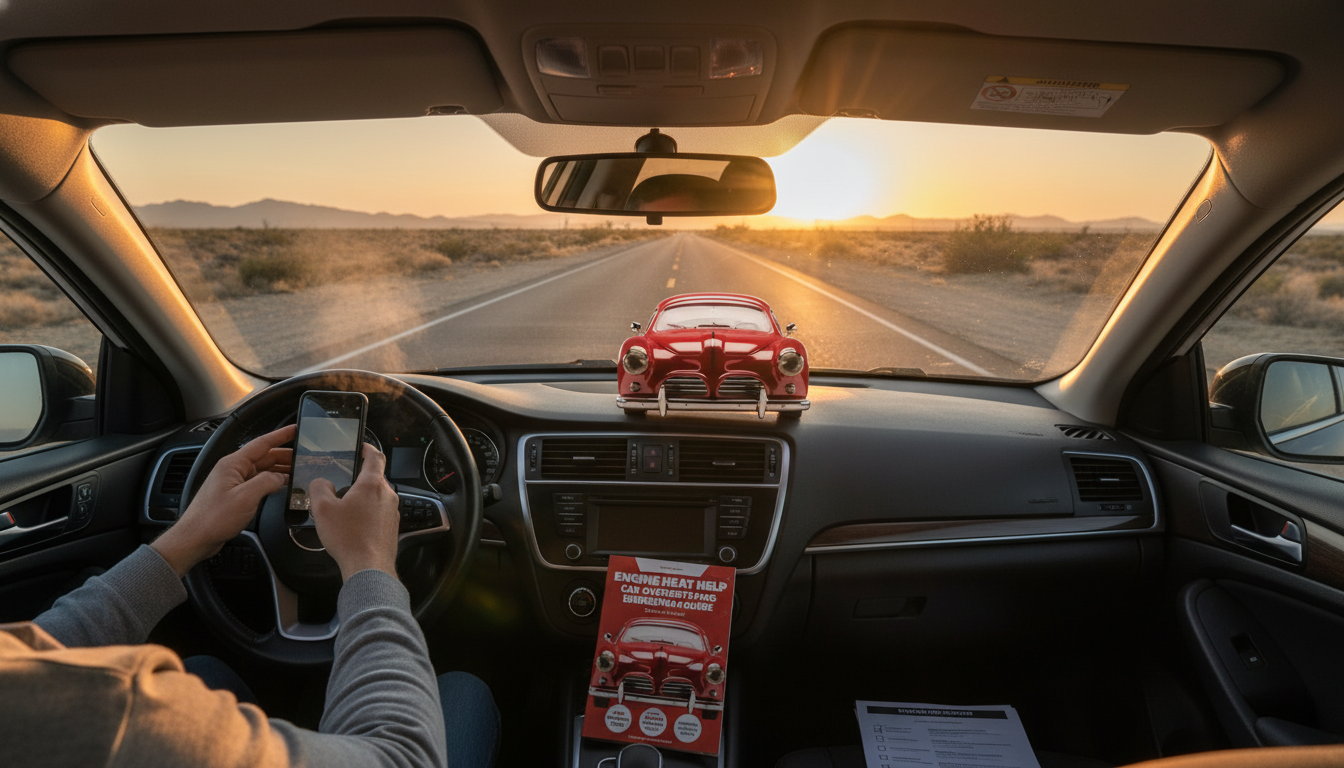
Engine Heat Help: What to Do When a Car Overheats on the Road
An overheating engine can turn a short drive into a safety risk within minutes. The goal is to protect people first, then prevent expensive engine damage by reducing heat quickly and avoiding the common mistakes that lead to burns or warped components. Below are immediate roadside actions, quick checks that don’t require tools, and the most common cooling-system failure points—plus a simple checklist to help prevent repeat incidents.
Recognize the warning signs early
Catching an overheat early can be the difference between a quick cool-down and a tow (or worse, a blown head gasket). Pay attention to these clues:
- Temperature gauge climbing rapidly toward hot, or a red temperature warning light
- Steam or a sweet smell from the front of the vehicle (often a coolant leak)
- Loss of power, rough running, or dashboard messages related to coolant temperature
- Heater stops blowing warm air (can indicate low coolant circulation)
- Puddles under the car after stopping (coolant is often bright green, orange, pink, or blue)
Immediate roadside steps to protect people and the engine
- Signal and move to a safe shoulder or parking area as soon as conditions allow; avoid stopping on curves, hills, or narrow shoulders.
- Turn off the A/C and set the cabin heater to maximum heat with the fan on high. This can pull heat away from the engine and buy time.
- If safe, keep rolling gently for a short distance at low load to reach a safer pull-off; avoid hard acceleration.
- Once stopped, shift to Park/Neutral, set the parking brake, and turn on hazard lights.
- Shut the engine off if the gauge is in the red, there is steam, or warning lights indicate overheating.
- Keep occupants away from traffic; if conditions are dangerous, stay buckled inside with hazards on and call for help.
For general roadside safety practices (visibility, positioning, and staying alert to traffic), review the guidance from NHTSA — Roadside Safety.
Cooling down safely: what not to do
- Do not open the radiator cap or coolant reservoir cap while hot; pressurized coolant can spray and cause severe burns.
- Wait at least 30–45 minutes (longer in extreme heat) before touching cooling-system components.
- Do not pour cold water onto a hot engine; rapid temperature change can crack or warp parts.
- If steam is present, increase distance from the front of the vehicle and allow the system to vent naturally.
- If a tow is needed, prioritize safety over “limping home” to avoid warped cylinder heads or head-gasket failure.
Quick diagnosis checks after the engine cools
Once temperatures come down and it’s safe to inspect, a few quick observations can narrow down the likely cause.
- Watch the temperature pattern: overheating at idle can point to fans; overheating at speed can point to airflow, coolant level, thermostat, radiator restriction, or water pump issues.
- Look for visible leaks: wet hoses, crusty residue, spray patterns near the radiator, or dripping under the water pump area.
- Check the coolant reservoir level (engine cold). Very low or empty suggests a leak or a recent boil-over.
- Listen/observe cooling fans: many vehicles cycle fans when hot or when A/C is engaged (model-dependent).
- Check for a broken belt: the serpentine belt drives the water pump on many engines; a missing or shredded belt can cause immediate overheating.
- Note any dashboard warnings (low coolant, engine protection mode) and record them for a mechanic.
Common overheating symptoms and safe next steps
| What happens | Likely cause | Safer next step |
|---|---|---|
| Overheats mostly at idle or slow traffic | Cooling fan not running, fan relay/fuse, fan motor, clogged radiator fins | Turn off engine, cool down, check fan operation and fuses; consider towing if fans don’t run |
| Overheats mostly at highway speeds | Low coolant, thermostat stuck, radiator restriction, water pump issue | Stop driving, cool down, check coolant level and visible leaks; tow if temperature rises quickly again |
| Sudden spike to hot with loss of heat from cabin heater | Very low coolant or air pocket, major leak | Shut off engine, wait to cool, do not open caps hot; call roadside assistance |
| Steam from front of vehicle | Boil-over from overheating, hose split, radiator leak | Move to safe location, shut off engine, keep distance until steam stops; tow recommended |
| Coolant smell but no obvious puddle | Small leak under pressure, reservoir cap issue, heater core seep | Top up only when cool (if appropriate), monitor closely, schedule inspection soon |
If it’s safe to add coolant (only after cooling)
For maintenance and repair planning guidance, AAA — Vehicle Maintenance and Repair Advice is a useful reference point.
Prevent repeat overheating: a simple engine cooling checklist
For broader maintenance basics and intervals, see Car Care Council — Maintenance Basics.
Roadside support tools: guided troubleshooting and a print-ready safety plan
Engine Heat Help emergency guide eBook includes a ready-to-follow overheat action plan, a cooling checklist, and a simple decision flow to help determine when it’s safer to stop testing and call for a tow.
For organizing small roadside items (like spare fuses, nitrile gloves, or a small rag) in the garage or trunk, an Elegant Cork Stopper Glass Storage Jar – Transparent Food & Tea Container can keep essentials grouped and easy to find before a trip.
FAQ
How to diagnose overheating engine
After the engine cools, check coolant level, look for visible leaks and residue, confirm cooling fans run when expected, and inspect the serpentine belt. If the temperature climbs rapidly again after topping off or you see heavy leaking/steam, stop testing and arrange a tow.
Is it safe to drive after the temperature gauge hits hot?
Driving while overheating can cause severe engine damage within minutes. Move only as far as needed to reach a safer pull-off at low load, then shut the engine off and let it cool; if it overheats again quickly, towing is the safer choice.













Leave a comment