

Daily Work Goals: Small Wins That Build Real Momentum
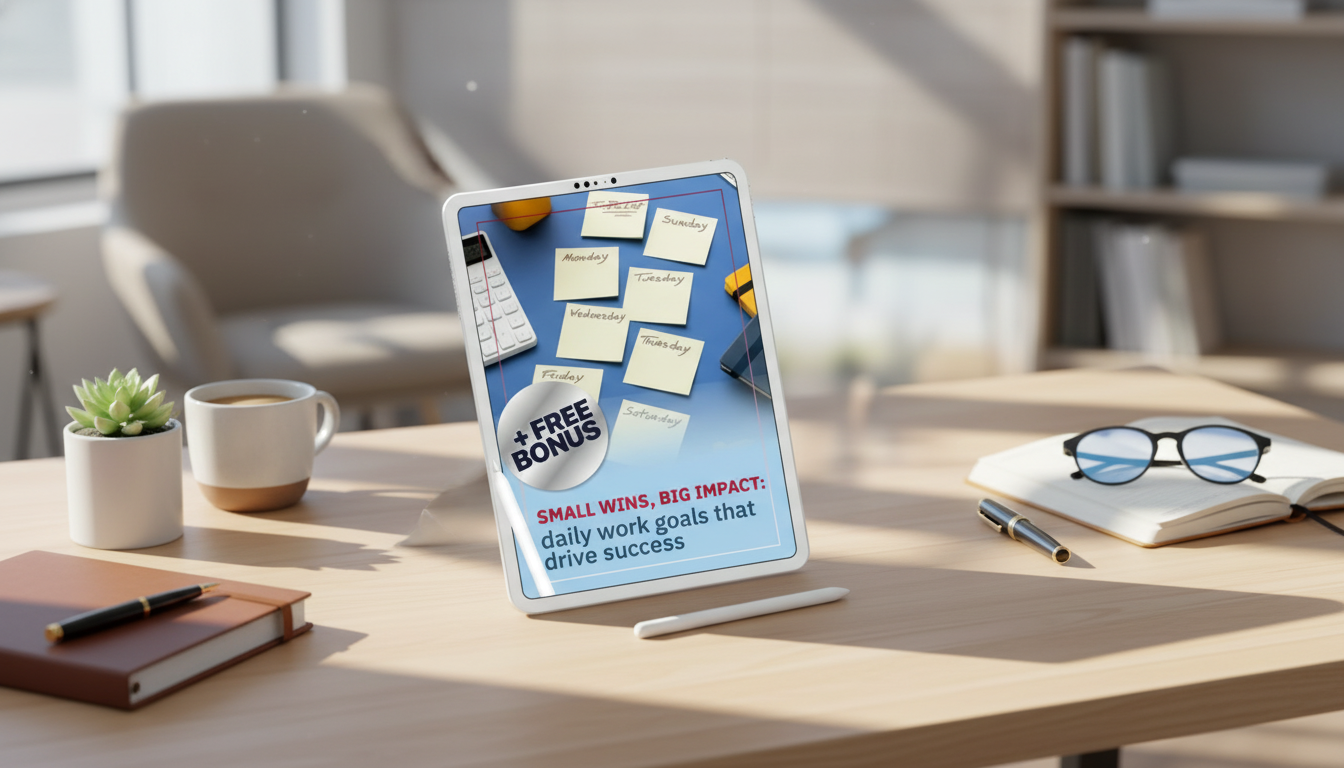
Small Wins, Big Impact: Daily Work Goals That Drive Success
Daily work goals turn big ambitions into doable actions. Instead of carrying a whole project around in your head, you focus on one or two clear outcomes you can finish today. That shift reduces overwhelm, improves follow-through, and builds momentum you can feel by the end of the day. Over time, those small, measurable wins compound into better performance, stronger habits, and clearer updates for teammates and stakeholders.
Why small daily wins change performance
Small wins work because they make progress easier to start and easier to see. When the goal is sized for a single day, you’re less likely to procrastinate, more likely to finish, and more likely to repeat the behavior tomorrow.
- Lower “activation energy”: Small goals make it simpler to begin, so consistency doesn’t depend on perfect motivation.
- Less context switching: A clear daily outcome defines what “done” looks like before distractions appear.
- Fast feedback: Frequent completion builds confidence and reinforces productive habits with immediate proof of progress.
- Compounding momentum: One finished step often unlocks the next (research gathered → decision made → work shipped).
- Visible progress supports morale: Seeing daily movement helps prevent burnout and makes status updates straightforward.
This idea is backed by research and real-world observation: small wins can create meaningful progress loops that improve performance over time. For a deeper look at why this works, see The Power of Small Wins and the American Psychological Association’s overview of how goal-setting supports behavior change.
A practical framework for daily work goals
A good daily goal is specific, observable, and sized to fit the day you actually have (meetings included). Use this quick framework to set goals that survive real life.
- Start with outcomes, not activities: Define the deliverable or decision that moves work forward (not “work on X”).
- Use three tiers: 1 Must-Do goal, 1–2 Should-Do goals, and a few Could-Do options for extra capacity.
- Make it testable: Attach a completion check like “sent,” “scheduled,” “drafted,” “decided,” or “published.”
- Time-box it: Assign realistic windows (15/30/60/90 minutes) to protect focus and prevent scope creep.
- Set constraints: Match the number of goals to your deep-work time and meeting load.
- Add a trigger: Tie the goal to a reliable cue (after stand-up, first hour of the day, post-lunch block).
Daily work goal structure
| Tier | Purpose | How many | Completion check |
|---|---|---|---|
| Must-Do | Protects the day’s most important outcome | 1 | A concrete deliverable or decision exists |
| Should-Do | Maintains steady progress on key projects | 1–2 | A visible step is completed and logged |
| Could-Do | Useful extras if time remains | 0–3 | Only pursued after Must/Should are complete |
Daily work goals examples you can copy (by focus area)
If goal-setting feels abstract, use plug-and-play formats that already include an output and a success check.
- Deep work: “Draft section 2 of the report (500–700 words) and add 3 citations.”
- Decision-making: “Choose the final proposal option and write a 5-bullet rationale for stakeholders.”
- Communication: “Send the client update email with timeline, risks, and next actions by 3 PM.”
- Planning: “Convert the project brief into 8 tasks with owners and due dates in the tracker.”
- Learning: “Complete one 20-minute module and summarize 3 takeaways applied to current work.”
- Quality: “Review yesterday’s work and fix the top 5 issues found in testing.”
Goal examples with time boxes and success checks
| Category | Example daily goal | Time box | Success check |
|---|---|---|---|
| Execution | Finish the first draft of the slide deck (10 slides) | 60–90 min | Deck saved and shared for review |
| Admin | Process and respond to all invoices/requests in the queue | 30 min | Inbox/queue at zero for that label |
| Meetings | Create agendas for tomorrow’s two meetings | 20 min | Agendas sent with desired outcomes |
| Sales/Outreach | Send 5 personalized follow-ups to warm leads | 30–45 min | 5 messages logged in CRM |
| Operations | Update SOP with the new steps and screenshots | 45–60 min | SOP published and versioned |
| Collaboration | Unblock teammate by answering 3 key questions | 15–25 min | Questions answered in one thread |
Role-based daily work goals examples
Different roles need different “done” definitions. These examples keep the same structure (output + check) while fitting common responsibilities.
A simple daily routine that makes goals stick
Time-boxing can make this routine easier to follow. If you like using a timer, the Pomodoro Technique is a simple way to protect focus in short sprints.
Common pitfalls and quick fixes
Printable and fillable guide for daily work goals
- Small Wins, Big Impact: Daily Work Goals That Drive Success | Productivity Guide + Daily Work Goals Examples | Digital Download PDF
- Stainless Steel Non-Stick Rolling Pin Set for Baking & Kitchen Use (great for building “small wins” routines outside work, like meal prep or baking projects)
- Elegant Cork Stopper Glass Storage Jar – Transparent Food & Tea Container (helpful for keeping daily staples visible and reducing friction in home routines)
FAQ
How many daily work goals should be set each day?
Aim for 1 Must-Do goal plus 1–2 Should-Do goals. On heavy meeting days, reduce the count so the goals match the focus time you actually have.
What’s the difference between a task list and a daily work goal?
A daily work goal is outcome-based and measurable, while a task list often mixes activities and reminders. For example, swap “work on presentation” for “finish slides 1–5 and send for review.”
How can daily work goals be tracked without extra apps?
Use a single page in a notebook or notes app with three lines (Must/Should/Could) and a checkbox plus a completion check (“sent,” “published,” “scheduled”). End the day with one short win and one blocker to keep tomorrow’s plan realistic.














Leave a comment