

Electric Tankless Water Heater Guide: Sizing & Power
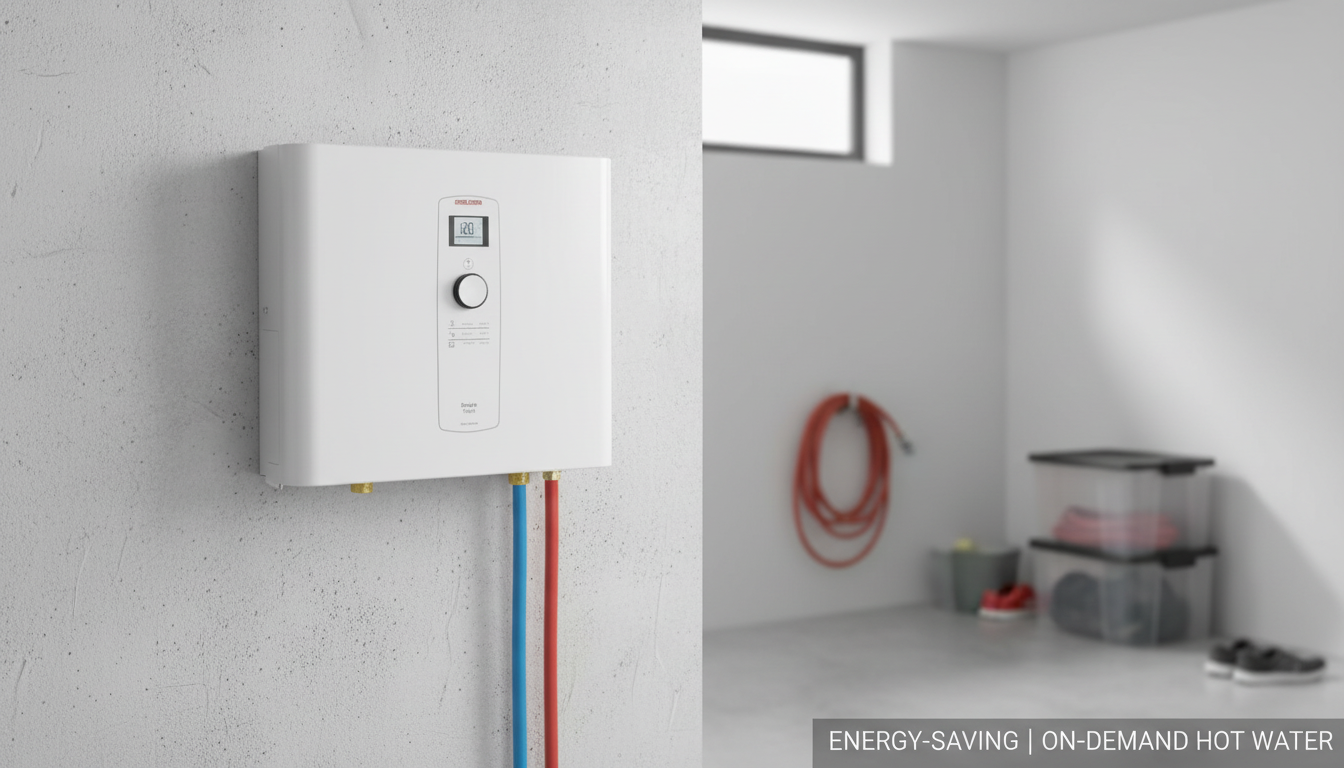
Electric Tankless Water Heater: What to Know Before Installing One
An electric tankless water heater delivers hot water on demand without a storage tank, helping reduce standby heat loss and freeing up space. The trade-off is that performance is tied closely to your electrical capacity, incoming water temperature, and how many fixtures are running at the same time. Below is a practical breakdown of how these systems work, how to size one, what installation typically involves, and when a traditional tank may still be the better fit.
How an Electric Tankless Water Heater Works
Unlike a storage-tank system that keeps a reservoir hot around the clock, an electric tankless unit heats water only when you open a hot-water tap. Cold water moves through the heater, sensors detect flow, and electric heating elements energize to raise the water temperature as it passes through.
Most units regulate output by modulating element power and/or adjusting flow. If demand exceeds the heater’s capacity at a given temperature rise, many models reduce flow to maintain the set temperature. That means you may still get hot water, but at a lower gallons-per-minute (GPM) rate than expected.
The key to comfort is matching the unit’s capacity to your real peak demand (how many fixtures run at once) and your climate (how cold the incoming water is in winter).
Sizing Basics: Flow Rate and Temperature Rise
Sizing comes down to two numbers: flow rate (GPM) and temperature rise (how many degrees the unit must heat the water). For example, if incoming water is 50°F and you want 120°F at the tap, your required rise is 70°F. The colder your supply water, the more heating power is needed—and the lower the GPM a given unit can provide.
Also consider simultaneous usage. A single shower might be fine, but a shower plus dishwasher plus a sink rinse can push the system past its comfort zone, especially in colder months.
| Fixture/use | Typical flow (GPM) | Notes |
|---|---|---|
| Shower | 1.5–2.5 | Low-flow heads reduce demand; multiple showers add up quickly |
| Bathroom sink | 0.5–1.5 | Often intermittent; lower priority in peak scenarios |
| Kitchen faucet | 1.0–2.2 | Higher when filling pots; consider aerators |
| Dishwasher | 1.0–2.0 | Cycles intermittently; may overlap with showers |
| Clothes washer | 1.5–3.0 | Varies by model and cycle temperature mix |
If your household frequently stacks hot-water uses, consider reducing fixture flow (for example, efficient showerheads) or splitting the load with a point-of-use unit near a remote bathroom. The U.S. Department of Energy’s overview of demand-type water heaters is a helpful starting point for understanding performance and savings expectations: https://www.energy.gov/energysaver/tankless-or-demand-type-water-heaters.
Electrical Requirements and Panel Capacity
Breaker sizing, wire gauge, grounding, and installation methods must match the manufacturer’s documentation and local code. For code context, the National Fire Protection Association (NFPA) provides an overview of the National Electrical Code (NEC): https://www.nfpa.org/codes-and-standards/all-codes-and-standards/list-of-codes-and-standards/detail?code=70.
Installation Considerations: Location, Plumbing, and Controls
Energy Use and Operating Cost: What Changes in Daily Use
Many households see the most noticeable savings from behavior and fixture efficiency rather than the heater alone: shorter showers, cooler laundry cycles, and efficient faucets/showerheads. If you’re exploring fixture upgrades, EPA WaterSense can help identify water-saving products: https://www.epa.gov/watersense/find-watersense-products.
| Factor | Electric tankless | Storage tank |
|---|---|---|
| Hot-water availability | Continuous within capacity | Limited by tank size and recovery rate |
| Space | Compact wall-mount | Larger floor footprint |
| Upfront install | Often higher due to electrical upgrades | Often lower with existing hookups |
| Maintenance | Periodic descaling in hard water | Anode/flush; tank replacement over time |
| Best fit | Low-to-moderate simultaneous demand, space constraints | High peak demand, limited electrical capacity |
Maintenance and Longevity
| Task | How often | Why it matters |
|---|---|---|
| Descale/flush (with isolation valves) | Every 6–12 months in hard water; otherwise as needed | Reduces scale on heating elements and stabilizes output |
| Clean inlet filter/screen | Every 3–6 months | Prevents flow restriction and sensor issues |
| Inspect electrical connections (qualified pro) | Annually | Maintains safe operation under high current loads |
| Check temperature setting | Seasonally | Adjusts for incoming water temperature changes and comfort |
When an Electric Tankless Water Heater Is (and Isn’t) the Right Choice
Featured Option
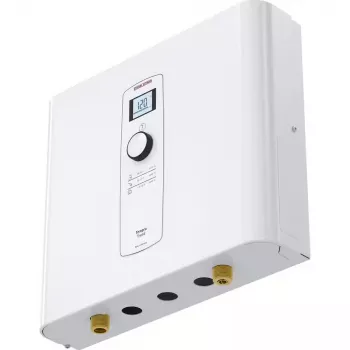
If you’re ready to shop, the Electric Tankless Water Heater is designed for on-demand hot water in a compact form factor. Before purchasing, confirm your electrical service capacity, breaker space, and the manufacturer’s flow/temperature-rise specifications for your region.
| Item | Value |
|---|---|
| Product | Electric Tankless Water Heater |
| Price | $612.65 USD |
| Availability | In stock |
| Product page | https://hovira.com/electric-tankless-water-heater/ |
For a small, home-focused add-on that complements utility spaces and organized storage, consider the Modern Glass Storage Jar with Golden Butterfly – Elegant Home Decor.
FAQ
Can an electric tankless water heater run two showers at the same time?
Yes, if the unit can deliver enough GPM at your required temperature rise. In colder seasons, incoming water is colder and available GPM drops, so two showers may require a larger-capacity unit and/or lower-flow showerheads.
Does an electric tankless water heater need 240V power?
Most whole-home models use 240V and require one or more dedicated double-pole breakers. Smaller point-of-use units may have different requirements, so always match the unit’s specs to local code and your panel capacity.
How often should a tankless water heater be descaled?
In hard-water areas, descaling every 6–12 months is common; softer water can allow longer intervals. Regular flushing helps prevent scale buildup that can cause reduced flow and unstable temperatures.












Leave a comment