

Folding Outdoor Camping Cart: Smooth Hauls Anywhere
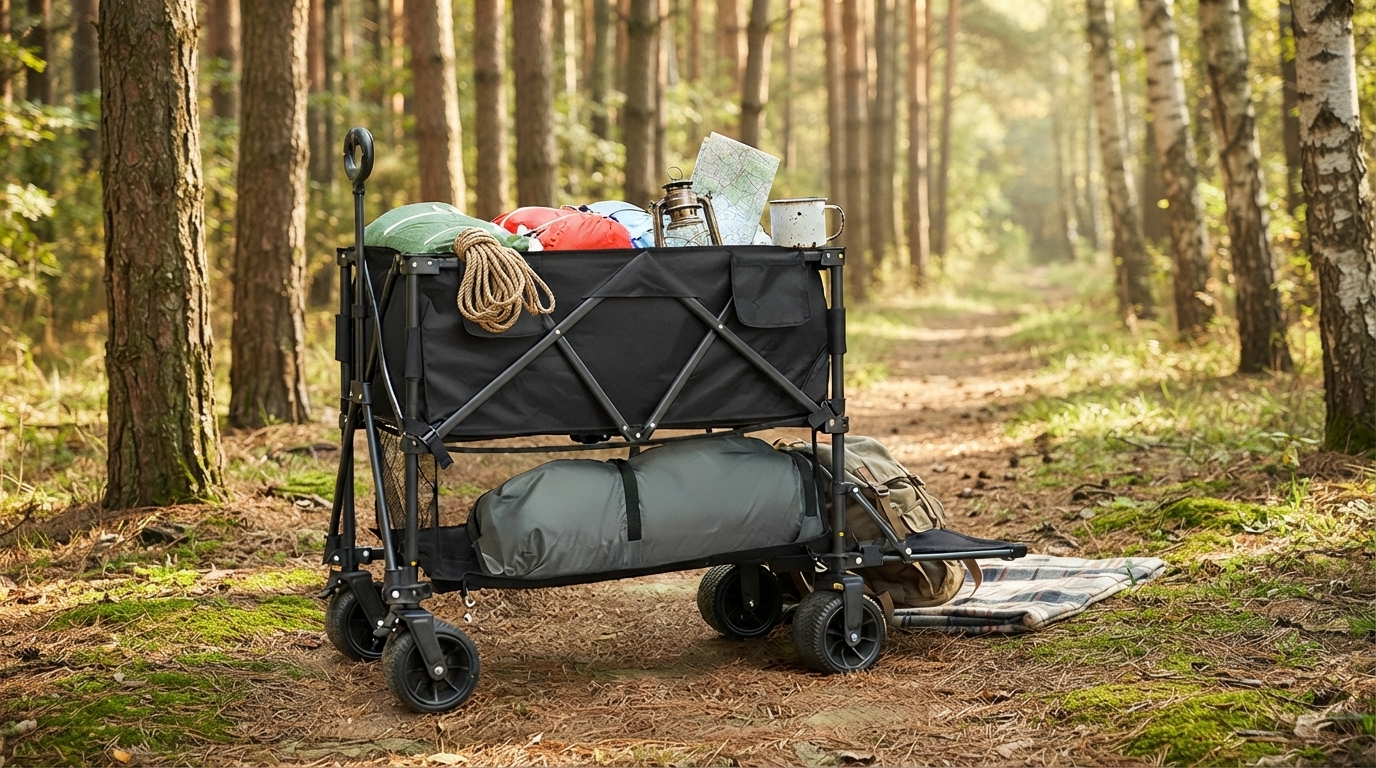
Folding Outdoor Camping Cart: Haul Gear Comfortably on Campsites, Parks, and Trails
A folding camping cart cuts down the back-and-forth between your vehicle and your spot, especially when the load includes a full cooler, bulky tents, camp kitchen bins, or firewood. The difference between a cart that feels effortless and one that fights you usually comes down to a few practical details: capacity, wheel design, foldability, and how stable it stays over gravel, grass, sand, and uneven ground. For more guidance, see Collapsible Wagon | Rowan County Public Library.
What a Folding Camping Cart Is Best For
A good folding cart earns its keep when the distance is long, the gear is awkward, or the ground is inconsistent. For further reading, see Heavy Duty Wagon | Beach Carts For Sand | Mighty Max Cart ….
- Camp setup and breakdown: Move tents, sleeping bags, camp kitchen bins, and water jugs in fewer runs.
- Beach days and park outings: Carry chairs, umbrellas, toys, and food without shoulder strain.
- Event hauling: Handy for tailgates, sports tournaments, and outdoor markets where parking is distant.
- Backyard and home use: Useful for garden supplies, mulch bags, and bulk items from the car to the house.
- When it’s not ideal: Very steep trails, deep mud, tight staircases, or rocky singletrack paths where a cart can snag or become unstable.
For land-friendly habits at busy sites, it also helps to plan fewer trips and keep gear contained; the Leave No Trace Seven Principles are a helpful refresher before heading out.
Key Features That Change Real-World Performance
Two carts can look similar online but behave very differently once they’re loaded. These are the features that most directly affect how smoothly the cart pulls and how long it lasts.
- Load capacity and frame strength: Higher capacity matters for coolers and water. A rigid frame helps prevent sagging when weight is uneven or the ground is rutted.
- Fabric bed and seams: Durable fabric resists abrasion from wood bundles, metal stakes, and rough storage bins. Reinforced corners help reduce tearing over time.
- Wheel type and size: Larger, wider wheels roll more easily over soft or bumpy surfaces. A useful tread pattern improves bite on gravel and grass.
- Handle design: Telescoping or angled handles improve leverage. Comfortable grips reduce hand fatigue on long pulls from parking to camp.
- Brakes or wheel locks: Helpful on sloped campsites or when loading and unloading on a driveway or hill.
- Fold and storage footprint: Quick-fold designs save time on arrival. A compact fold fits trunks, garage shelves, and closets more easily.
- Weight of the cart: Lighter carts are easier to lift when folded, but ultra-light builds can trade off stability under heavy, top-heavy loads.
Quick Checklist: Match the Cart to the Terrain and Gear
Instead of shopping by capacity alone, match your most common terrain and cargo type to the features that make those trips easier.
| Situation | What to Prioritize | Why It Helps |
|---|---|---|
| Long walk from parking to campsite | Comfortable handle + stable tracking | Reduces fatigue and keeps the cart from veering under load |
| Sand or soft grass | Wide wheels + larger diameter | Less sinking and smoother rolling |
| Coolers and water jugs | High capacity frame + secure bed | Supports concentrated weight without bending or tipping |
| Uneven ground and ruts | Sturdy frame + balanced wheelbase | Improves stability and prevents spill-outs |
| Small trunk or limited storage | Compact fold + quick setup | Fits tight spaces and saves time on arrival |
If camp meals are part of your setup, planning bins around your cart’s footprint keeps loads stable. REI’s guide to camp kitchen basics is a useful reference for deciding what containers and cooking gear you’ll actually use (and therefore what you’ll want to haul).
How to Load It So It Pulls Smoothly (and Doesn’t Tip)
Even a sturdy cart can feel awkward if it’s loaded in a way that shifts weight away from the wheels or creates a top-heavy stack.
- Place dense items low and centered: Put coolers and water close to the axle line to reduce tipping on turns.
- Balance left-to-right: Uneven loading can make the cart drift and can stress one side of the frame more than the other.
- Stack lighter items on top: Chairs, blankets, and clothing bags ride best above the heavy base layer.
- Use straps for awkward shapes: Firewood bundles, propane bottles, and long poles should be secured so they can’t slide when you hit a rut.
- Keep a clear turning radius: Avoid overfilling past the sidewalls if it compromises steering or causes gear to spill on tight turns.
Care, Cleaning, and Storage
A Solid Option to Consider
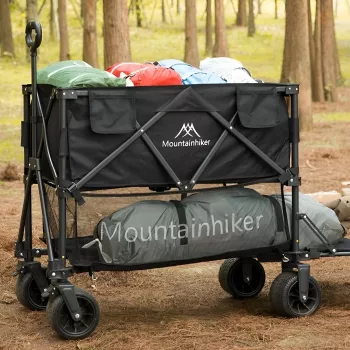
- Folding Outdoor Camping Cart: Designed for hauling bulky outdoor gear while packing down for easier storage.
- Calvin Klein Men’s Pochette & Grooming Bag: A compact way to keep toiletries and small essentials organized so they don’t get lost in the main haul.
- The Clear-Mind Decision Maker | Printable Mindfulness Checklist: Helpful for trip planning and packing decisions when you want to keep gear (and stress) under control.
FAQ
Do folding camping carts work on sand?
They can, but performance depends heavily on wheel width and diameter—wider wheels reduce sinking. Packing lighter and pulling steadily (instead of jerking the handle) also helps the cart stay on top of soft sand.
How much weight can a folding camping cart carry safely?
Use the manufacturer’s rated capacity as the hard limit, and keep heavy items centered and low. Concentrated loads like a full cooler can stress frames more than evenly distributed gear, so balance matters as much as the number on the label.
How do you keep a loaded cart from tipping over?
Load heavy items low, balance side-to-side, and avoid stacking above the sidewalls when the ground is uneven. Straps are especially useful for tall or shifting items so they don’t slide mid-pull.












Leave a comment