

Global Travel Etiquette eBook: Tips for Confident Trips

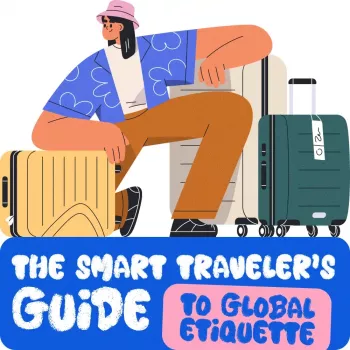
The Smart Traveler’s Guide to Global Etiquette (Digital eBook): Cultural Tips for Confident International Travel
Navigating social norms abroad can be the difference between a smooth, welcoming trip and an awkward misunderstanding. This digital guide is designed to help travelers recognize common etiquette pitfalls, understand why customs vary, and apply practical, respectful behaviors in everyday situations—from greetings and dining to tipping, public conduct, and business settings.
What “good manners” looks like around the world
Etiquette isn’t a universal rulebook—it’s a local system of respect. A behavior that reads as friendly and open in one country can feel intrusive or careless in another. That’s why “good manners” is less about memorizing rigid rules and more about noticing what a community signals as considerate.
- Small actions carry big cultural meaning: eye contact, speaking volume, personal space, punctuality, and even how you hand over a credit card can communicate respect—or the opposite.
- Context matters: the same gesture can be fine with friends but inappropriate with elders, in religious spaces, or in formal settings.
- A simple default when unsure: observe first, ask politely, and mirror the most respectful behavior in the room.
Why travelers get tripped up: the most common etiquette misunderstandings
Most awkward moments come from “autopilot” habits—doing what feels normal at home and assuming it carries the same meaning elsewhere. A few areas tend to cause the most confusion:
- Greetings: some cultures prefer a quick handshake; others rely on bows, cheek kisses, or verbal greetings without touching. In certain settings, physical contact (or initiating it) may be inappropriate.
- Body language: pointing, showing the sole of a shoe, beckoning with one finger, and hand signals like “OK” or thumbs-up can be offensive depending on the region.
- Conversation norms: directness vs. indirect hints, interrupting, teasing, and “safe” small talk differ widely. Topics such as politics, religion, money, or personal questions can be normal in one place and rude in another.
- Privacy and photos: photographing people, homes, temples, markets, or ceremonies may require permission—even when it’s in a public area.
Quick-reference etiquette table for everyday situations
Use this snapshot as a fast checklist before meals, meetings, religious site visits, and public transit. When uncertain, choosing the more modest, quieter, and more formal option usually reduces risk.
| Situation | Safer default | Common watch-outs |
|---|---|---|
| Greeting someone new | Wait for the other person to initiate contact; offer a polite smile and verbal greeting | Too-firm handshakes, unsolicited hugs, prolonged eye contact |
| Dining in a home or small restaurant | Follow seating cues; keep hands visible; try a bit of what’s offered when possible | Starting before the host, left-hand use where discouraged, visible impatience |
| Visiting religious or cultural sites | Dress modestly; speak softly; ask before photos | Exposed shoulders/knees, turning back to shrines, flash photography |
| Taxis, markets, and bargaining | Stay friendly; ask prices clearly; negotiate calmly where appropriate | Aggressive haggling, raising voice, ignoring queue/turn-taking norms |
| Tipping and service expectations | Check local norms; tip discreetly when customary | Overt cash displays, tipping where it’s considered insulting, undertipping in tip-based economies |
| Public behavior | Keep volume moderate; give extra personal space; follow local rules on eating/drinking in transit | Loud calls, public affection where discouraged, littering |
How the eBook helps: practical cultural tips travelers can use immediately
The Smart Traveler’s Guide to Global Etiquette (digital download) is built for real travel moments—when you’re stepping into a taxi, meeting a host, joining a tour group, or sitting down to a meal and don’t want to guess.
- Readable, travel-friendly format: quick guidance you can reference before key moments (check-in, meals, tours) without digging through long chapters.
- Scenario-based clarity: greetings, dining, guest etiquette, gift-giving, public conduct, and respectful communication are addressed in practical terms.
- Cultural humility, not perfectionism: learn what to do if you make a mistake—how to recover gracefully and show sincere respect.
- Versatile for many trips: leisure travel, study abroad, cruises, group tours, and first-time international travel.
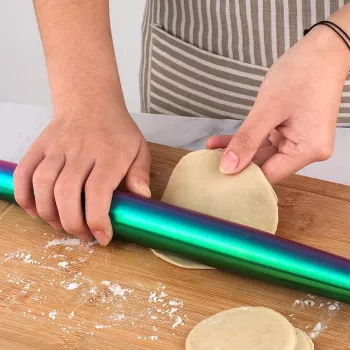
For travelers who like to feel prepared, pairing the guide with a few “smooth-trip” essentials can help. If you’re staying in an Airbnb or vacation rental and plan to cook, items like the Elegant Cork Stopper Glass Storage Jar – Transparent Food & Tea Container can be handy for keeping tea, spices, or snacks organized. For longer stays that include baking or shared meals, the Stainless Steel Non-Stick Rolling Pin Set for Baking & Kitchen Use and the Beautiful Stainless Steel Shell Spoon – Elegant Kitchen Ladle Set can support respectful “guest cooking” when it’s appropriate to contribute—without improvising with someone else’s limited tools.
When etiquette matters most: high-stakes moments on a trip
Respectful communication toolkit (even without fluent language skills)
For destination-specific updates beyond etiquette—like safety notices, entry requirements, and local advisories—review official travel resources before each leg of your itinerary, including the U.S. Department of State – International Travel and the UK Foreign, Commonwealth & Development Office – Foreign travel advice. For quick country background references, the CIA World Factbook can also be useful.
Digital download details and who it’s best for
FAQ
Is this guide useful if traveling to multiple countries on one trip?
Yes. It emphasizes principles (observe, mirror respectful cues, and choose modest/formal defaults) that work across destinations, plus quick-reference behaviors you can review before each new leg of your itinerary.
What should be done after accidentally breaking a local custom?
Offer a brief, sincere apology, correct the behavior right away, and avoid arguing or over-explaining. Respectful effort and calm adjustment are often appreciated more than perfect execution.
Does etiquette guidance cover dining, tipping, and greetings?
Yes. It covers day-to-day situations like greetings, table manners, tipping expectations, gift-giving, public behavior, and service norms so you can handle common interactions with confidence.












Leave a comment