

Magnetic Wooden Alphabet Blocks: Build, Click, and Spell
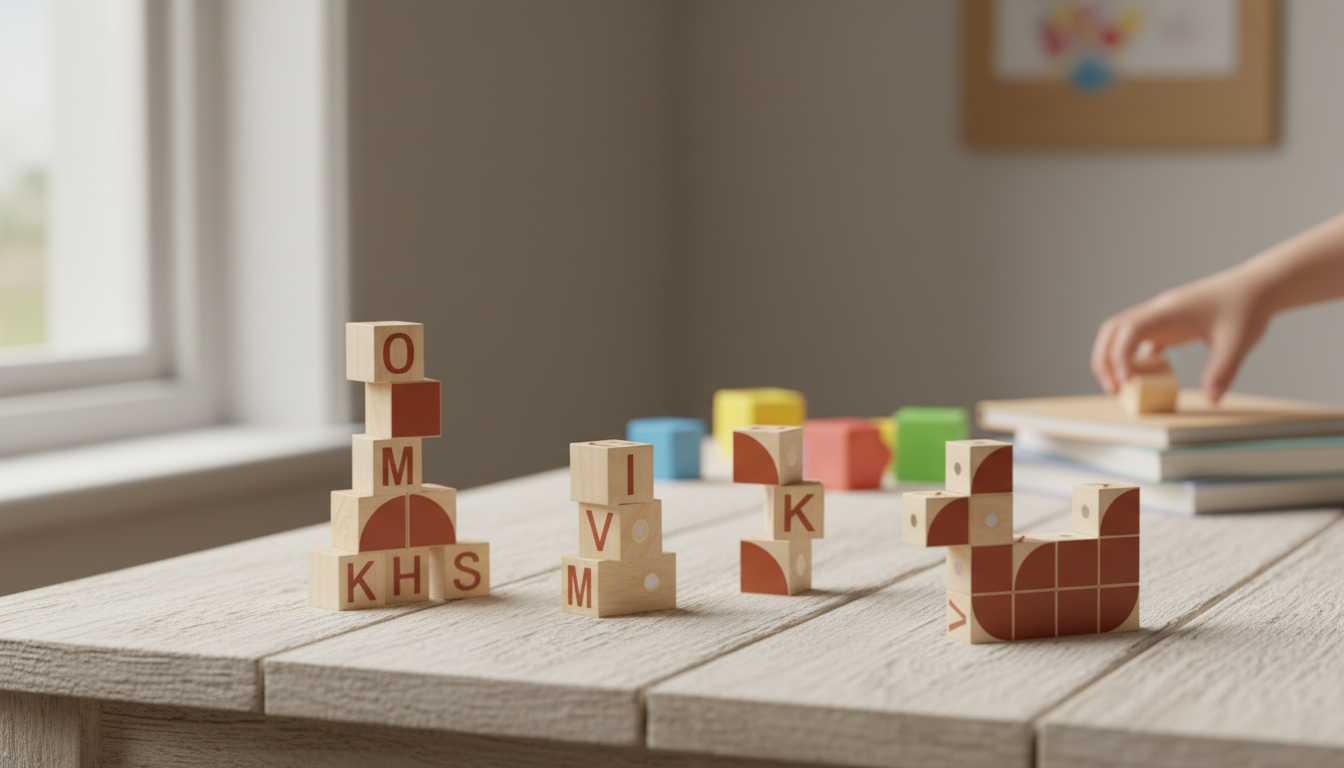
Magnetic Wooden Alphabet Blocks for Hands-On Letter Learning and Building
Magnetic wooden alphabet blocks blend the familiar feel of classic wood blocks with gentle magnetic connections that help builds “hold” while kids explore letters. That small bit of added stability makes it easier to move from simple stacking to purposeful play like spelling a child’s name, sorting letters, or building tiny towers that don’t collapse the moment a block is nudged. They’re equally useful for quick, guided learning moments and for independent, open-ended building on the floor, at the table, or in a travel bin.
What Makes These Blocks Different
- Wooden block feel with a satisfying magnetic “click”: Magnets help pieces stay together during building, so kids can focus on creating instead of constantly rebuilding fallen stacks.
- Alphabet-forward play: Activities can grow with a child—from simple letter matching to early spelling and word-building.
- Two-hand coordination built in: Kids practice picking up, rotating, aligning, pressing together, and separating blocks—movements that support everyday fine-motor control.
- Fits multiple play styles: Great for floor play, tabletop stations, and compact “busy bins” for quiet time or travel.
Skills Supported Through Everyday Play
- Letter recognition: Try point-and-name games (“Where is the A?”), quick letter hunts, and—if a set includes both—uppercase/lowercase matching.
- Phonics readiness: Connect letters with sounds using beginning-sound prompts (B for ball, C for cat) and simple sound-blending with short words.
- Fine-motor strength: The pinch-and-pull action of magnetic connections encourages controlled finger strength without requiring excessive force.
- Spatial reasoning: Kids experiment with balance, symmetry, and planning—figuring out which shapes and orientations make a structure sturdier.
- Language growth: Build scenes (a “zoo,” a “road,” a “castle”) and label creations with starting letters or short words, then narrate what’s happening.
How to Use Magnetic Alphabet Blocks by Age
Toddlers (with close supervision)
- Focus on sorting by color or simple categories (letters vs. shapes if included).
- Practice safe stacking and “tap together, pull apart” play to explore how magnets work.
- Use a few letters at a time—point to a named letter when an adult calls it out.
Preschoolers
- Build a child’s name and talk about the first letter as a “special letter.”
- Introduce simple CVC word play (cat, dog) with lots of sound support.
- Play “find the letter that starts…” games using familiar objects (toy car → C).
Kindergarten and early elementary
- Move into longer words, simple sight words, and “build-and-spell” challenges.
- Explore word families (at, cat, hat) by swapping the first letter while keeping the ending steady.
- Try timed “mix and fix” rounds: scramble letters, then rebuild the target word.
Short sessions tend to work best: aim for 5–10 minutes of structured play (a specific task) followed by open building time where kids can create freely.
Quick Activity Ideas (Low Prep)
Safety and Material Checklist
- Age appropriateness: Follow the product’s age labeling; toddlers need close supervision with any small parts.
- Magnets: Choose blocks with magnets that are securely enclosed. Discard any item that cracks or shows exposed magnets. For additional guidance, see the U.S. Consumer Product Safety Commission (CPSC).
- Finish quality: Look for smooth edges and child-safe coatings; avoid splintering, rough seams, or sticky finishes.
- Block size: Larger blocks are easier for small hands and can reduce choke-risk compared with mini pieces.
- Storage: A lidded bin or bag helps keep sets complete and reduces loose pieces underfoot.
General toy-selection tips can also be found through the American Academy of Pediatrics, and many toys are designed around benchmarks like ASTM F963 safety standards.
Comparing Toy Options at a Glance
| Option | Best For | Things to Watch |
|---|---|---|
| Magnetic wooden alphabet blocks | Letters + building that holds together | Confirm magnets are fully enclosed; choose a comfortable block size |
| Non-magnetic wooden alphabet blocks | Classic stacking and letter exposure | Structures may slip apart; may need trays or mats for steadier play |
| Plastic magnetic tiles (non-letter) | Large-scale building and geometry play | Less direct letter practice unless paired with cards/labels |
| Foam letters/blocks | Soft, quiet play and bath-time variants | Less structure-building stability; may not support stacking skills as well |
Product Spotlight: Magnetic Wooden Alphabet Blocks
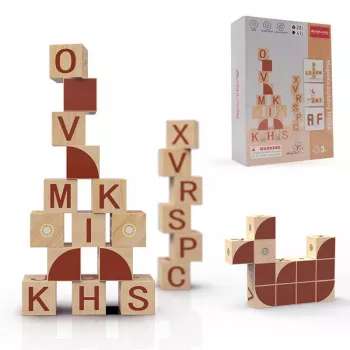
If you want one toy that supports both early literacy and hands-on building, Magnetic Wooden Alphabet Blocks are designed for exactly that mix. The magnetic connections help kids keep simple structures together while they rotate pieces to find specific letters, line up a name, or experiment with early word-building. They work well for independent play, parent-guided learning moments, and “station-style” setups at home.
Helpful add-on for adults (optional)
For caregivers who like having a quick reset before guided learning time, The Clear-Mind Decision Maker | Printable Mindfulness Checklist for Clarity & Calm Choices is an easy, low-effort tool to keep on hand during busy routines.
FAQ
What is the best magnetic building blocks for toddlers?
Look for larger pieces that are easy to grasp, smooth on all edges, and made with magnets that are fully enclosed. Check the age rating, avoid tiny add-ons for younger toddlers, and prioritize sets that store neatly so loose pieces don’t end up on the floor.
How to make wooden block letters?
Start with unfinished wooden cubes sized for small hands, sand all edges smooth, and apply a child-safe paint or sealant. Add letters with stencils, durable vinyl, or (adult-only) wood-burning tools, and let the finish cure completely before play.
Where can I buy large wooden blocks?
Large wooden blocks are commonly available through toy shops, educational supply stores, and online listings with clear dimensions and safety guidance. If you’re choosing a magnetic set, confirm magnets are encased and the blocks are sized appropriately for early learners.











Leave a comment