

Pay Off $8,000 in 6 Months: Weekly Checklist Plan
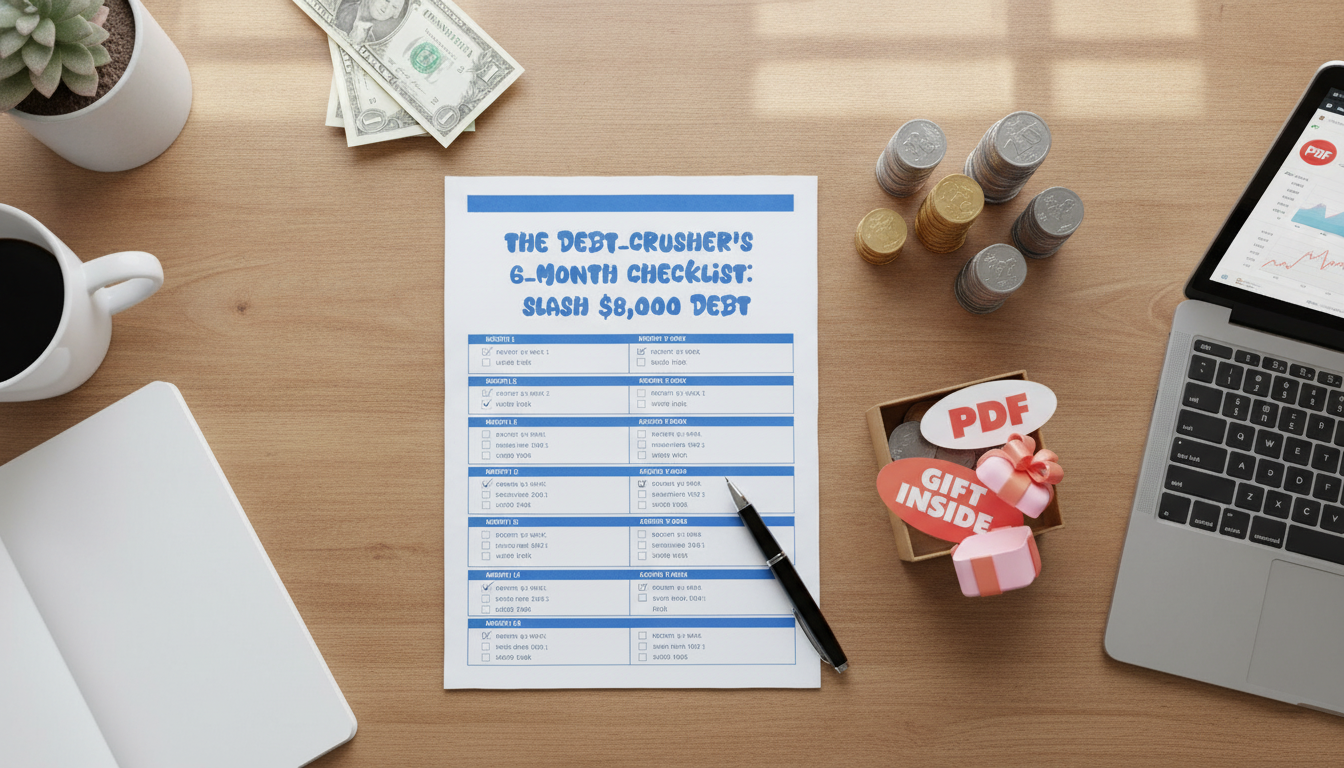
The Debt-Crusher’s 6-Month Checklist: A Practical Plan to Cut $8,000 and Stay on Track
Paying off $8,000 in six months is demanding, but it becomes manageable with clear weekly actions, a realistic budget, and a simple tracking system that shows progress fast. The goal is to make “what to do next” obvious: cover minimum payments, send targeted extra payments on a schedule, cut spending in ways that don’t rebound, and track balances so the momentum stays visible.
What It Takes to Pay Off $8,000 in 6 Months
Start with a quick reality check: $8,000 ÷ 6 ≈ $1,334 per month (plus interest unless rates are extremely low or temporarily paused). That number isn’t meant to discourage—it’s meant to clarify what needs to happen in cash flow.
- Focus on controllables: spending cuts that stick, temporary extra income, negotiating rates/fees, and consistent payment timing.
- Expect uneven months: plan ahead for at least one “messy” month (car repair, travel, medical, school costs) and decide how you’ll adapt without quitting.
- If the math doesn’t work on current income, shift the goal: extend to 9–12 months, prioritize the highest-interest balances first, and explore rate relief options.
6-Month Paydown Targets (Example for $8,000 Principal)
| Month | Target Payment (Principal-Only Example) | Cumulative Paid | Remaining Balance |
|---|---|---|---|
| 1 | $1,334 | $1,334 | $6,666 |
| 2 | $1,334 | $2,668 | $5,332 |
| 3 | $1,334 | $4,002 | $3,998 |
| 4 | $1,334 | $5,336 | $2,664 |
| 5 | $1,334 | $6,670 | $1,330 |
| 6 | $1,330 | $8,000 | $0 |
Set the Ground Rules Before Week 1
- List every debt with balance, APR, minimum payment, and due date; confirm totals match statements (not memory).
- Choose a payoff method: avalanche (highest APR first) for lower interest cost, or snowball (lowest balance first) for quick wins. Either works if the extra payment is consistent.
- Protect the plan with a mini buffer: $300–$1,000 in a separate “do-not-touch” category helps prevent new debt when small surprises hit.
- Stop the leak: pause non-essential subscriptions, remove stored cards from shopping apps, and use a 24-hour rule for discretionary buys.
If you need help organizing the steps and keeping them visible, a printable approach can be easier than bouncing between multiple apps. The Debt-Crusher’s 6-Month Checklist (Printable PDF) combines a six-month timeline with budget pages and a payment log so you can see progress at a glance.
Month-by-Month Checklist (Simple, Repeatable Actions)
Month 1: Build the map
- Create a baseline budget based on the last 30–60 days of real spending.
- Set automatic minimum payments for every debt.
- Make your first extra payment within 48 hours of payday to remove decision fatigue.
Month 2: Shrink fixed costs
- Call internet/phone providers, insurance, and any subscription services.
- Ask directly for a lower rate, promotional pricing, or a plan review.
- Redirect every dollar saved straight to the target debt the same day.
Month 3: Raise cash flow
- Sell unused items with a deadline (7–14 days) so “later” doesn’t become “never.”
- Pick up a short sprint: extra shifts, weekend gig, or short-term contract work.
- Send all “found money” to debt before it blends into everyday spending.
Month 4: Audit spending categories
- Tighten groceries, dining, rideshare, and online shopping.
- Use a weekly cap (clear and enforceable) rather than vague monthly intentions.
- Plan low-cost defaults so choices are easy when you’re tired.
Month 5: Prevent backsliding
- Look ahead 30–60 days for birthdays, travel, school costs, and holidays.
- Create tiny sinking funds so those events don’t end up on a credit card.
- Re-check your due dates and autopay settings to avoid late fees.
Month 6: Close the loop
- Schedule the final payment and confirm your payoff amount with the lender (including any trailing interest).
- Verify the balance shows $0 and save the confirmation.
- Set a new autopilot goal: starter emergency fund, retirement contributions, or the next debt.
Weekly Routine That Keeps Momentum (15 Minutes)
- Every payday: pay minimums first, then send the extra payment to the target debt immediately.
- Every week: update balances (at least the target balance) and record the change; visibility keeps the plan emotionally “real.”
- Midweek spend check: compare actual spending to the weekly cap. If you’re over, pick one specific offset (skip one meal out, no delivery, postpone a purchase).
- End of week: plan known costs (gas, groceries, bills) so the budget matches reality rather than optimism.
Budget Cuts That Usually Work Better Than “No Fun” Rules
When you feel decision fatigue (a common reason people overspend), a short grounding routine can help you stick to the plan long enough for results to show. The Clear-Mind Decision Maker is a printable checklist designed to slow down impulsive choices so your budget has fewer surprise leaks.
How to Find Extra Money Without Burning Out
For trustworthy guidance on dealing with debt and creditor communication, review the FTC’s tips on getting out of debt and the CFPB’s resources on managing debt and debt collection. If you need to request changes or respond to a collector, the CFPB sample letters can help you stay organized and accurate.
Use a Printable Checklist + Tracker to Make the Plan Stick
Common Pitfalls (and Quick Fixes)
FAQ
Is debt payoff planner and tracker free?
Some debt payoff planners and trackers are free (often with ads, limited customization, or data-sharing tradeoffs), while others are paid for more control and features. A one-time printable purchase can be cheaper long-term than an ongoing subscription, especially if you prefer offline visibility and a simple routine.














Leave a comment