

Vibrating Peanut Ball Massager: Rechargeable Relief
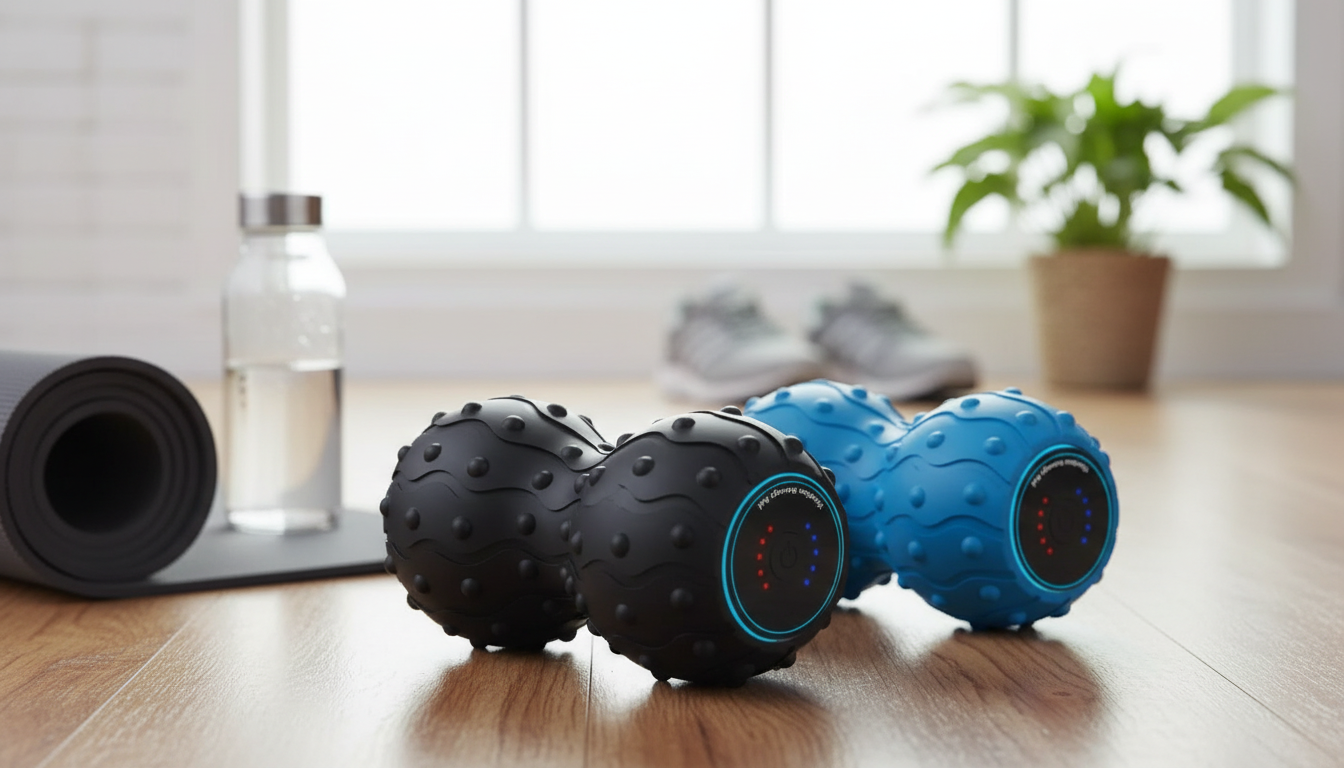
Portable Electric Vibrating Peanut Ball for Targeted Muscle Relaxation
A vibrating peanut ball massager combines focused pressure with vibration to help ease tight spots along the neck, spine-adjacent muscles, shoulders, glutes, calves, and feet. Its dual-lobed shape “hugs” muscle groups and can be used against a wall, on the floor, or at a desk—making it a practical option for quick recovery sessions at home, at the gym, or while traveling.
What a Vibrating Peanut Ball Is (and Why the Shape Matters)
A peanut ball is essentially two connected massage balls—one tool, two pressure points. That dual-lobed design is the reason it feels more controlled than a single lacrosse-style ball in areas where bones and joints are close to the surface.
- Dual-lobed support near bony landmarks: The shape can target muscles on either side of bony areas (often helpful near the spine, shoulder blades, and the base of the neck) while helping you avoid direct pressure on bones.
- Vibration for a soothing “downshift”: Vibration adds a calming sensation that may help muscles feel less guarded during self-massage, especially when you’re trying to relax into a tender spot.
- Portable and versatile positioning: The compact form fits in a bag and works well for standing wall sessions or floor sessions with body-weight control.
Key Features to Look For in a Rechargeable Peanut Ball Massager
Small tools can vary a lot in day-to-day usability. A few practical details make the difference between a device you use once and a device you keep in your routine.
- Vibration levels: Multiple intensities let you start with a gentle setting and progress to deeper work based on comfort.
- Rechargeable power: Rechargeable units are easier to use consistently; check charging style and expected runtime so it fits your schedule.
- Surface grip and firmness: You want enough traction to keep it from slipping, plus a firmness that feels effective without turning “sharp.”
- Noise and portability: Quieter motors and a compact design are more desk- and travel-friendly.
- Easy controls: Simple buttons and clear indicators help you adjust intensity mid-session without breaking position.
Quick guide: where to use a vibrating peanut ball and how long
| Area | Best position | Pressure tip | Time per spot |
|---|---|---|---|
| Neck base/upper traps | Against a wall or lying on the floor | Start light; avoid direct pressure on the spine | 20–40 seconds |
| Between shoulder blades | Floor (slow body-weight shifts) | Keep ball beside the spine, not on it | 30–60 seconds |
| Glutes/hips | Floor seated or lying | Breathe out as you sink into tension | 30–90 seconds |
| Calves | Floor with leg supported | Use small rolls rather than long sweeping rolls | 30–60 seconds |
| Feet (plantar area) | Seated, rolling under foot | Stay gentle if sensitive; increase gradually | 1–2 minutes per foot |
How to Use It: Simple Routines for Common Tight Areas
Good self-massage is less about “crushing” tightness and more about steady, repeatable pressure paired with calm breathing. If you’re new to vibration, begin with the lowest setting and treat the first week as a technique phase.
Routine 1: Quick warm-up (1–2 minutes)
- Choose a low vibration level.
- Lightly roll larger areas (upper back against the wall, or calves on the floor) to prepare the tissues.
- Keep movement slow—think “scan,” not “scrub.”
Routine 2: Target points (5–8 minutes)
- Pause on a tender spot and hold steady pressure.
- Add tiny side-to-side shifts or micro-rocks rather than aggressive rolling.
- Stay relaxed in your jaw and shoulders; slow exhale can help you sink in gently.
Routine 3: Desk reset using the wall (2–4 minutes)
- Place the peanut ball between your upper back and the wall (just beside the spine).
- Bend your knees slightly to control pressure; slide an inch up/down to find the “just right” spot.
- Hold 20–40 seconds per point, then move slightly wider toward the shoulder blade.
Routine 4: Post-workout recovery (6–10 minutes)
- Focus on glutes/hips, calves, and feet with slow, controlled positions.
- Use body weight as the dial; increase pressure in small increments.
- Finish with 30–60 seconds of lighter rolling to “downshift.”
Comfort and Safety Notes
Self-massage should feel helpful, not punishing. If symptoms feel unusual, the safest move is to stop and reassess.
For broader recovery and self-care guidance, consider trusted references like the National Center for Complementary and Integrative Health (NCCIH) overview on massage therapy and Mayo Clinic guidance on back pain self-care.
Who It’s Especially Useful For
Charging, Care, and Storage
Product Options Available
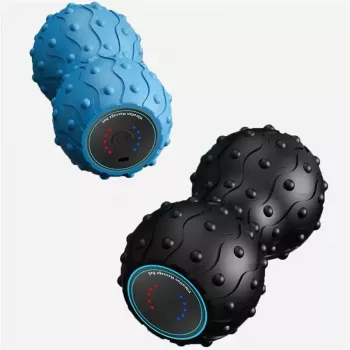
- Portable Electric Vibrating Peanut Ball – Muscle Relaxation & Rechargeable Massager (Rechargeable, travel-friendly design for targeted self-massage.)
- Women’s Abstract Print Loose Hoodie (A comfortable layer for cooldowns, travel days, or post-session relaxation.)
FAQ
How long should a vibrating peanut ball be used on one spot?
About 20–90 seconds per tender point is a practical range. Start shorter and lighter, then increase gradually; move on if pain becomes sharp or if you feel tingling or radiating sensations.
Can a peanut ball be used along the spine?
Use it beside the spine on the muscles, not directly on the vertebrae. A wall technique often makes pressure easier to control, especially around sensitive upper-back areas.
Is vibration better than a non-vibrating peanut ball?
Vibration can be a comfort add-on that feels more soothing for some people, but pressure control and technique matter most. If vibration helps you relax into a tender spot, it may make sessions easier to tolerate.












Leave a comment