

Wooden Outdoor Catio with Platforms, House & Roof
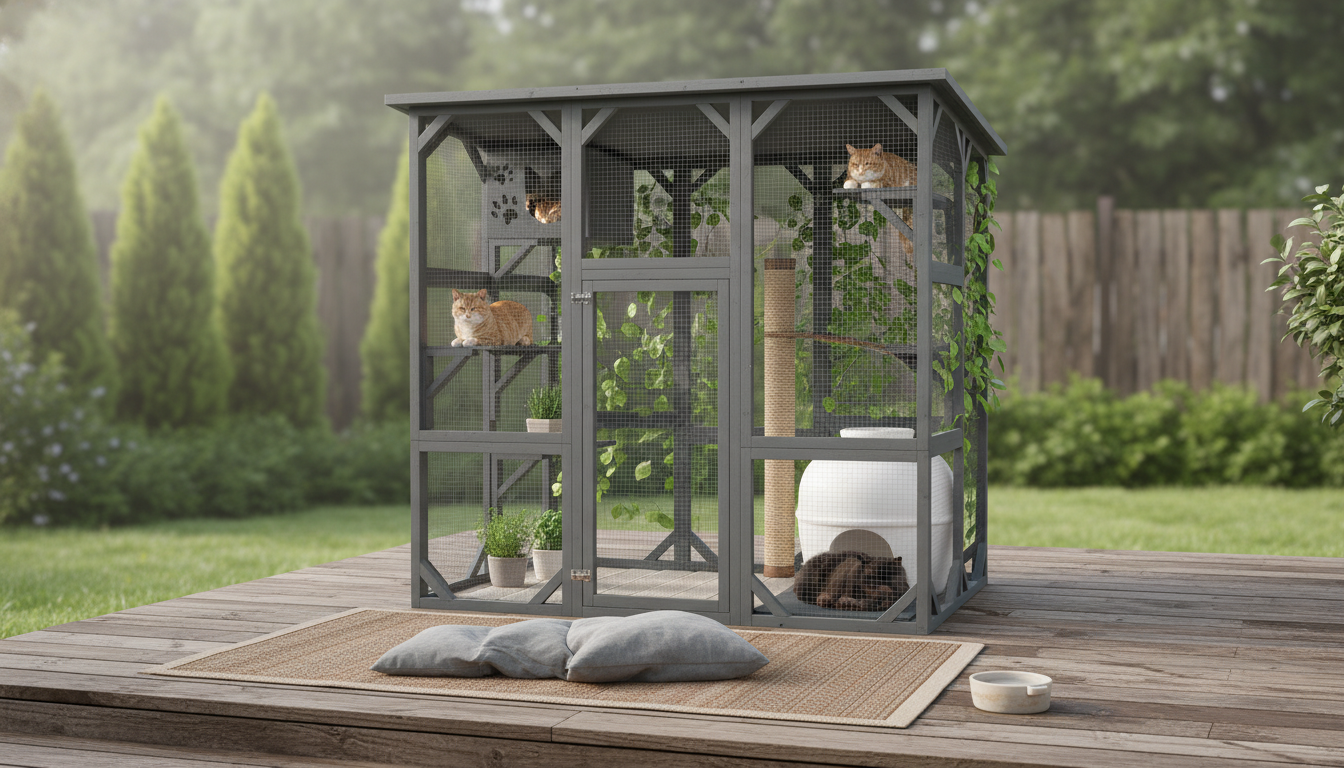
A large wooden outdoor cat enclosure (often called a catio) makes it possible to offer fresh air, sunshine, and backyard views without the hazards that come with free roaming. When the design includes multiple platforms, an enclosed house, and a weatherproof roof, cats can climb, lounge, and retreat to a calmer space while staying better protected from rain, harsh sun, and wind.
What This Enclosure Setup Offers
- Secure outdoor access that reduces exposure to traffic, predators, and getting lost.
- Vertical platforms that encourage climbing, observation, and everyday exercise.
- An enclosed house area that provides shade, privacy, and a quieter resting zone.
- A roof designed to shed water and help protect interior spaces from weather.
- A wood-frame look that blends naturally into patios, decks, and garden spaces.
For many households, this type of setup supports a consistent routine: short morning sun sessions, mid-day shaded naps, and evening “patrol” time from an elevated perch. It can also help reduce boredom-related behaviors by adding safe novelty and sensory stimulation.
Key Features to Look For in a Platform-and-House Catio
Platforms that feel secure underfoot
Look for staggered heights with reasonable stepping distances so cats can move confidently without big leaps. Wider shelves and corner perches are especially helpful for larger cats or seniors who still enjoy climbing but prefer stable landings.
A house area that supports real downtime
The enclosed house should allow your cat to turn around comfortably, lie stretched out, and settle without feeling exposed. Smooth, easy-to-clean surfaces and a draft-reducing entrance help keep it usable in more seasons.
Mesh, fasteners, and edges that prioritize safety
Sturdy wire/mesh, secure staples or screws, and trimmed edges reduce snag risks and prevent flexing at corners. A quick hand-check along the interior—especially near doors and platform brackets—can reveal sharp points before your cat does.
Door access that makes care realistic
A human-size access door simplifies cleaning, bedding changes, and hardware checks. If you plan to connect the enclosure to a window insert or a tunnel, a smaller pet door can be useful, but it should seal well and latch securely.
Roof coverage matched to your climate
A weatherproof roof helps with rain and midday heat, but details matter: overhangs can reduce splashback and keep platforms drier, while a slight pitch encourages water runoff.
Wood quality and finish
For outdoor longevity, choose smooth sanding, a pet-safe sealant/paint, and tight joints where moisture typically sneaks in. Pay special attention to end grain (the cut ends of boards), since it can wick water quickly if left unsealed.
Sizing and Layout Planning
- Measure the placement area (patio, lawn edge, deck) and keep clearance for doors to swing open fully.
- Choose a footprint that allows at least one continuous “loop” path (up, across platforms, down) to reduce crowding.
- Consider cat count and temperament: timid cats benefit from extra hiding and more than one elevated perch.
- Plan for a litter zone if cats will spend extended time inside; place it away from the house sleeping area.
- Account for sun and wind direction; position the roofed section to block prevailing weather when possible.
As a practical rule, it’s easier to keep the space peaceful when there are multiple “choices” available at the same time—two perches, two resting zones, and more than one route up and down—so one cat can’t easily control the entire enclosure.
Materials, Weather Resistance, and Outdoor Longevity
Wood can perform well outdoors, but it needs moisture management. Sealed end grain, protected joints, and periodic re-sealing help reduce swelling, cracking, and soft spots. A roof improves comfort, yet ground contact and splashback often determine how long the frame stays sound.
- Use pavers, decking, or a raised base when feasible to reduce dampness and keep the floor area cleaner.
- Maintain ventilation even in wet climates; avoid fully sealing the structure without airflow.
- In snowy regions, confirm the roof pitch and strength are appropriate and clear heavy buildup promptly.
- In hot climates, prioritize shade coverage and consider adding a cooling mat or ceramic tile resting spot.
Quick Planning Checklist for Outdoor Placement
| Factor | Why it matters | Practical tip |
|---|---|---|
| Ground surface | Prevents moisture damage and improves stability | Place on pavers, decking, or a level, compacted base |
| Sun exposure | Reduces overheating and sun stress | Aim for morning sun and afternoon shade when possible |
| Wind and rain direction | Limits drafts and blowing rain | Face openings away from prevailing weather |
| Drainage | Avoids pooling water around the frame | Keep a slight slope away from the enclosure and clear gutters/downspouts |
| Cleaning access | Makes routine care easier | Leave at least 2–3 ft clearance on the service side |
Safety Considerations Before the First Use
For guidance on keeping cats safer at home and limiting outdoor risks, see the American Veterinary Medical Association (AVMA) resources on cats and wildlife. General cat care basics are also available from the ASPCA’s cat care guidance.
Enrichment Ideas for Platforms and the Enclosed House
How to Choose the Right Wooden Outdoor Cat Enclosure
Care and Maintenance
FAQ
Can a wooden outdoor cat enclosure stay outside year-round?
Yes, if the wood is properly sealed and maintained and the enclosure is placed on a well-drained, level base. Regular inspections and seasonal re-sealing help extend lifespan, especially in wet or freeze–thaw climates.
How many cats can use an enclosure with platforms and a house?
It depends on the overall floor space and the number of resting spots. Aim for multiple elevated perches and more than one retreat area so cats can avoid conflict; adding extra shelves can improve flow for multi-cat homes.
Is a weatherproof roof enough to keep the interior dry?
A roof reduces direct rain, but splashback and wind-driven rain can still enter. Overhangs, positioning away from prevailing wind, and raising the base on pavers or decking improve dryness and comfort.












Leave a comment