

Is Opal Stone Expensive? Prices by Type & Quality

Is opal stone expensive?
Opal can be expensive, but it isn’t automatically a “high-price” gemstone across the board. The cost depends heavily on the opal type, how vivid the color play is, how large the stone is, and whether it’s a solid opal or a layered product like a doublet or triplet. That’s why you’ll see opal jewelry priced anywhere from budget-friendly to truly collectible.
What makes some opals cost more than others?
The biggest driver is “play-of-color”—the shifting flashes of color seen when the stone moves in light. Brighter, broader, and more consistent color patterns generally raise value. Body tone matters too: dark opals (often associated with Australian sources) can make colors look more intense and may cost more than lighter opals with similar pattern strength.
How opal type affects price
Not all opals are priced the same. Australian opals—especially black opal—are often among the most expensive. Ethiopian opals can deliver striking color at a wider range of price points, though some are more sensitive to water or chemicals. Common opal (without play-of-color) is typically much less expensive.
Solid opal vs. doublet or triplet
A solid opal is a single piece of opal and is usually priced higher than a doublet (opal layer backed by another material) or triplet (opal layer with a protective top cap). Doublets and triplets can look beautiful, but they’re generally less expensive and may require extra care to avoid moisture damage or delamination.
What to expect when buying an opal ring
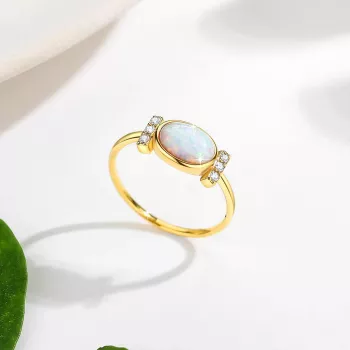
In rings, settings and metal choice also influence total cost. A protective bezel or halo can help shield an opal’s surface, and gold settings add value beyond the gemstone itself. For a practical example of how opal and fine metal combine in real-world pricing, see this guide to a 14k gold oval opal ring: https://hovira.com/guide-14k-gold-oval-opal-ring-6x8mm-for-women/.
FAQ
What is the difference between an opal doublet and a triplet?
A doublet is a thin slice of opal bonded to a backing, while a triplet adds a clear top layer (often quartz or glass) over the opal. Both can be attractive, but they’re generally less expensive than solid opals and need careful handling around water and chemicals.









Leave a comment