

Sintered Stone Dining Tables: Pros, Cons, and Care
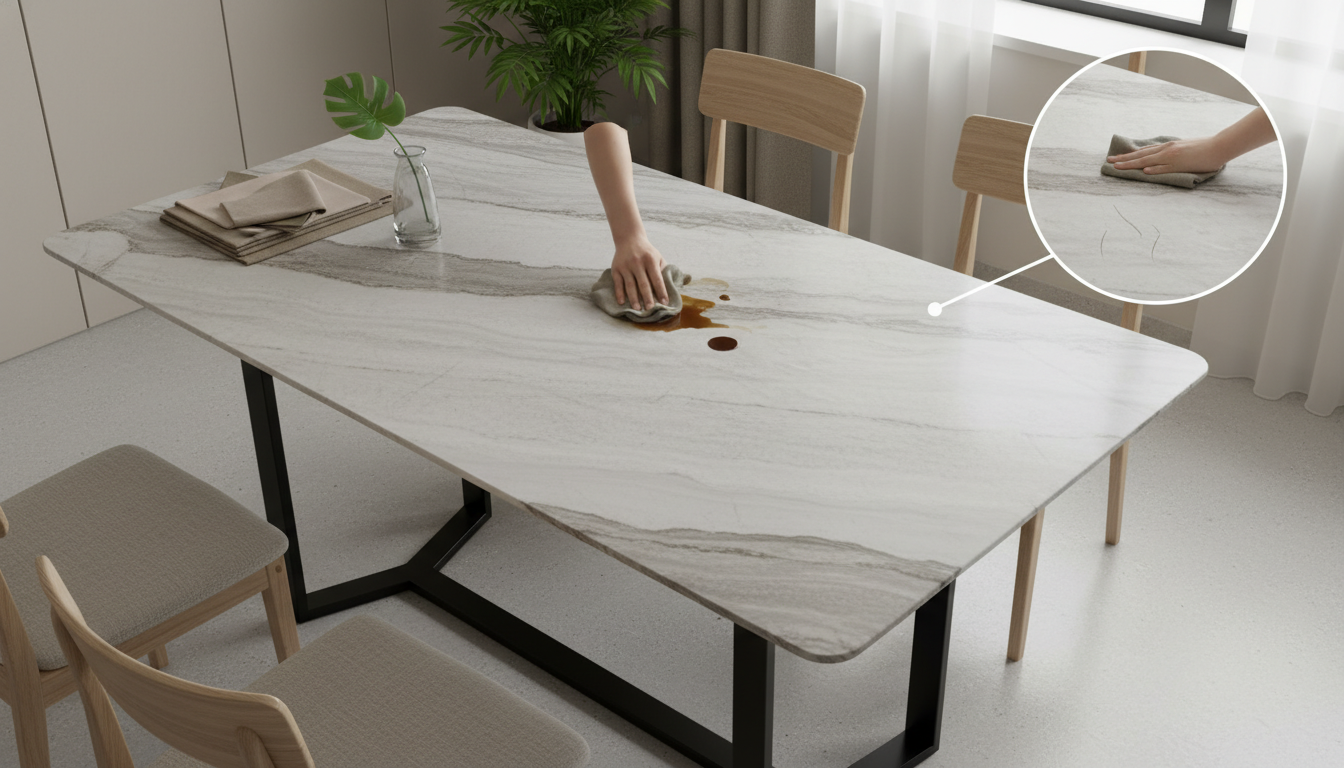
Is sintered stone a good material for a dining table?
Yes—sintered stone is a strong, low-maintenance choice for a dining table, especially for busy homes that deal with daily meals, spills, and frequent use. It’s made by compressing and heating natural minerals into a dense surface, which helps it stand up to common dining-room wear without demanding delicate care.
Why sintered stone works well for everyday dining
For most households, the biggest wins are durability and practicality. Sintered stone is typically resistant to scratches from plates and serving pieces, and it handles heat better than many traditional tabletop materials—useful when hot dishes come to the table. It’s also commonly non-porous, which makes it less likely to absorb liquids that can cause staining or lingering odors.
How it looks in a dining space
Visually, sintered stone can deliver a high-end, modern look with patterns that mimic marble, concrete, or other natural finishes. Because the surface is engineered, it can offer a more consistent appearance than quarried stone while still feeling elevated. If the table design pairs a sintered stone top with a sculptural base, it can read as a true centerpiece rather than just a utility surface.
What to consider before buying
Weight is the main tradeoff. Sintered stone tops can be heavy, which is great for stability but may complicate moving or upstairs delivery. Edges and corners can also be vulnerable to chipping if struck hard, so it’s smart to use placemats, avoid banging heavy cookware against the rim, and confirm the manufacturer’s edge profile and construction details.
Want a real-world example?
See how sintered stone is used in a statement dining design here: 71-inch gold base dining table with sintered stone top guide.
For Sintered Stone Dining Tables: Pros, Cons, and Care, the best answer depends on fit, material, care instructions, and how the product will be used day to day.
FAQ
Does sintered stone stain easily?
Most sintered stone surfaces are non-porous, so everyday spills like wine, coffee, or sauces are less likely to stain if wiped up promptly. Regular cleaning with mild soap and water is usually enough.













Leave a comment