

What is thicker, 18/8 or 18-10 stainless steel?
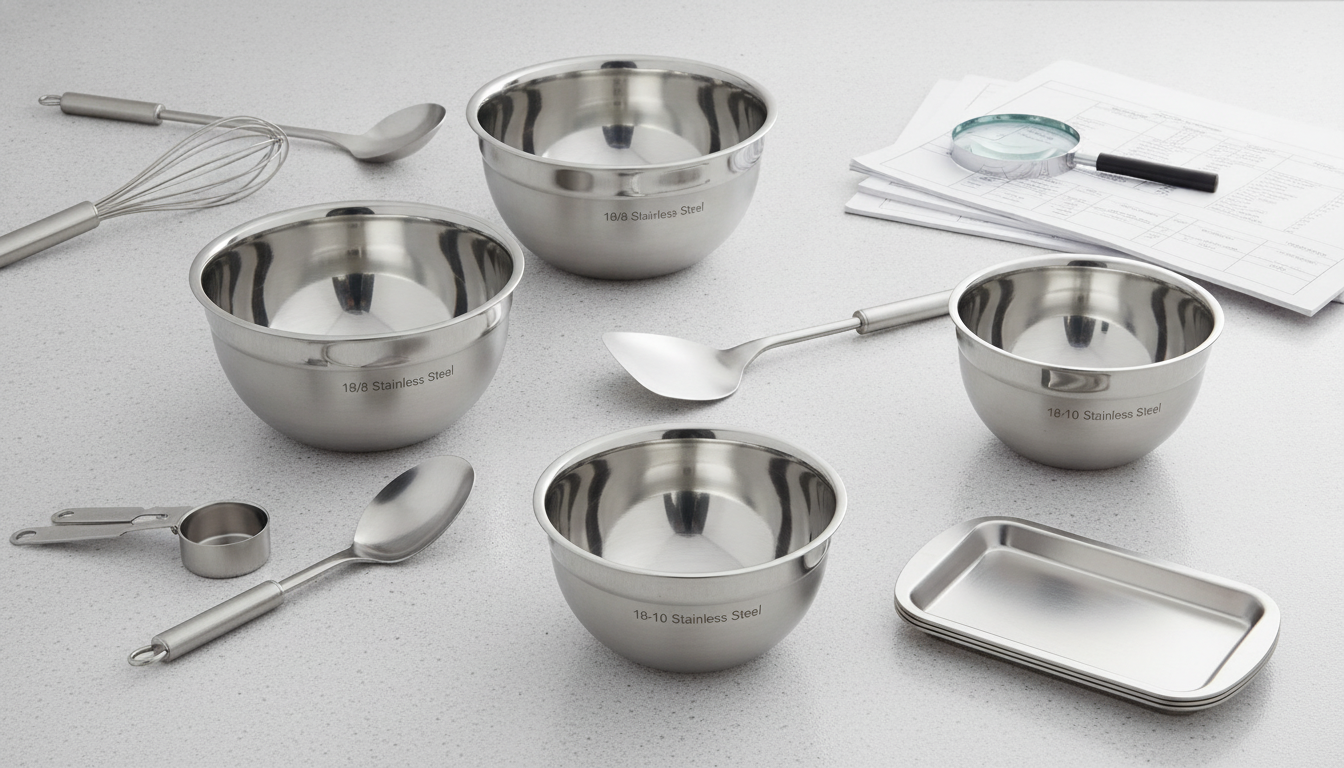
What is thicker, 18/8 or 18-10 stainless steel?
Neither one is automatically thicker. “18/8” and “18/10” describe the alloy recipe—about 18% chromium with either ~8% or ~10% nickel—not the wall thickness of the bowl, pot, or utensil.
What the numbers actually mean
Both 18/8 and 18/10 are common food-grade stainless steels (often in the 300-series). The chromium helps prevent rust, while the nickel improves corrosion resistance and can add a slightly brighter, more “polished” look. That’s why 18/10 is often marketed as a more premium finish, especially for flatware and cookware.
So what determines “thickness” instead?
Thickness is set by the product’s gauge, millimeter rating, or overall construction—not whether it’s 18/8 or 18/10. Two mixing bowls can both be 18/10, yet one can feel flimsy and another can feel substantial if the manufacturer used different sheet thicknesses or reinforced the rim and base.
How to compare thickness when shopping
- Look for gauge or mm measurements: If listed, these are the most direct indicators of thickness.
- Check the rim and base: A rolled rim and a wider, flatter base often signal sturdier build and better stability.
- Assess weight and rigidity: Heavier bowls usually flex less when stirring thick doughs or whisking.
- Match the bowl to the task: Thicker bowls tend to be more stable for vigorous mixing and can feel quieter on the counter.
If you’re comparing stainless steel mixing bowls specifically, material grade is only one piece of the puzzle. For a practical breakdown of bowl features (including lids, nesting, and everyday usability), visit this stainless steel mixing bowls guide.
For What is thicker, 18/8 or 18-10 stainless steel?, the best answer depends on fit, material, care instructions, and how the product will be used day to day.
FAQ
Does 18/10 stainless steel resist rust better than 18/8?
Often, yes. The slightly higher nickel content in 18/10 can improve corrosion resistance and help the surface maintain its shine, though real-world performance also depends on how it’s made and how it’s used and cleaned.














Leave a comment