

Ceramic Bowls in Boiling Water: Crack Risk & Tips

Will ceramic bowls crack in boiling water?
They can, but it depends on the type of ceramic and how quickly the temperature changes. Most cracking happens from thermal shock—when one part of the bowl heats up or cools down much faster than the rest. Pouring boiling water into a room-temperature ceramic bowl is often fine if the bowl is well-made and evenly heated, but it’s riskier with thin, porous, or already-chipped ceramics.
When cracking is most likely
Ceramic bowls are more likely to crack in boiling water if they’re coming straight from the refrigerator or freezer, if they have hairline cracks you can’t easily see, or if the glaze is crazed (a network of fine lines). Earthenware and some decorative ceramics are typically more vulnerable because they’re less dense and may be fired at lower temperatures.
Porcelain and stoneware tend to handle heat better
Porcelain and many stoneware bowls are generally stronger and less porous, so they’re often better at handling hot liquids. Even so, no ceramic is completely immune to thermal shock—especially if the bowl has thin sections, uneven thickness, or manufacturing flaws.
How to reduce the risk
Warm the bowl first by rinsing it with hot tap water, then add the boiling water. Avoid setting a hot bowl on a cold, wet countertop; use a dry towel or trivet instead. If the bowl is labeled “oven-safe” or “thermal shock resistant,” that’s a good sign, but it still pays to avoid extreme temperature jumps.
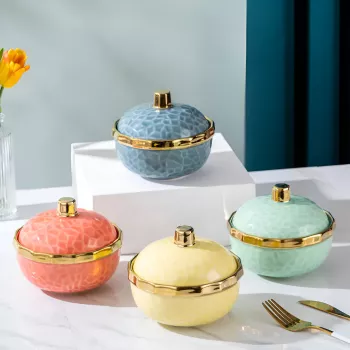
If you’re choosing a lidded option for soups, noodles, eggs, or stews, a purpose-built porcelain vessel can make a difference in heat retention and durability. For more context on selecting a heat-friendly serving piece, see this guide: https://hovira.com/guide-porcelain-soup-pot-with-lid-for-noodles-eggs-stews/.
FAQ
Can you put a ceramic bowl in the microwave after it’s been in the fridge?
It’s safer to let it sit at room temperature for a few minutes first. Moving directly from fridge-cold to microwave heat can trigger thermal shock, especially in thinner or lower-quality ceramics.











Leave a comment