

Airtight Glass Jar with Wooden Lid for Pantry Storage
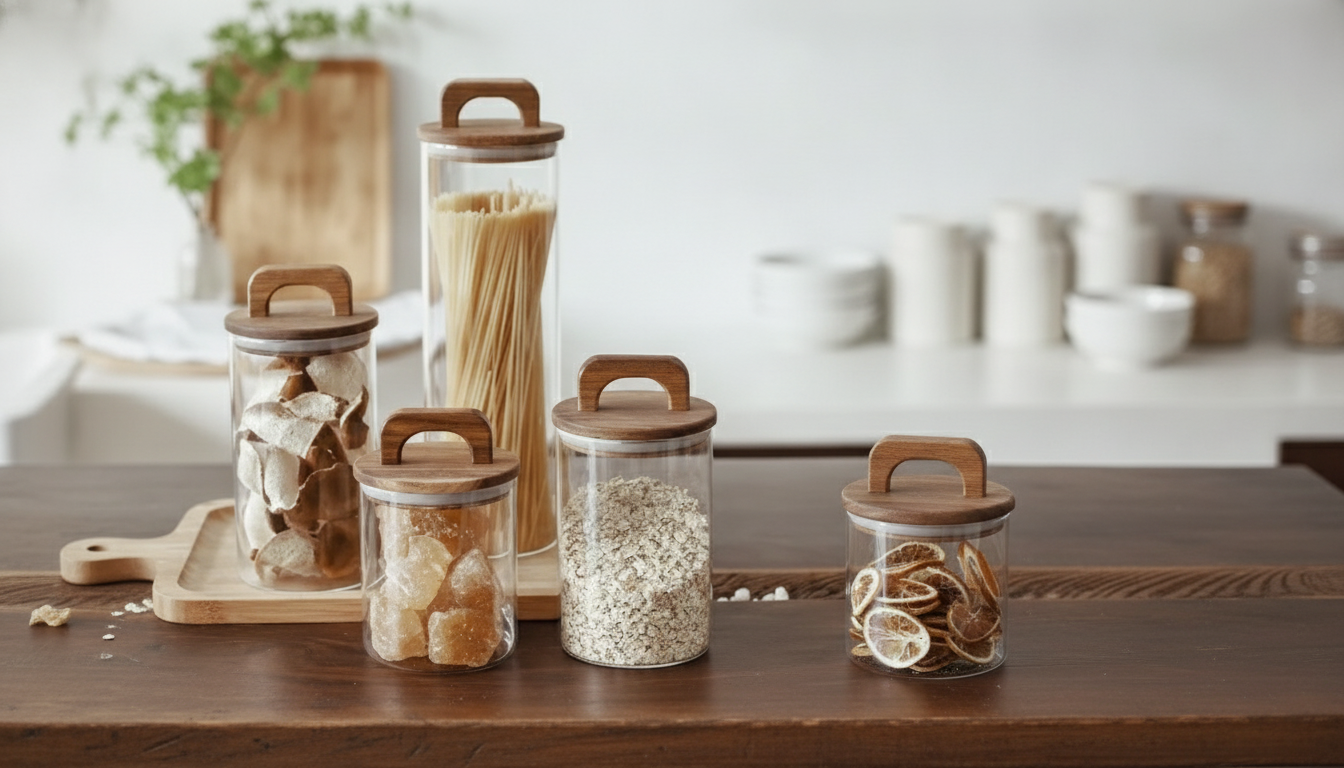
Large Airtight Glass Storage Jar with Wooden Lid: Fresh Storage with a Natural Finish
Airtight storage solves two everyday problems at once: keeping pantry staples fresher longer and making countertops look calmer and more intentional. This large glass jar pairs clear, easy-to-see storage with a warm wooden lid, creating a simple system for dry goods, snacks, and kitchen essentials without the clutter of mismatched packaging.
What Makes This Jar Different
Not all pantry containers feel good to use every day. The right jar should make refills easier, reduce waste from stale food, and look natural on open shelving or the counter.
- Clear glass body makes contents visible at a glance for quick refills and fewer duplicates.
- Wooden lid adds a natural look that suits modern, rustic, and minimalist kitchens.
- Airtight closure helps reduce exposure to moisture and air that can stale dry foods faster.
- Large capacity supports bulk items like pasta, rice, oats, beans, and baking ingredients.
For a simple pantry upgrade that looks intentional without being fussy, the Large Airtight Glass Storage Jar with Wooden Lid is an easy place to start—especially if you’re moving staples out of crinkly bags and half-closed boxes.
Best Uses Around the Home
This style of jar earns its keep well beyond flour and sugar. Because it’s clear and easy to grab, it supports routines like weekly meal prep, daily coffee, and after-school snacks.
- Pantry staples: flour, sugar, oats, granola, coffee beans, tea bags, dried fruit, nuts
- Snacks and treats: cookies, crackers, candy, trail mix, protein bites (keep dry for best results)
- Meal prep helpers: measured portions of rice, quinoa, lentils, and pantry mixes
- Non-food storage: cotton rounds, bath salts, craft supplies, office clips, or pet treats kept dry
Food safety still matters even with great containers: keep dry goods dry, store them away from heat and moisture, and follow general food storage guidance from trusted sources like the FDA and the USDA FSIS.
Airtight Basics: How the Seal Works
An airtight jar typically relies on two things working together: a fitted lid and a gasket (or sealing ring) that compresses to block airflow. When everything sits correctly, the seal helps slow down the staling process caused by exposure to air and humidity.
- An airtight jar typically relies on a fitted lid plus a gasket or sealing ring that compresses to block airflow.
- A secure seal is most noticeable when the lid sits evenly all the way around the rim without wobble.
- Airtight storage is ideal for dry goods; it is not a substitute for canning or long-term preservation methods.
- For best results, close the lid immediately after each use to limit humidity exposure.
Airtight vs. Not Airtight: Quick Check
| Check | Airtight Result | What to Do If Not |
|---|---|---|
| Lid sits flush | Even contact around rim | Re-seat lid; check for crumbs on rim |
| Gasket condition | Clean, flexible, uncracked | Wash and dry; replace if warped/cracked |
| Closure feel | Firm resistance when closing | Ensure lid is aligned; avoid cross-seating |
| Storage outcome | Dry goods stay crisp longer | Move jar away from steam; close faster after use |
Care and Cleaning for Glass and Wood
Glass is naturally non-porous and simple to refresh, while wood benefits from a gentler approach. Keeping both parts clean (and fully dry) helps the seal do its job and helps foods keep their intended flavor.
- Glass jar: wash with warm, soapy water; rinse thoroughly to avoid residue that can affect aromas and flavors.
- Wooden lid: wipe clean with a damp cloth; avoid prolonged soaking to reduce warping and odor absorption.
- Dry completely before reassembling to protect the seal and prevent trapped moisture.
- Avoid storing very hot items until fully cooled to minimize condensation inside the jar.
If the jar is used near the stove or dishwasher, keep an eye out for steam exposure—humidity is the quickest way to compromise crispness, even with a good seal.
Styling and Organization Tips That Actually Save Time
Pantry organization works best when it reduces decisions. The goal is to make the most-used items the easiest to see, reach, and refill—without rearranging everything every week.
- Group by category (breakfast, baking, snacks) and keep the most-used jars at eye level.
- Use simple labels on the glass for quick identification and easy rotation of older stock first.
- Standardize a few jar sizes to create cleaner shelves and make refills predictable.
- Keep jars away from direct stove steam and sunny windows to reduce moisture and temperature swings.
A small, practical add-on for staying consistent with routines is a printable checklist you can keep in a kitchen binder or on the fridge. If you like that kind of support, consider The Clear-Mind Decision Maker | Printable Mindfulness Checklist for Clarity & Calm Choices for quick, low-effort planning.
Product Snapshot
At-a-Glance Details
| Item | Details |
|---|---|
| Product | Large Airtight Glass Storage Jar with Wooden Lid |
| Price | $8.51 USD |
| Availability | In stock |
| Best for | Dry pantry items, snacks, countertop storage |
More In-Stock Picks
- Calvin Klein Men’s Pochette & Grooming Bag for streamlined travel and bathroom organization.
- Autumn Elegance: Women’s Totem Print Blazer with Long Sleeves and Pockets for a polished layer with functional storage.
FAQ
How do you seal a wooden lid on a glass jar?
An airtight seal typically comes from a fitted gasket or sealing ring underneath the wooden lid, not the wood itself. Make sure the jar rim is clean and dry, seat the gasket evenly, and press the lid down straight so it sits flush all the way around without crumbs or sticky residue breaking the seal.
Which jars are airtight?
Airtight jars are the ones designed with a sealing mechanism and gasket that limits air exchange—common examples include silicone-gasket lids, clamp-top styles, or lids with a sealing ring. A quick test is a flush fit and consistent, firm resistance when closing; airtight storage helps with dry goods but isn’t the same as canning.











Leave a comment