Moissanite Wheelchair Pendant Necklace: Sparkle & Meaning

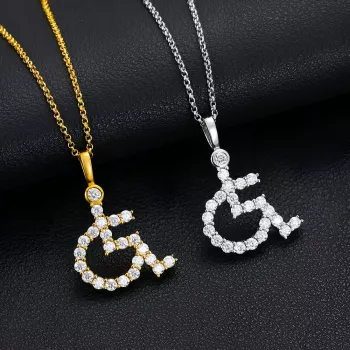
Moissanite Diamond Wheelchair Pendant Necklace
A wheelchair pendant necklace can be both a stylish accessory and a meaningful symbol of identity, support, and visibility. This moissanite diamond wheelchair pendant necklace pairs a bright, diamond-like sparkle with a recognizable silhouette—easy to wear daily, thoughtful to gift, and simple to style with casual or dress looks.
What Makes a Wheelchair Pendant Special
A wheelchair pendant is instantly recognizable, which is part of what makes it powerful. It can represent lived experience, allyship, advocacy, or simply pride in a mobility journey—without requiring an explanation every time it’s worn.
It’s also surprisingly versatile. The shape reads clearly at a glance, and when it’s finished with reflective stones, it catches indoor lighting and sunlight in a way that feels elevated without being too formal.
As a gift, it works beautifully for milestones that matter: rehab wins, “new chair day,” graduation, competition goals, or a career step forward. It doesn’t need engraving to feel personal—meaning can come from the moment and the intention.
Moissanite Sparkle: What to Expect
Moissanite is loved for its strong brilliance and “fire,” meaning it can throw vivid flashes of light—especially under direct lighting. For a pendant worn close to the face and upper chest, that extra sparkle can be a standout detail.
Many people choose moissanite for a diamond-like look without the same price tag. That can make it easier to wear frequently and confidently, instead of saving it for special occasions.
It’s also practical for jewelry that gets handled often—putting it on and taking it off, traveling, or moving through daily routines—while still looking luxe. For more background on the material, see GIA’s overview of moissanite.
Moissanite vs. Diamond Look and Wear
| Feature | Moissanite | Diamond |
|---|---|---|
| Brilliance and fire | Very high; can show colorful flashes | High; typically more white brilliance |
| Durability (everyday wear) | Hard and resilient for daily use | Extremely hard; classic choice for daily wear |
| Value for budget | Usually more affordable for similar visual size | Often higher cost, especially at larger sizes |
| Care needs | Regular cleaning to maintain sparkle | Regular cleaning to maintain sparkle |
If durability is a deciding factor, it can help to understand hardness in general (not just brand claims). The Mohs hardness scale provides a straightforward reference point for what “hard” means in everyday terms.
Design Details That Improve Daily Wear
Small design choices can make a big difference when a necklace is worn often. A flatter, snag-resistant pendant profile tends to feel smoother against tops and outer layers—especially with hoodies, scarves, or lanyards that can catch on higher-relief jewelry.
Pay attention to the bail (the loop where the chain runs through) and how it connects to the pendant. A smooth, sturdy connection can help reduce flipping and twisting, so the wheelchair silhouette stays facing forward while you move.
Comfort matters, too. For wheelchair users and active days, lighter jewelry can be easier on the neck and collarbone over long wear. If you prefer a statement look, consider balancing sparkle with a chain that feels secure but not bulky.
Fit, Length, and Styling Ideas
Necklace length changes the whole vibe. Shorter lengths sit higher and read as a statement; mid-lengths layer well; longer lengths can sit over tops and hoodies without disappearing into fabric. Choosing the “right” length often comes down to what you wear most days.
Layering is an easy way to make a wheelchair pendant look intentional rather than crowded. Pair it with a simple chain or a small charm necklace, keeping the wheelchair pendant as the focal point and letting the sparkle do the work.
For outfits, it works with tees and sweatshirts for casual visibility, and it cleans up nicely with solid-color tops and blazers for a dressier look. If you love cozy streetwear, try it over a Women’s Abstract Print Loose Hoodie—the contrast between soft fabric and sharp sparkle is a strong everyday combination.
Quick Guide to Necklace Length and Look
| Length style | Where it sits (approx.) | Best for |
|---|---|---|
| Choker/short | High on the neck/collarbone | Bold statement, open necklines |
| Princess/mid | Collarbone to upper chest | Everyday wear, layering |
| Long | Mid-chest and below | Wearing over hoodies and high-neck tops |
Care and Cleaning to Keep the Shine
If your pendant uses prongs or small stones, it’s smart to check the setting occasionally—especially if you wear it daily. For general guidance on jewelry marketing and terminology (helpful when comparing pieces), the FTC Jewelry Guides are a solid reference.
Gifting: When This Necklace Feels Most Meaningful
Product Spotlight: Moissanite Diamond Wheelchair Pendant Necklace
The Moissanite Diamond Wheelchair Pendant Necklace is designed to work as both a symbol and a statement piece. The wheelchair silhouette stays clear while the moissanite-style sparkle adds a bright, eye-catching finish.
At-a-Glance Details
| Item | Detail |
|---|---|
| Name | Moissanite Diamond Wheelchair Pendant Necklace |
| Price | $43.51 USD |
| Availability | In stock |
| Product page | View product |
FAQ
Does moissanite look like a diamond in a necklace?
Moissanite has a bright, diamond-like appearance and is known for strong sparkle. In some lighting, it may show more colorful “fire” than a traditional diamond, which many people find especially eye-catching in a pendant.
How do you clean a moissanite pendant necklace safely?
Use warm water, mild dish soap, and a soft brush to gently clean the surface, then rinse and dry with a lint-free cloth. Avoid harsh chemicals and store the necklace separately to help maintain shine and prevent scratches.
Is a wheelchair pendant necklace a good gift?
Yes—many people appreciate it as a meaningful symbol of visibility, support, pride, or celebration of a milestone. Including a short message about why you chose it can make it feel personal without needing custom engraving.











Leave a comment