

Wooden Alphabet Block Sizes: Standard, Jumbo, Mini
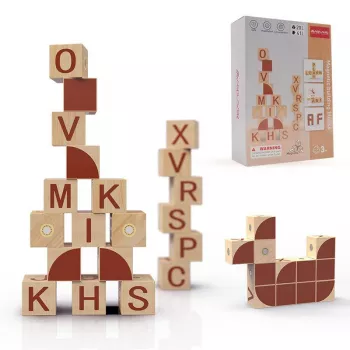
How big are wooden alphabet blocks?
Wooden alphabet blocks come in a few common “standard” sizes, and the right choice usually depends on a child’s age, how the blocks will be used (stacking, spelling, sensory play), and whether you want them to work with other toys like magnets or boards.
Most classic wooden alphabet blocks are roughly 1.5 to 2 inches (about 4 to 5 cm) per side. This size is popular because it’s easy for small hands to grip, stable enough for stacking short towers, and large enough for clear, readable letters.
You’ll also see jumbo options around 2.25 to 3 inches per side, which can be easier for toddlers to handle and can make letters more visible from a distance (great for group learning or floor play). On the smaller end, mini blocks can be closer to 1 inch per side; these are more compact for storage but can be harder for young children to manipulate.
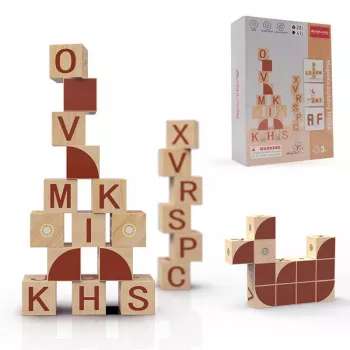
Beyond the cube size, letter faces and printing style vary. Some sets use one big letter per side, while others add pictures or multiple characters. If learning is the priority, look for high-contrast lettering and a finish that doesn’t create glare.
When comparing sets, check the product dimensions carefully—some “alphabet blocks” are rectangular, or include extra thickness for embedded magnets. For more detail on choosing letter-learning blocks (including magnetic wooden options), see the full guide here: https://hovira.com/guide-magnetic-wooden-alphabet-blocks-letter-learning/.
For Wooden Alphabet Block Sizes: Standard, Jumbo, Mini, the best answer depends on fit, material, care instructions, and how the product will be used day to day.
Checking those details first helps avoid a poor match and keeps the choice practical after delivery.
For Wooden Alphabet Block Sizes: Standard, Jumbo, Mini, the best answer depends on fit, material, care instructions, and how the product will be used day to day.
FAQ
What age are wooden alphabet blocks suitable for?
Many sets are designed for ages 18 months and up, but always follow the manufacturer’s age rating. Larger blocks are typically better for toddlers, while older preschoolers can handle smaller, more detailed sets.












Leave a comment