

Overheating Engine: Is It Safe to Drive Home?
How can you get home if your engine is overheating?
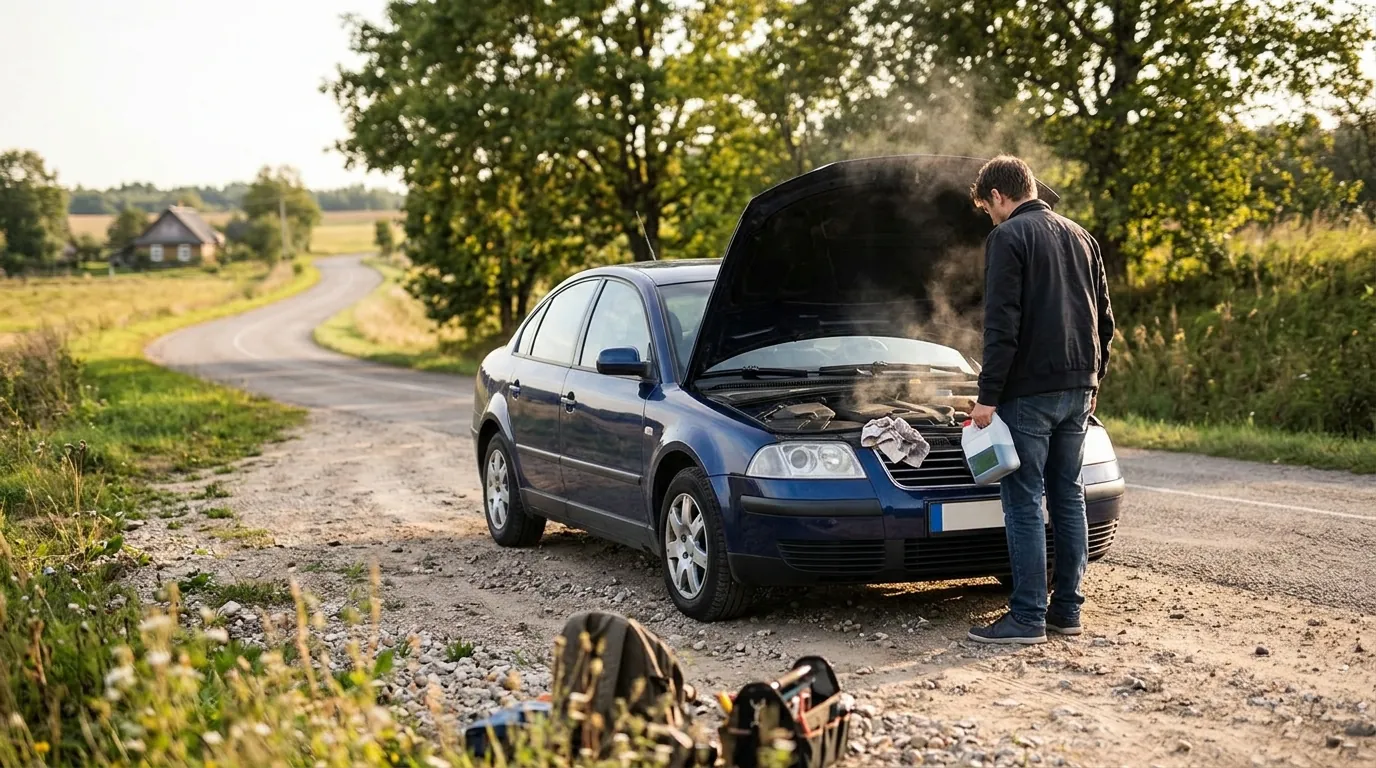
The safest way home may be a tow. If your temperature gauge reaches the red zone, a warning light comes on, or you see steam, signal and pull over as soon as you can do so safely. Turn off the engine. Continuing to drive can cause severe engine damage, and a sudden breakdown could leave you stranded in traffic.
Pull over and let the engine cool
Turn on your hazard lights and park away from moving traffic. If you are in an unsafe location, call for roadside assistance rather than working beside the car. Keep your hands clear of the engine bay if you see steam. Never remove the radiator cap or coolant reservoir cap while the system is hot: pressurized coolant can cause serious burns.
Give the engine at least 30 minutes to cool, and longer if it is still hot. Once it is cool, look for coolant pooling beneath the car or an obvious leak. If you find a leak, the warning returns, or the engine will not run normally, arrange a tow. For more roadside checks and warning signs, see our guide to what to do when your car overheats.
Decide whether a short drive is safe
Only consider driving if the engine has cooled, the coolant level is adequate, you see no leak or steam, and the temperature gauge stays in its normal range after restarting. Drive only a short distance to a safe place or repair shop—not automatically all the way home. Turn off the air conditioning, set the cabin heater to high if you can tolerate it, and watch the gauge continuously. Pull over and shut off the engine immediately if the temperature rises again.
If the coolant reservoir is low, add the coolant specified for your vehicle only after the engine has cooled and the reservoir is safe to open. Our team recommends keeping suitable coolant in your roadside kit, but a top-off is not a repair. Even if the gauge settles down, have the cooling system inspected before relying on the car for another trip.
FAQ
Can I add water to an overheating engine?
Only after the engine has cooled, and only if you cannot get the specified coolant, plain water may serve as a temporary top-off in the coolant reservoir. Do not open a hot cooling system; have a repair shop diagnose the overheating and restore the proper coolant mixture.













Leave a comment