

3500N Pneumatic Tool: PET Strap Widths & Thickness
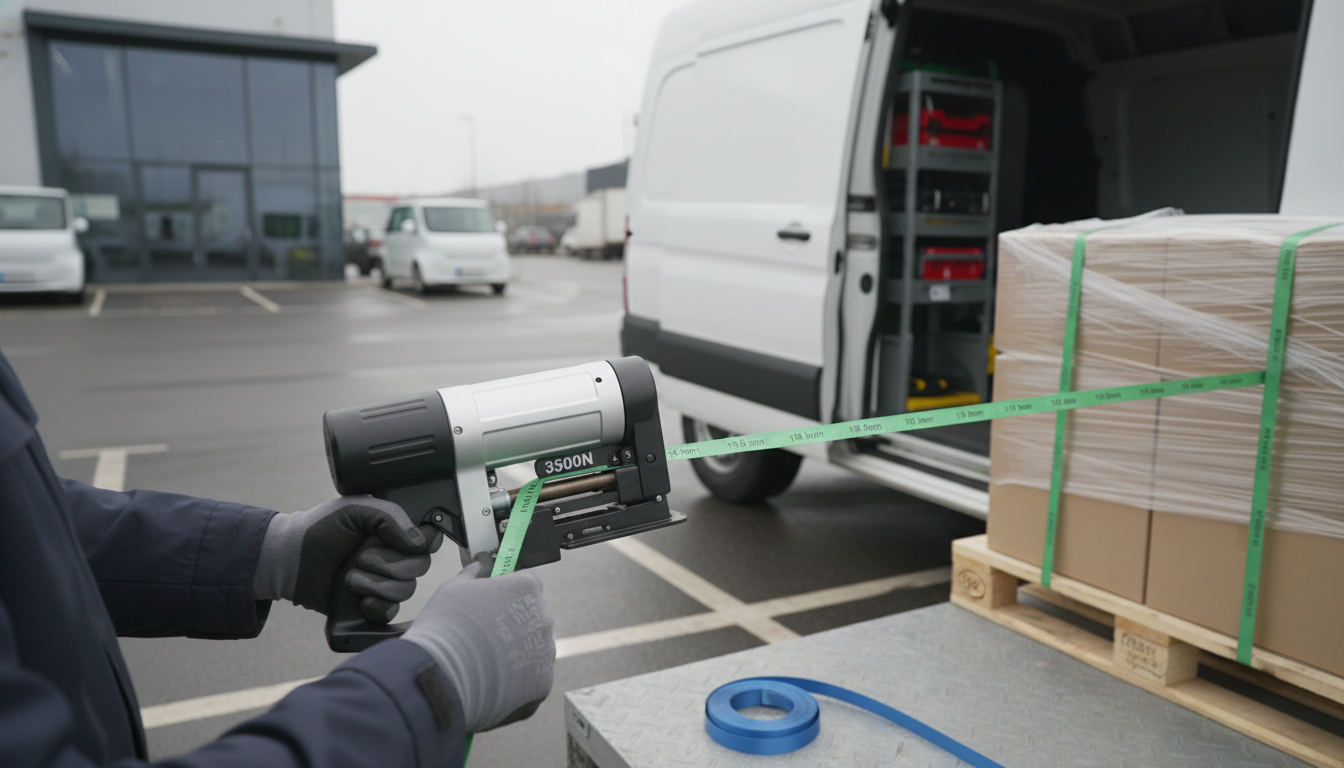
What PET strapping widths and thicknesses are compatible with a 3500N pneumatic strapping tool?
A 3500N pneumatic strapping tool is typically designed to run PET (polyester) strapping in the common “mid-duty” size range used for palletizing and unitizing loads. In practical terms, you’ll want PET strap that matches the tool’s feed path, gripper, and sealing/cutting geometry—especially strap width and thickness.
Compatible PET strap widths
Most 3500N pneumatic PET tools are compatible with PET strapping in these widths:
- 1/2 inch (12 mm)
- 5/8 inch (16 mm)
- 3/4 inch (19 mm)
If your tool is a single-size configuration, it will only accept one width. If it’s a multi-width version (or has interchangeable wear parts), it may accept two or more widths within that range. Using a wider strap than the tool is built for can cause feed jams and poor welds; using a narrower strap can lead to slipping and inconsistent tension.
Compatible PET strap thicknesses
For thickness, the typical compatible range for a 3500N pneumatic tool is:
- 0.020–0.050 inch (about 0.5–1.27 mm)
Within that range, many users land around 0.030–0.040 inch for everyday pallet loads. Too-thick strap may not feed smoothly and can reduce sealing consistency; too-thin strap can melt excessively during friction welding and weaken the seal if settings aren’t adjusted.
How to confirm the right size for your exact tool
The most reliable checks are the tool’s data plate/model spec, the strap channel width, and whether the gripper and welding shoe are sized for your strap. For a step-by-step setup and sizing guidance specific to 3500N-class pneumatic PET tools, use this reference: https://hovira.com/blog/guide-3500n-pneumatic-strapping-tool-pet-belt-setup-use/.
FAQ
How do I know if my PET strap is too thick for my pneumatic strapping tool?
Common signs include hard feeding, frequent jams, incomplete cutting, and uneven or weak friction-weld seals. If the tool struggles to tension smoothly or the seal looks over-melted/under-fused even after adjustment, the strap thickness may be outside the tool’s intended range.












Leave a comment