

Do Toddlers Need a Play Kitchen? A Simple Buying Guide
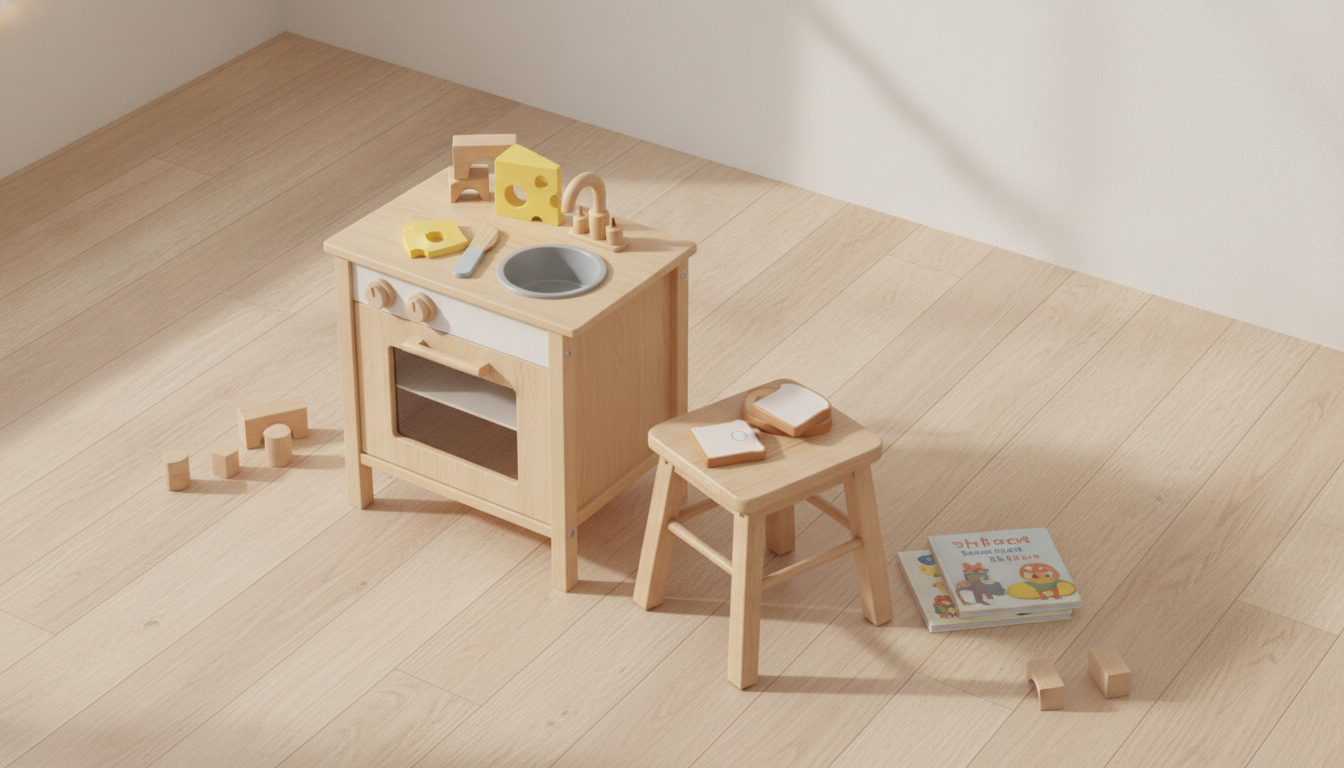
Does a toddler need a play kitchen?
A toddler doesn’t need a play kitchen, but many families find it’s one of the most useful pretend-play toys for ages 2–5. A good play kitchen can hold a child’s attention longer than many single-purpose toys because it invites open-ended play—cooking “meals,” washing dishes, serving stuffed animals, or copying what they see adults do at home.
When a play kitchen is worth it
A play kitchen tends to be a strong choice if a toddler likes imitating routines (stirring, pouring, cleaning), enjoys role-play, or needs an activity that supports independent play. Pretend cooking can also build everyday skills: taking turns, following simple sequences (wash, cut, cook, serve), practicing new words (ingredients, utensils), and using fine-motor movements like twisting knobs, opening doors, and placing play food on plates.
When it’s not necessary
If space is tight, your child is in a short-lived toy phase, or they prefer climbing and gross-motor play, a full kitchen set may not get much use. Some toddlers are content with a small bin of pretend food and a few safe tools (spoons, bowls) and will “cook” anywhere—on a stool, a low shelf, or a play table.
How to choose the right option for your home
For longer-lasting value, look for sturdy construction, smooth edges, and features your child will actually use—an oven door that opens easily, knobs that turn, and storage for accessories. Height matters too: a counter at about waist level helps toddlers play comfortably without constant reaching. If you want help deciding between materials, sizes, and features, this guide to wooden kitchen play sets is a practical starting point: https://hovira.com/guide-wooden-kitchen-play-set-pretend-cooking-toddlers/.
A simple way to decide
Try a “kitchen week” first: set out a bowl, spoon, a few plastic containers, and a couple of play foods. If your toddler returns to it day after day and invents new scenarios, a play kitchen is likely to be a hit.
FAQ
What age is best for a play kitchen?
Many kids start enjoying basic pretend cooking around age 2, and interest often grows through preschool. Choose a set with simple, sturdy parts for younger toddlers and add more accessories as they get older.












Leave a comment