

100W Cordless Hand Mixer: Speed, Turbo & Quiet Tips
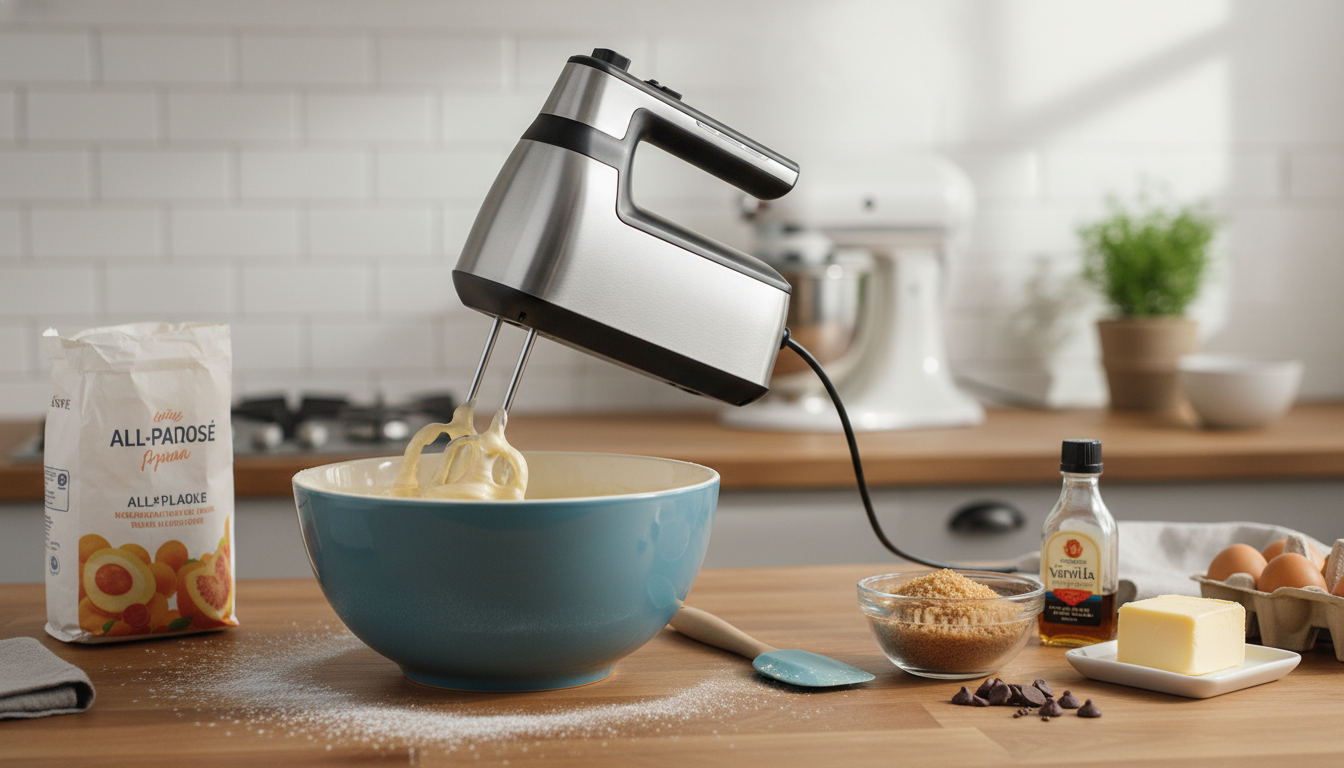
What a Cordless 100W Hand Mixer Is Best For
A 100W cordless electric hand mixer is built for the mixing jobs that come up most often—without the hassle of working around a cord or hunting for an open outlet. For everyday baking and quick kitchen tasks, it’s a comfortable middle ground: plenty of control for light-to-medium mixtures, with the freedom to move around your kitchen (or beyond it).
- Everyday mixing jobs: pancake batter, cake mixes, brownies, frosting, and whipped cream
- Small-batch cooking where counter space and outlet access are limited
- Quick touch-ups: re-whipping cream, loosening frosting, blending sauces, and mixing eggs
- Light doughs and mixtures; thicker bread doughs typically need a stand mixer or stronger motor
- Convenience tasks: mixing near the stove, dining table, or patio without a cord
For dense, heavy, or high-volume work (think stiff bread dough, large batches of thick cookie dough, or long mixing times), cordless models in the 100W class can struggle. They’ll often get the job done in smaller amounts, but performance and runtime are best when the mixture isn’t overly resistant.
Key Features That Matter: Variable Speed, Turbo Boost, and Quiet Operation
Cordless mixers aren’t only about portability. The way a mixer ramps up, how it behaves under load, and how it sounds in a smaller kitchen can matter just as much as the watt rating on the box.
- Variable speed control helps prevent flour clouds and splatter by starting slow, then ramping up smoothly
- Turbo boost provides a short burst of extra power for dense spots or to finish whipping faster
- Quiet-focused design often comes from better motor balancing, internal damping, and smoother gearing
- Cordless ergonomics: weight distribution and grip shape affect control more than raw wattage
- Eject mechanism should release beaters smoothly without sticking, even after thicker mixes
Feature checklist and what it changes in the bowl
| Feature | Why it matters | Best use cases | What to watch for |
|---|---|---|---|
| Variable speed | Improves control and reduces mess | Batters, frostings, eggs | Too-fast lowest speed can still cause splatter |
| Turbo boost | Extra power on demand | Thicker mixtures, quick finishing | Overuse can drain battery faster and warm the motor |
| Quiet operation | More comfortable mixing, especially in small spaces | Early mornings, shared kitchens | Quiet doesn’t always mean more powerful |
| Cordless design | Freedom of movement and easier storage | Small kitchens, RVs, events | Battery runtime depends on speed and mixture thickness |
| 100W motor class | Balanced for light-to-medium tasks | Whipped cream, cakes, cookies | Not ideal for heavy bread dough or large batches |
How to Choose the Right Cordless Hand Mixer
With cordless models, the “right” choice is less about chasing the biggest number and more about matching how you mix. A well-designed 100W mixer can feel effortless for frosting and whipped cream, while a poorly tuned one may splatter on low or bog down as soon as batter thickens.
- Match power to recipes: frequent thick cookie dough and large batches benefit from higher torque; a 100W class mixer excels at light-to-medium mixing
- Look for a low starting speed: the first speed setting should be gentle enough for dry ingredients
- Check turbo behavior: a momentary turbo button is useful; continuous turbo can make control harder
- Prioritize comfort: handle shape, trigger placement, and overall balance matter during 3–5 minute mixing sessions
- Assess attachment needs: standard beaters cover most tasks; dough hooks are helpful if included and if the motor can handle them
- Runtime expectations: higher speeds reduce runtime; plan for short bursts on dense mixtures instead of long continuous mixing
- Storage and cleaning: dishwasher-safe beaters and a smooth body shell reduce cleanup time
- Noise expectations: quieter models are more pleasant, but performance should still meet recipe demands
If possible, pick a model that feels stable in-hand when held level over a bowl. In cordless mixers, a slightly top-heavy design can increase wrist fatigue, especially when mixing thicker frosting or when working slowly for several minutes.
Using Variable Speed and Turbo for Better Results
Variable speed is the feature that most directly improves outcomes. It helps keep dry ingredients in the bowl, prevents over-aeration, and makes it easier to stop at the right texture instead of overshooting it.
- Start slow: begin at the lowest speed to incorporate dry ingredients without sending them airborne
- Increase gradually: move up a step at a time until the mixture becomes uniform
- Use turbo strategically: apply turbo for a few seconds to break up stubborn pockets or finish whipping peaks
- Keep beaters submerged: reduce splatter by keeping beaters in the mixture before turning on and while changing speeds
- Pause to scrape: stop the mixer and scrape bowl sides with a spatula for even mixing and less strain on the motor
Battery, Charging Habits, and Cordless Practicality
For general appliance safety and design standards, resources like UL Solutions’ small appliance safety overview can be helpful when comparing product categories and safety expectations.
Keeping It Quiet: Techniques That Reduce Noise and Vibration
Cleaning, Maintenance, and Safe Handling
For broader sanitation guidance in kitchens, the FDA Food Code is a reliable reference point for food safety practices.
Troubleshooting Common Issues
FAQ
Can a 100W cordless hand mixer handle cookie dough?
It can handle lighter cookie doughs in small batches. For very thick or large batches, mix in shorter intervals, scrape frequently, and avoid continuous turbo to limit overheating and rapid battery drain.
How can splatter be reduced when using a hand mixer?
Start at the lowest speed and keep the beaters fully in the mixture before turning the mixer on. Add dry ingredients gradually and pause to scrape instead of forcing the mix at high speed.
What keeps a hand mixer quieter during use?
Using the lowest effective speed, a heavier bowl on a non-slip mat, and properly seated attachments helps reduce vibration. Avoiding over-thick mixtures also reduces strain, which often lowers noise.












Leave a comment