

3000W Commercial Grain Mill: Fast, Consistent Flour Prep
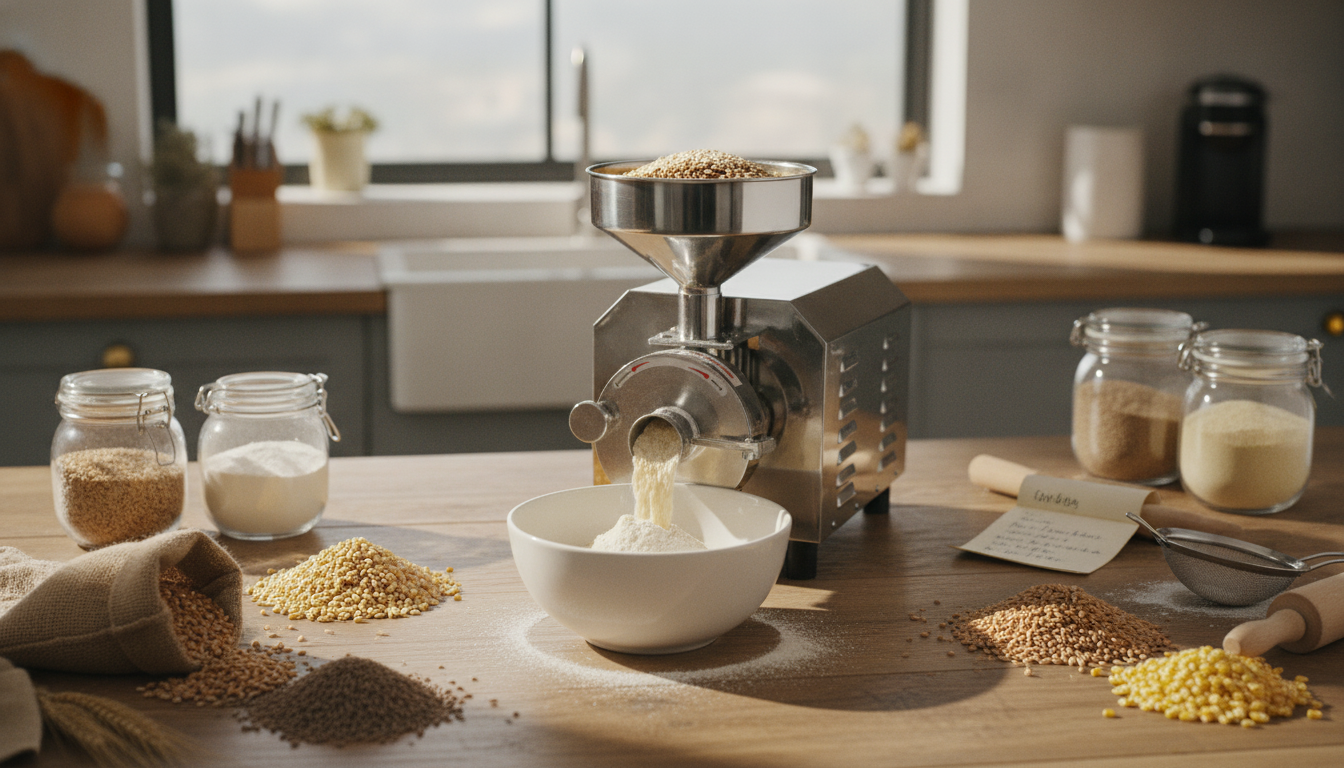
High-Efficiency Milling Without the Prep Bottleneck
A powerful flour mill can turn grains, spices, and dry ingredients into consistent powder quickly—without bottlenecks during prep. A 3000W commercial grinder is built for busy kitchens that need repeatable results, predictable batch timing, and fewer slowdowns when multiple recipes hit the line at once. Below is a practical guide to what matters most, how to run it smoothly day to day, and the habits that keep output consistent while keeping cleanup manageable.
What This 3000W Commercial Mill Is Built For
Commercial-grade milling is about throughput and consistency. A 3000W class grinder is designed for fast processing of dry ingredients where “close enough” texture isn’t good enough—especially when you’re portioning doughs, standardizing spice blends, or filling containers for retail or service.
- High-throughput grinding for grains and dry ingredients when speed and consistency matter.
- Suitable for restaurant prep, small food production, bakeries, and high-volume home use.
- Designed to reduce batch-to-batch variation compared with lower-power household grinders.
- Best results with dry, clean ingredients; avoid wet, oily, or sticky materials that can gum up grinding.
Performance Priorities: Power, Fineness, and Heat Management
Power is only part of performance. The goal is stable speed under load so the mill doesn’t bog down as the chamber fills. That stability is what helps produce a more uniform grind and keeps batch time predictable.
- 3000W class motors support faster milling and more stable speed under load.
- Finer output typically requires longer run time or multiple passes; plan batch sizes to prevent overheating.
- Heat buildup can affect flavor and aroma of spices and flours—use pulse grinding or rest intervals for delicate ingredients.
- Consistency improves when ingredient size is uniform (pre-crack large grains if needed).
Batch Planning Cheatsheet (Typical Use Patterns)
| Goal | Suggested approach | Why it helps |
|---|---|---|
| Everyday flour for baking | Grind in medium batches; sift if needed for extra-fine texture | Maintains consistent fineness without excessive heat |
| Spice powder | Short bursts with brief pauses | Protects volatile oils and reduces clumping |
| Large-volume prep | Run repeatable batch sizes on a timed routine | Improves consistency across multiple containers |
| Extra-fine powder | Two-pass grinding or grind + sieve | Achieves finer result without forcing a single long run |
Ingredients That Work Well (and What to Avoid)
Commercial mills shine with dry, brittle ingredients that fracture cleanly. The biggest threats to performance are moisture (clumping and drag), oils (paste formation), and foreign objects (damage and safety hazards).
- Common good candidates: wheat, rice, corn, beans, dry herbs, dried peppers, and many dry spices.
- Use only fully dried materials; moisture raises clumping risk and can stress the motor.
- Avoid very oily items (for example, some nuts and seeds) unless the grinder is explicitly rated for them—oils can turn powder into paste.
- Remove stones, hard debris, and metal fragments; foreign objects can damage blades/plates and create safety hazards.
For nutrition and ingredient reference while standardizing recipes, an authoritative database like USDA FoodData Central can be helpful when you’re documenting outputs and labeling.
Daily Workflow: Setup, Grinding, and Consistent Output
Consistency comes from a repeatable routine more than “perfect” technique. When multiple staff members run the mill, a simple standard procedure can keep results aligned across shifts.
- Stage ingredients: measure, confirm dryness, and pre-sort to remove contaminants.
- Use a repeatable timing method (timer or standard cycles) to match fineness across batches.
- Let the machine rest between heavy runs to control temperature and extend service life.
- If a recipe needs uniform particle size, pair grinding with sifting and recombine fractions as required.
One practical approach is to define “house settings” for each ingredient: a standard batch weight, a standard run time (or burst pattern), and a standard finishing step (no sieve, fine sieve, or two-pass). That small bit of structure makes it easier to train quickly and reduce redo work.
Cleaning, Maintenance, and Storage for Long Service Life
Commercial prep environments reward equipment that’s easy to reset between ingredients. The key is avoiding moisture where it doesn’t belong and preventing flavor transfer—especially when switching from pungent spices to neutral flours.
Safety and Noise Considerations in Commercial Spaces
For guidance on managing exposure in work settings, see OSHA’s Occupational Noise Exposure overview for practical context on noise awareness and protection.
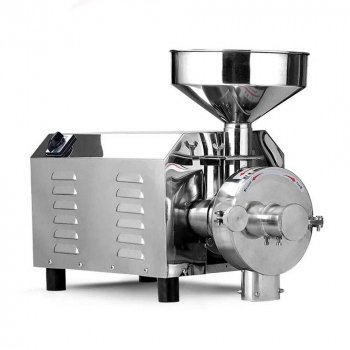
Product Snapshot: High-Efficiency Commercial Grain Flour Mill 3000W Electric Powder Grinder
For kitchens that need speed and repeatability, the High-Efficiency Commercial Grain Flour Mill 3000W Electric Powder Grinder is a high-power option built to turn dry ingredients into flour or powder efficiently. It’s a strong fit for consistent daily prep routines, small production runs, and any workflow where frequent re-grinds slow the team down.
Quick Specs at a Glance
| Item | Detail |
|---|---|
| Product name | High-Efficiency Commercial Grain Flour Mill 3000W Electric Powder Grinder |
| Power class | 3000W |
| Price | 1627.99 USD |
| Availability | In stock |
| Product page | View product |
Operational Tip: Standardize Decisions Across Shifts
If multiple people handle prep, a simple checklist culture helps avoid “close enough” batches. For teams that like a structured way to think through equipment choices and workflow changes, The Clear-Mind Decision Maker | Printable Mindfulness Checklist for Clarity & Calm Choices can be used as a lightweight template for documenting what changed (ingredient dryness, batch size, timing) and what result it produced.
FAQ
What is an example of high-efficiency?
High-efficiency means getting the same (or better) output with less wasted time and energy. For a grinder, that looks like maintaining strong, stable speed under load so you get consistent flour faster with fewer re-grinds and less downtime between batches.
What is the energy efficiency tax credit for commercial buildings?
Energy incentives vary by jurisdiction, and many programs focus on building systems (like HVAC, lighting, and the building envelope) rather than a single appliance. For current U.S. rules, review official IRS resources (including Section 179D guidance) and confirm details with a qualified tax professional.











Leave a comment