

Montessori Play Kitchen: What Makes It Work (or Not)
Is a play kitchen Montessori?
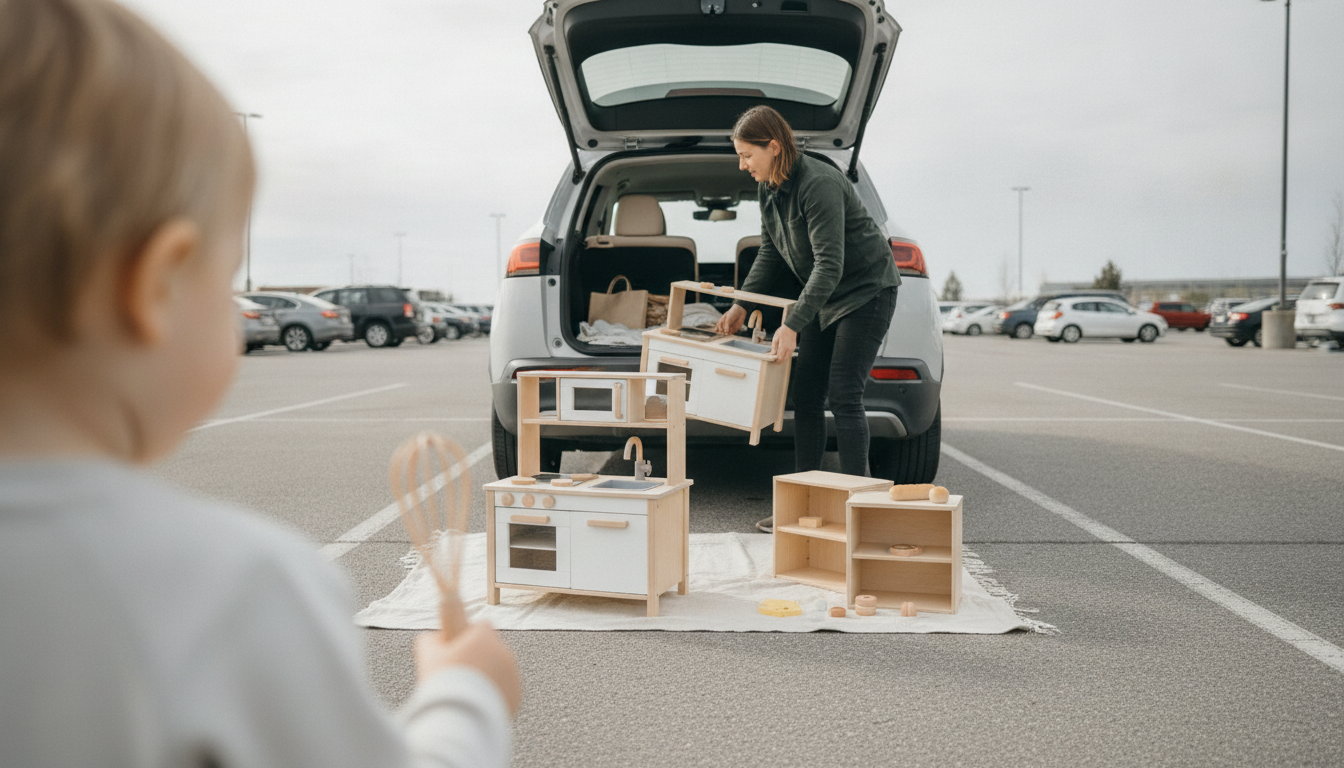
A play kitchen can be Montessori-aligned, but it isn’t automatically “Montessori” just because it’s made of wood or looks minimalist. In Montessori, the focus is on purposeful, hands-on activities that build real-life skills and independence. A play kitchen fits that philosophy when it invites practical routines—washing, preparing, serving, cleaning up—at a child’s level and at their pace.
What makes a play kitchen Montessori-aligned?
Montessori-style play tends to be open-ended, realistic, and grounded in everyday life. A kitchen set can support that when it has simple features, encourages order, and avoids overstimulating effects. Look for a design that feels like a “real” workspace—accessible shelves, easy-to-turn knobs, and space for a child to set out items neatly and return them when finished.
Materials matter, too. Sturdy wood, smooth edges, and a stable base help a child focus on the activity rather than the toy. Fewer built-in sounds and flashing lights can also keep attention on the sequence of tasks: choose tools, prep “ingredients,” cook, serve, and clean.
How to set up a play kitchen the Montessori way
The setup often matters more than the label. Stock the kitchen with a small rotation of realistic items: a child-safe whisk, wooden spoon, small bowls, felt or wooden food, and a mini towel for “cleanup.” Keep quantities limited so the space stays tidy and decisions stay manageable.
Pair pretend cooking with real-life opportunities whenever possible. Let kids rinse produce, stir batter, or wipe the table after meals, then revisit similar steps in their play kitchen. That connection between play and real routines is where Montessori-friendly pretend play shines.
Choosing a set that supports independent play
Prioritize durability, a height that matches your child, and features that encourage sequencing and responsibility (like doors that open smoothly and storage that makes sense). For a deeper breakdown of what to look for—materials, safety details, and age-appropriate features—see the full guide here: wooden kitchen play set guide.
FAQ
What age is best for a play kitchen?
Many kids start enjoying a play kitchen around 18 months to 2 years with simple accessories, and it often stays popular through preschool and early elementary. Choose a stable set with larger pieces for toddlers, then add more detailed tools as skills grow.












Leave a comment